2026 届高考英语语法填空分类强化100 题(高考真题+名校模拟)
专题29 语法填空之传统节日(设立台湾光复纪念日+24 节气) 解析版
目录
板块一:10 月25 日设立为台湾光复纪念日
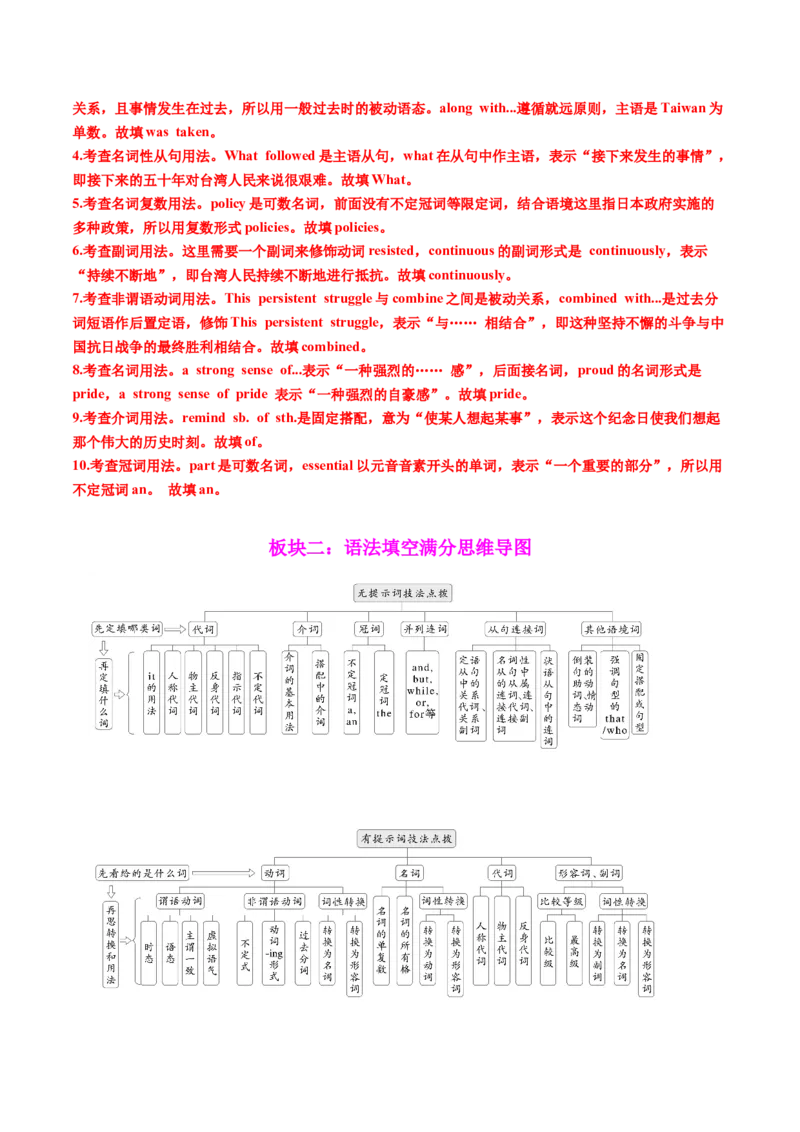
板块二:语法填空满分思维导图
板块三:传统节日之24 节气14 篇
板块一:10 月25 日设立为台湾光复纪念日
 (原创) 10 月25 日设立为台湾光复纪念日
(一)
China's national legislature(立法机关) voted on Friday to name October 25 as the Commemoration Day of
Taiwan's Restoration. The country will organize commemorative(纪念性) activities in various      1     (form)
to honor the      2    (history) event on this day.
In 1945, all Chinese achieved the great victory in the Chinese People's War of Resistance     3     Japanese
Aggression (1931-45) and the World Anti-Fascist War,      4      brought about Taiwan's restoration to the
motherland. It highlighted that Taiwan's restoration is living proof of the Chinese government's recovery of control
over Taiwan, and also a crucial part of the historical fact and legal chain that Taiwan is an integral part of China.
The decision      5     (make) in line with the Constitution, aiming to safeguard the achievements of the
World Anti-Fascist War and the post-war international order, to demonstrate the firm will to uphold      6      one-
China principle and defend national sovereignty(国家主权), unity and territorial integrity(领土完整),      7

to strengthen the shared national memory of compatriots(同胞) on both sides.
On October 25, 1945, the ceremony to accept Japan's surrender was held in Taipei,      8     (mark) the
return of Taiwan and the Penghu Islands to China's sovereign jurisdiction.
Chen Binhua, spokesman for the State Council Taiwan Affairs Office, said the decision reflects the shared
aspirations of all Chinese people, including compatriots in Taiwan. "We will take the      9     (establish) of the
day as an opportunity      10     (organize) various commemorative events," he added.
【背景导读】
10 月24 日,十四届全国人大常委会第十八次会议表决通过关于设立台湾光复纪念日的决定,以法
律形式将10 月25 日设立为台湾光复纪念日。设立台湾光复纪念日,在国家层面举行纪念活动,有利于体
现台湾是中国不可分割一部分这一无可辩驳的历史事实,巩固国际社会坚持一个中国的格局,引领两岸同
胞传承、弘扬伟大抗战精神,激励全体中华儿女为祖国统一、民族复兴而团结奋斗。历史将永远铭记这一
刻——1945 年10 月25 日,中国政府代表在同盟国中国战区台湾省受降仪式上向全世界宣告:自即日起,
台湾及澎湖列岛已正式重入中国版图,所有一切土地、人民、政事皆已置于中国主权之下。
【答案】
1. forms 2. historic 3. Against 4. which 5. was made 6. the 7. and 8. marking 9. establishment 10. to organize
【解析】
1. 考查名词复数用法。various 暗示后边名词用复数形式。故填forms。
2. 考查形容词作定语用法。结合语境全国人大通过立法把10 月25 日设为台湾光复纪念日,具有历史意义。
故填historic。
3. 考查介词用法。the Chinese People's War of Resistance Against Japanese Aggression 中国人民抗日战争,
against 表示“抵抗”。故填Against。
4. 考查定语从句用法。结合语境空白处需要which 引导非限制性定语从句,并充当其主语。故填which。
5. 考查动词时态语态用法。结合新闻材料的语境这件事发生在过去,应用一般过去时;同时又是被动含义。
故填was made。
6. 考查冠词用法。结合语境这里应用定冠词the 表示特指“一个中国原则”。故填the。
7. 考查并列句用法。结合语境这里是三个动词不定式作aiming 的并列宾语。故填and。
8. 考查非谓语动词用法。结合语境这里应用现在分词短语作伴随状语,强调一个主动的动作。故填
marking。
9. 考查动词变名词用法。定冠词the 暗示这里应用名词establishment 表示“建立”。故填establishment。
10. 考查非谓语动词用法。结合语境这里应用动词不定式短语作定语。故填to organize。
(二)
On October 24, China's top legislature officially established October 25 as the Commemoration Day of Taiwan's
Restoration. This decision means the country will now formally honor this 1. ______ (history) day each year through
various activities.
Back in 1895, following the First Sino - Japanese War, Japan forced the Qing government 2. ______ (sign) the
unequal Treaty of Shimonoseki. Through this treaty, Taiwan, along with the Penghu Islands, 3. ______ (take) away
from China and given to Japan. 4. ______ followed was fifty difficult years for the Taiwanese people. Under Japanese
rule, they faced severe 5. ______ (policy) designed to erase their cultural identity and take advantage of the island's
resources. The goal was to make them forget their Chinese heritage. However, the spirit of the Taiwanese people
remained unbroken. They 6. ______ (continuous) resisted, organizing numerous uprisings—both large and small—
to bravely challenge foreign control.
This persistent struggle, 7. ______ (combine) with China's ultimate victory in the War of Resistance Against
Japanese Aggression, paved the way for Taiwan's return. On October 25, 1945, Taiwan was officially restored to its
motherland. It was a day full of tears of joy and a strong sense of 8. ______ (proud) for all Chinese people.
Now, Establishing the Commemoration Day of Taiwan's Restoration is like lighting a lamp. It reminds us
vividly 9. ______ that great moment in history. It also clearly shows the world that Taiwan has always been 10.
______ essential part of China's territory.
【答案】1.historic 2.to sign 3.was taken 4.What 5.policies 6.continuously 7.combined 8.pride 9.of
10.an
【解析】
1.考查形容词用法。此处需要一个形容词来修饰名词day,history 的形容词形式historic 表示“有历史意
义的”,符合语境,指这个具有历史意义的日子。故填historic。
2.考查非谓语动词用法。force sb. to do sth.是固定搭配,意为“强迫某人做某事”,所以这里用动词不
定式to sign,表示日本强迫清政府签署不平等条约。故填to sign。
3.考查动词时态语态用法。句子主语Taiwan, along with the Penghu Islands 与take away 之间构成被动
关系,且事情发生在过去,所以用一般过去时的被动语态。along with...遵循就远原则,主语是Taiwan 为
单数。故填was taken。
4.考查名词性从句用法。What followed 是主语从句,what 在从句中作主语,表示“接下来发生的事情”,
即接下来的五十年对台湾人民来说很艰难。故填What。
5.考查名词复数用法。policy 是可数名词,前面没有不定冠词等限定词,结合语境这里指日本政府实施的
多种政策,所以用复数形式policies。故填policies。
6.考查副词用法。这里需要一个副词来修饰动词resisted,continuous 的副词形式是 continuously,表示
“持续不断地”,即台湾人民持续不断地进行抵抗。故填continuously。
7.考查非谓语动词用法。This persistent struggle 与combine 之间是被动关系,combined with...是过去分
词短语作后置定语,修饰This persistent struggle,表示“与…… 相结合”,即这种坚持不懈的斗争与中
国抗日战争的最终胜利相结合。故填combined。
8.考查名词用法。a strong sense of...表示“一种强烈的…… 感”,后面接名词,proud 的名词形式是
pride,a strong sense of pride 表示“一种强烈的自豪感”。故填pride。
9.考查介词用法。remind sb. of sth.是固定搭配,意为“使某人想起某事”,表示这个纪念日使我们想起
那个伟大的历史时刻。故填of。
10.考查冠词用法。part 是可数名词,essential 以元音音素开头的单词,表示“一个重要的部分”,所以用
不定冠词an。 故填an。
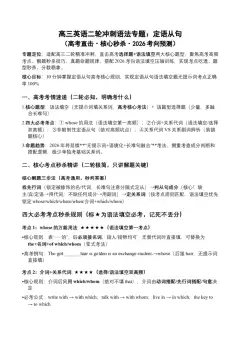
板块二:语法填空满分思维导图
板块三:传统节日之24 节气14 篇
01(25-26 高三上·湖北十堰·阶段练习)阅读下面短文,在空白处填入1 个适当的单词或括号内单词的正确
形式。
Chu Shu, or the End of Heat, is the 14th solar term in the traditional Chinese solar calendar,     1     (mark)
an important seasonal transition. This term,     2     original meaning was “taking a break”, has evolved to
indicate the end of the hot summer and the beginning of cooler autumn days. This period of time     3     (typical)
lasts from late August to early September.
Known for a variety of cultural and agricultural activities, the End of Heat is deeply rooted in Chinese tradition
and lifestyle and symbolizes     4     shift in weather patterns and agricultural practices. Although autumn is
approaching, regions, particularly in Southern China, may still experience occasional summer heat     5     (refer)
to as “autumn tigers”.
Agriculturally, farmers across China prepare for harvesting crops     6     rice and sorghum, which become
ripe during this time. This period also coincides (重合) with diverse    7     (ceremony) and expressions of
gratitude to the land.
One     8     (note) cultural practice during the End of Heat is ancestor worship (祭祖), which is closely
tied to the Zhongyuan Festival. This festival     9     (fall) on the 15th day of the Chinese lunar calendar. It is a
time to pay respects to ancestors through various rituals, including the floating of water lanterns. These lanterns in
the shape of lotus flowers are set to flow in rivers     10     (honor) the spirits and guide them in the afterlife.
【答案】1.marking    2.whose    3.typically    4.a    5.referred    6.like    7.ceremonies
8.notable    9.falls    10.to honor
【导语】本文是一篇说明文。文章主要介绍了中国传统节气“处暑”。
1.考查非谓语动词。句意:处暑是中国传统太阳历中的第14 个节气,标志着一个重要的季节过渡。本句
已有谓语动词is,此处mark 需作非谓语成分,主语Chu Shu 与mark 是主动关系,因此用现在分词marking
作伴随状语,补充说明处暑的作用。故填marking。
2.考查连词。句意:这个节气,其最初的含义是“休息”,如今已演变为表示炎热夏季的结束和凉爽秋
日的开始。此处引导非限制性定语从句,先行词是this term,从句中original meaning 与this term 是所属关
系,所以用关系代词whose 引导定语从句,在从句中作定语。故填whose。
3.考查副词。句意:这段时间通常从8 月末持续到9 月初。空格后lasts 是动词,此处需用副词修饰动词,
typically 表示“通常”。故填typically。
4.考查冠词。句意:处暑以多样的文化与农业活动闻名,深深植根于中国的传统与生活方式中,象征着
天气模式和农业习俗的一个转变。shift 是可数名词,此处泛指“一个转变”,用不定冠词,且shift 以辅音
音素开头。故填a。
5.考查非谓语动词。句意:尽管秋天临近,尤其是中国南方的地区,仍可能遭遇被称为“秋老虎”的间
歇性暑热。本句已有谓语动词may still experience,此处refer 需作非谓语成分,空格前summer heat 与refer
是被动关系,表示“被称为……”,用过去分词referred 作后置定语。故填referred。
6.考查介词。句意:在农业方面,中国各地的农民准备收割像水稻、高粱等农作物,这些作物在这段时
间成熟。此处表示举例,用介词like,表示“像……”。故填like。
7.考查名词。句意:这段时间也恰逢各种仪式和对土地感恩的表达。diverse 表示“多样的”,需接可数
名词复数,作宾语。故填ceremonies。
8.考查形容词。句意:处暑期间一个值得注意的文化习俗是祭祖,这与中元节密切相关。此处修饰名词
cultural practice,需用形容词作定语。故填notable。
9.考查谓语动词。句意:这个节日在中国农历的十五日。fall on 是固定短语,表示“(节日)适逢某日”,
主语this festival 是第三人称单数,且表示客观事实用一般现在时。故填falls。
10.考查非谓语动词。句意:这些莲花形状的灯笼被放入河中漂流,以纪念亡灵并指引它们往生。此句已
有谓语动词are set,honor 需作非谓语成分,此处动词不定式表目的,译为“为了纪念”。故填to honor。
02(25-26 高三上·黑龙江哈尔滨·阶段练习)阅读下面材料,在空白处填入适当的内容(只填1 个单词)或
括号内单词的正确形式。
White Dew, the 15th solar term in     1     24 solar terms of Chinese tradition, marks the end of early
autumn and signals the transition to mid-autumn, a period     2     the heat-cold balance undergoes a dramatic
shift. It arrives when the sun, after a journey across the celestial sphere (天球),     3     (reach) the longitude of
165 degrees, occurring annually between September 7th and 9th, a timing     4     (determine) by ancient
astronomical observations guiding agricultural activities for millennia (千年).
During this term, sweltering summer heat fades, and the air, once humid, becomes far     5     (fresh) than
before, carrying a crisp coolness in morning mist and evening breeze. The widening temperature gap     6     day
and night — often over 10℃ — causes water vapor to condense (凝结) into tiny droplets on leaves, their radiance (光辉)
in morning sunlight inspiring the poetic name “White Dew” passed down for     7     (generation).
Across China, diverse customs link to White Dew. In Nanjing, connoisseurs (鉴赏家) enjoy     8     (fresh)
picked White Dew Tea, whose flavor, characterized by mellow sweetness and subtle floral notes, differs from other
seasonal teas. In Fuzhou, locals follow the tradition of eating sweet longans, convinced     9     these fruits
nourish the body, alleviate fatigue, and enhance blood circulation — a belief rooted in TCM (传统中医) principles.
As weather cools, experts recommend adjusting clothing timely, especially after sunset to avoid chills, and
emphasize     10     (maintain) adequate warm water intake is key to preventing respiratory dryness from autumn
dryness.
【答案】 1.the    2.when    3.reaches    4.determined    5.fresher    6.between    7.
generations    8.freshly    9.that    10.maintaining
【导语】本文是一篇说明文。主要介绍中国传统二十四节气中的白露,包括其时间、气候特点、名称由来
及各地习俗。
1.考查冠词。句意:白露是中国传统二十四节气中的第十五个节气,标志着初秋的结束,也预示着向中
秋的过渡——这一时期冷热平衡发生剧烈变化。此处特指“中国传统的二十四节气”,24 solar terms 为特
指概念,用定冠词the。故填the。
2.考查定语从句。句意:白露是中国传统二十四节气中的第十五个节气,标志着初秋的结束,也预示着
向中秋的过渡——这一时期冷热平衡发生剧烈变化。此处为关系词引导的定语从句,先行词为a period,关
系词指代先行词在从句中作时间状语,用关系副词when。故填when。
3.考查动词时态。句意:当太阳在天球上运行到黄经165 度时,白露便到来了,每年在9 月7 日至9 日之
间,这一时间是由古代天文观测确定的,数千年来指导着农业活动。此处为谓语动词,描述客观规律,用
一般现在时,主语the sun 为第三人称单数,所以谓语动词用reaches。故填reaches。
4.考查非谓语动词。句意:当太阳在天球上运行到黄经165 度时,白露便到来了,每年在9 月7 日至9 日
之间,这一时间是由古代天文观测确定的,数千年来指导着农业活动。此处为非谓语动词,a timing 与
determine 为被动关系,用过去分词determined 作后置定语。故填determined。
5.考查形容词比较级。句意:在这个节气期间,酷暑消退,曾经潮湿的空气变得比以前清新得多,晨雾
和晚风都带着清爽的凉意。根据后文“than before”可知,此处用fresh 的比较级fresher,表“更清新的”。
故填fresher。
6.考查介词。句意:昼夜温差(通常超过10℃)加大,导致水汽在叶片上凝结成小水珠,这些水珠在晨
光中闪烁,催生了流传数代的诗意名称“白露”。此处为固定搭配“between day and night”,意为“昼夜之
间”,所以用介词between。故填between。
7.考查名词复数。句意:昼夜温差(通常超过10℃)加大,导致水汽在叶片上凝结成小水珠,这些水珠
在晨光中闪烁,催生了流传数代的诗意名称“白露”。generation 为可数名词,此处作介词for 的宾语,空
前无限定词,所以此处使用名词复数形式表示泛指意义,“for generations”意为“世代相传、数代以来”。
故填generations。
8.考查副词。句意:在南京,鉴赏家们喜欢喝刚采摘的白露茶,其口感醇厚甘甜,带着淡淡的花香,与
其他季节的茶不同。此处修饰过去分词picked,用fresh 的副词形式freshly,意为“刚刚、新近”。故填
freshly。
9.考查宾语从句。句意:在福州,当地人有吃甜龙眼的传统,他们相信这种水果能滋养身体、缓解疲劳、
促进血液循环——这一说法源于中医理论。此处为连接词引导的宾语从句,作convinced 的宾语,从句中
不缺少成分且句意完整,用连接词that,只起连接作用,无实际意义。故填that。
10.考查非谓语动词。句意:随着天气转凉,专家建议及时添衣,尤其是日落后,以防着凉,并强调保持
充足的温水摄入是预防秋季干燥引发呼吸道干燥的关键。emphasize 后跟省略连接词that 的宾语从句,
“________ (maintain) adequate warm water intake”在宾语从句中作主语,maintain 用动名词形式maintaining。
故填maintaining。
03(25-26 高二上·山东·开学考试)阅读下面短文,在空白处填入1 个适当的单词或括号内单词的正确形式。
According to the Chinese solar terms, during Major Heat, most parts of China experience the     1     (hot)
days of the year. On scorching summer days, we modern people can enjoy cold drinks in an air-conditioned room to
escape the heat. But how did ancient people cool down     2     these modern-day technologies?
As early as Pre-Qin Dynasty, people used natural ice to keep food fresh and make cold drinks. According to
the record in the Confucian classic Zhou Rites, the Zhou royal court had a specialized department called the “ice
administration” which had 80     3     (employee). The department     4     (collect) natural ice blocks each
December, and then transported them to the ice house for     5     (store).
Some senior officials were awarded ice cubes by the Zhou royal court,     6     was a big honor during
that time. The system of granting ice lasted until the Ming and Qing dynasties. During the Qing Dynasty, “ice
tickets”     7     (distribute) to officials instead of sending the ice directly to them.
The most commonly used cooling tool is called “Jian”, a big container     8     (fill) with ice. It was
made of ceramic (陶瓷) in early Chinese history, and was later made of copper. The “Jian” can be seen as     9
ancient refrigerator, which can be used     30     (make) cold drinks.
【答案】1.hottest    2.without    3.employees    4.collected    5.storage    6.which    7.
were distributed    8.filled    9.an    10.to make
【导语】本文是一篇说明文,主要讲的是中国古代在没有现代制冷技术的情况下,如何利用天然冰和特制
工具来降温避暑的方法。
1.考查最高级。句意:根据中国的节气,在大暑期间,中国大部分地区都经历了一年中最热的日子。空
前有the,空格处用最高级hottest,故填hottest。
2.考查介词。句意:但是,没有这些现代科技,古人是如何降温的呢?根据语境可知,句子表示“没有
这些现代科技,古人是如何降温的呢”,空格处意为“没有”,用介词without,故填without。
3.考查名词的复数。句意:根据儒家经典《周礼》的记载,周朝有一个专门的部门,叫做“冰政”,有
80 名雇员。空前有80,空格处用复数,故填employees。
4.考查时态。句意:该部门每年12 月收集天然冰块,然后将它们运送到冰窖储存。空处作谓语,由and
then transported 可知,句子时态是一般过去时,空格处用过去式,故填collected。
5.考查名词。句意:该部门每年12 月收集天然冰块,然后将它们运送到冰窖储存。空格处用名词作宾语,
store 的名词是storage,不可数名词,意为“储存”,故填storage。
6.考查定语从句。句意:一些高级官员被周王室授予冰块,这在当时是一项很大的荣誉。空格处引导的
是非限制性定语从句,从句中缺少主语,主语是前面整个主句的内容,因此用关系代词which 引导定语从
句,故填which。
7.考查时态,被动语态和主谓一致。句意:在清朝,“冰票”是分发给官员,而不是直接送冰给他们。
“冰票”是被分发,且描述过去的事情,因此句子用一般过去时的被动语态,主语“ice tickets”是复数,因
此空格处是were distributed,故填were distributed。
8.考查非谓语动词。句意:最常用的降温工具是一种名为“鉴”的大容器,里面装满了冰块。句中谓语
是is called,空格处用非谓语动词,container 和fill 之间是逻辑动宾关系,因此用过去分词表被动,作后置
定语,故填filled。
9.考查冠词。句意:这种“鉴”可以被视为一种古老的冰箱,可以用来制作冷饮。refrigerator 是可数名词
的单数形式,表泛指,前面要加不定冠词,ancient 是元音音素开头,因此不定冠词用an,故填an。
10.考查不定式。句意:这种“鉴”可以被视为一种古老的冰箱,可以用来制作冷饮。“鉴”可以被用来
做冷饮,sth. be used to do 意为“某物被用来做某事”,因此空格处用不定式to make,故填to make。
04(24-25 高二下·浙江·阶段练习)阅读下面短文,在空白处填入1 个适当的单词或括号内单词的正确形式。
The traditional Chinese solar calendar divides the year into 24 solar terms. Xiaoman, the 8th solar term of a
year,    1    (know) as Grain Buds, begins on May 21 this year, and ends on June 5. The name suggests that the
seeds from the grain are becoming full    2    are not ripe.
In China, the 24 solar terms   3     (create) thousands of years ago to guide agricultural production. But
4    solar term culture is still useful today to guide people’s lives through special foods, cultural    5    (ceremony),
gardening and even healthy living tips that correspond with each solar term. Let’s see    6    we can do during
the“Grain Buds” period.
During the Grain Buds period, summer harvest is about    7    (begin). A saying about rain during this
time mentions, “A heavy rainfall makes the river full.” Because of the great increase in rainfall, rivers are full of
water,    8    gives rise to great tasting fish and shrimps. It is harvest season for fishermen.
Silkworm rearing is a traditional byproduct for people in regions south of the Yangtze River. During the Grain
Buds season, silkworms have cocooned. People begin to cook cocoons and prepare the    9    (spin) wheel for
reeling silk. People in Jiangsu and Zhejiang provinces regard this season     10     the birthday of the silkworm
deity. Those who engage in the silk industry pray to the deity for blessings and a boom season for the silk business.
【答案】1.known    2.but    3.were created    4.the    5.ceremonies    6.what    7.to begin    8
.which    9.spinning    10.as
【导语】本文是一篇说明文,介绍了中国传统节气“小满”的文化内涵、农事活动及长江以南地区的养蚕
习俗,展现了节气文化在现代生活中的延续与影响。
1.考查非谓语动词。句意:小满是一年中的第八个节气,今年的小满从5 月21 日开始,到6 月5 日结束。
句中谓语是begins,空格处用非谓语动词,Xiaoman 和know 之间是逻辑动宾关系,因此用过去分词表被动,
作后置定语,故填known。
2.考查连词。句意:这个名字暗示着谷物的种子正在变得饱满,但还没有成熟。由are not ripe 可知,句子
表示“这个名字暗示着谷物的种子正在变得饱满,但还没有成熟”,空格处意为“但是”,因此用but,
故填but。
3.考查时态,被动语态和主谓一致。句意:在中国,24 节气是几千年前为指导农业生产而创造的。由
thousands of years ago 可知,句子时态是一般过去时,24 节气是被创造,因此用一般过去时的被动语态,主
语terms 是复数,因此be 动词用were,故填were created。
4.考查定冠词。句意:但是节气文化今天仍然有用,通过与每个节气相对应的特殊食物、文化仪式、园
艺甚至健康生活技巧来指导人们的生活。空格处用定冠词the 特指“节气文化”,故填the。
5.考查名词的复数。句意:但是节气文化今天仍然有用,通过与每个节气相对应的特殊食物、文化仪式、
园艺甚至健康生活技巧来指导人们的生活。ceremony 是可数名词,泛指不止一个,因此用复数,故填
ceremonies。
6.考查宾语从句。句意:让我们看看在“小满”期间我们可以做些什么。空格处引导宾语从句,从句中
缺少宾语,句子表示“让我们看看在“小满”期间我们可以做些什么”,因此用what 引导宾语从句,故填
what。
7.考查不定式。句意:在小满时节,夏收即将开始。be about to do 是固定短语,意为“即将做某事”,因
此空格处是不定式to begin。故填to begin。
8.考查定语从句。句意:由于降雨量的大幅增加,河流充满了水,这就产生了美味的鱼虾。空格处引导
非限制性定语从句,从句中缺少主语,主语是前面整个主句的内容,因此用which 引导定语从句,故填
which。
9.考查非谓语动词。句意:人们开始煮茧,准备纺车缫丝。spin 和wheel 之间是主谓关系,因此用现在分
词spinning 表主动,作定语,故填spinning。
10.考查介词。句意:江苏和浙江的人们把这个季节看作是蚕神的生日。regard...as...是固定短语,意为
“把……看作……”,因此空格处用介词as,故填as。
05(24-25 高二下·四川绵阳·期中)阅读短文内容,在空白处填入1 个适当的单词或括号内单词的正确形式。
The Qingming Festival (or Tomb Sweeping Day) is a traditional Chinese festival     1     (celebrate) on
the first day of the Qingming solar term. It usually falls on either April th or 5th of the Gregorian calendar, when
everything sheds the old to embrace the new. However beautiful the spring scenery is then, people won’t forget     2
the original meaning of this festival is.
The Qingming Festival     3     (start) over 2,500 years ago during the Zhou Dynasty. On that day,
emperors would offer sacrifices in honor of their ancestors     4     (pray) for wealth, peace and good harvests
for the country. In 732, Emperor Xuanzong of the Tang Dynasty stated respect must be paid at ancestors’ graves.
Over time, this developed into the tomb-sweeping tradition. So far, the Qingming Festival     5     (observe) by the
Chinese for over 2,500 years, and it became a public holiday in China in 2008. It is a time for many different activities,
among     6     the main ones are tomb sweeping, a spring outing and kite flying.
The day before Tomb Sweeping Day was the traditional Chinese Cold Food Day in ancient China. With time
7     (pass), the two festivals were gradually combined into one. The traditional Qingming festival foods include
sweet green rice balls, peach blossom porridge, crispy cakes and eggs. These foods are usually cooked one or two
days before the arrival of the Qingming Festival. Besides China, many other     8     (country) also celebrate
Qingming Festival, such as Vietnam, Japan and South Korea.
As a solar term, the Qingming Festival not only embodies the     9     (wise) of Chinese people who attach
great importance to living in harmony      10      the rhythms of nature, but also records the sentiments and
philosophical reflections of the Chinese people.
【答案】1.celebrated    2.what    3.started    4.to pray    5.has been observed    6.which
7.passing    8.countries    9.wisdom    10.with
【导语】本文是一篇说明文。文章介绍了清明节。
1.考查非谓语动词。句意:清明节(或扫墓节)是中国的一个传统节日,在清明节气的第一天庆祝。
“(celebrate) on the first day of the Qingming solar term”作后置定语,celebrate(庆祝)是非谓语动词,与其逻辑
主语“a traditional Chinese festival”之间是被动关系,用过去分词表被动。故填celebrated。
2.考查宾语从句。句意:然而,无论那时的春光多么美丽,人们都不会忘记这个节日的初衷是什么。
“____ the original meaning of this festival is”是宾语从句,从句中缺少表语,结合句意,表示“什么”,用
连接代词what 引导该从句。故填what。
3.考查时态。句意:清明节始于2500 多年前的周朝。start(开始)是谓语动词,与主语The Qingming
Festival 之间是主动关系,根据时间状语“over 2,500 years ago”可知,讲述过去发生的事情,用一般过去时
态。故填started。
4.考查非谓语动词。句意:在那天,皇帝们会祭祀祖先,为国家祈求财富、和平和丰收。“(pray) for
wealth, peace and good harvests for the country”是“offer sacrifices in honor of their ancestors”的目的,用不定
式作目的状语。故填to pray。
5.考查时态语态和主谓一致。句意:到目前为止,中国人已经过了2500 多年的清明节,它在2008 年成为
中国的一个公共假日。observe(庆祝)是谓语动词,与主语“The Qingming Festival”之间是被动关系,结合时
间状语“So far”可知,讲述从过去持续到现在的动作,用现在完成时的被动语态,主语是专有名词,谓语
动词用单数形式;综上,谓语动词用现在完成时的被动语态,单数形式。故填has been observed。
6.考查定语从句。句意:这是一个进行许多不同活动的时间,其中主要的活动是扫墓、春游和放风筝。
“among ____ the main ones are tomb sweeping, a spring outing and kite flying”是“介词+关系代词”引导的非
限制性定语从句,修饰先行词“many different activities”,指物,关系词将其代入从句中作宾语,用关系代
词which 引导从句。故填which。
7.考查非谓语动词。句意:随着时间的推移,这两个节日逐渐合二为一。“ With time ____(pass)”是with
复合结构,pass(流逝)是非谓语动词,与其逻辑主语time 之间是主动关系,用现在分词表主动。故填
passing。
8.考查名词。句意:除了中国,许多其他国家也庆祝清明节,如越南、日本和韩国。可数名词country(国
家)作主语,有“many other”修饰,用复数形式。故填countries。
9.考查名词。句意:作为一个节气,清明节不仅体现了中国人重视与自然节奏和谐相处的智慧,也记录
了中国人的情感和哲学思考。提示词作宾语,用名词wisdom,意为“智慧”,不可数名词。故填
wisdom。
10.考查介词。句意:作为一个节气,清明节不仅体现了中国人重视与自然节奏和谐相处的智慧,也记录
了中国人的情感和哲学思考。in harmony with 是固定短语,意为“与……和谐相处”。故填with。
06(2025·湖北·模拟预测)阅读下面短文,在空白处填入1 个适当的单词或括号内单词的正确形式。
“Grain Rain”, known as “Gǔyǔ” in Chinese, is one of the 24 solar terms in the traditional Chinese calendar.
It    1    (usual) falls around April 20th each year and marks the last solar term of spring. The name “Grain Rain”
signifies the key period for the growth of grains, as this is    2    rainfall increases significantly, providing essential
water for crops to grow and    3    (lead) to a more fruitful harvest.
In addition to its agricultural significance, Grain Rain is associated with cultural practices and traditions. For
instance, it is    4    time when people in some regions of China drink tea made from freshly    5    (pick) tea
leaves, as it is believed to have health    6    (benefit). It is also common for people    7     (engage) in
activities such as paying respect to ancestors. Moreover, many classical Chinese poems celebrate this time of year,
emphasizing the beauty of spring and the life-giving property of rain.
Overall, Grain Rain is a time that    8    (highlight) the importance of rain in agriculture and reflects the
close relationship    9    traditional Chinese culture and the natural world. It is a period that not only supports
agricultural productivity    10    also enriches cultural traditions and practices, stressing the harmonious balance
between humans and nature.
【答案】1.usually    2.when    3.leading    4.a    5.picked    6.benefits    7.to engage

8.highlights    9.between    10.but
【导语】本文是一篇说明文。文章主要介绍了谷雨的时间、对农业的意义,以及相关文化习俗,体现其对
农业和文化的重要性。
1.考查副词。句意:它通常在每年的4 月20 日左右,标志着春季的最后一个节气。空处修饰动词falls,
应用副词usually“通常”,作状语。故填usually。
2.考查表语从句。句意:“谷雨”这个名字标志着谷物生长的关键时期,因为此时降雨量显著增加,为
作物生长提供了必要的水分,带来了更丰硕的收获。空处引导表语从句,从句中缺少时间状语,应用连接
副词when 引导。故填when。
3.考查非谓语动词。句意:“谷雨”这个名字标志着谷物生长的关键时期,因为此时降雨量显著增加,
为作物生长提供了必要的水分,带来了更丰硕的收获。空处与providing 并列,作伴随状语,provide 与lead
之间是并列关系,应用现在分词形式leading。故填leading。
4.考查冠词。句意:例如,在中国的一些地区,人们会在这个时候喝用新鲜采摘的茶叶制成的茶,因为
人们认为它对健康有益。此处泛指“一个时候”,应用不定冠词,time 以辅音音素开头,应用不定冠词
a。故填a。
5.考查非谓语动词。句意:例如,在中国的一些地区,人们会在这个时候喝用新鲜采摘的茶叶制成的茶,
因为人们认为它对健康有益。空处修饰tea leaves,tea leaves 与pick 之间是被动关系,应用过去分词形式
picked,作定语。故填picked。
6.考查名词。句意:例如,在中国的一些地区,人们会在这个时候喝用新鲜采摘的茶叶制成的茶,因为
人们认为它对健康有益。结合语意可知,此处表示不止一个益处,应用名词benefit 的复数形式benefits,
作宾语。故填benefits。
7.考查非谓语动词。句意:人们也常常会进行祭祖等活动。固定句型It is+adj.+for sb. to do sth.“对某人来说
做某事是……的”,其中it 作形式主语,动词不定式形式作真正的主语,所以空处应用动词不定式形式to
engage。故填to engage。
8.考查主谓一致。句意:总的来说,谷雨是一个凸显雨水在农业中的重要性,反映了中国传统文化与自
然世界之间密切关系的时节。根据句中is 和reflects 可知,句子使用一般现在时,that 引导定语从句,修饰
先行词a time,that 在从句中作主语,从句的谓语动词highlight 应用第三人称单数形式highlights。故填
highlights。
9.考查介词。句意:总的来说,谷雨是一个凸显雨水在农业中的重要性,反映了中国传统文化与自然世
界之间密切关系的时节。固定搭配relationship between... and...表示“……与……之间的关系”,所以空处应
用介词between。故填between。
10.考查连词。句意:这是一个不仅有助于农业生产,而且丰富了文化传统和习俗的时期,强调了人与自
然之间的和谐平衡。固定句型not only... but (also)...表示“不但……而且……”,所以空处应用连词but。故
填but。
07(2025·江苏·二模)阅读下面短文,在空白处填入1 个适当的单词或括号内单词的正确形式。
The traditional Chinese solar calendar divides the year into 24 solar terms. Start of Winter, (Chinese: 立冬),
the 19th solar term of the year, begins this year on Nov 7    1    ends on Nov 21. Start of Winter is the first solar term
of winter, which means winter is coming and crops    2    (harvest) in autumn should be stored up.
On the first day of Start of Winter, there is a custom, “nourishing the winter”, in Southeast China in places
such as Fujian, Guangdong and Taiwan provinces.    3    (prepare) for the oncoming cold winter, people there
like to eat high-calorie food such as chicken, duck, beef, mutton, and fish,    4    are usually stewed with the four
Chinese medicines (angelica, ligusticum wallichii, Chinese herbaceous peony and rehmannia glutinosa libosch) to
enhance the    5    (effective) of the nourishment.
In Tianjin, on the first day of Start of Winter, people eat dumplings stuffed with Chinese pumpkins (wogua).
It is a common vegetable in North China.    6    (general), the pumpkins are bought in the summer and stored
7    the Start of Winter when they are taken out.
On the first day of Start of Winter, people in Wuxi have a custom of eating tuanzi, a kind of    8    (tradition)
Chinese food made with rice. At this time, the autumn grain crops have just been sold on the market, and the tuanzi
made by the newly-harvested crops    9    (taste) delicious. Most rural residents make tuanzi by     10     (they),
while urban residents buy ready-made tuanzi. The tuanzi stuffing can be sweet bean paste, radish or lard.
【答案】1.and    2.harvested    3.To prepare    4.which    5.effectiveness    .Generally
7.until    8.traditional    9.tastes    10.themselves
【导语】本文是一篇说明文。文章介绍了中国传统二十四节气中的“立冬”以及与之相关的饮食习俗。
1.考查连词。句意:立冬,作为一年中的第19 个节气,今年从11 月7 日开始,至11 月21 日结束。空处
连接前后两个谓语,两者之间是顺承关系,应用并列连词and。故填and。
2.考查非谓语动词。句意:立冬是冬季的第一个节气,意味着冬天即将来临,秋季收获的庄稼应该储存
起来。句子已有谓语,空处是非谓语,作crops 的后置定语,harvest“收获”和crops 逻辑上是被动关系,
因此用harvest 的过去分词形式。故填harvested。
3.考查非谓语动词。句意:为了对即将到来的寒冷冬季做准备,人们喜欢食用高热量食物,如鸡肉、鸭
肉、牛肉、羊肉和鱼,这些食物通常与四种中药材(当归、川芎、白芍和熟地黄)一起炖煮,以增强滋补
效果。句子已有谓语,空处是非谓语,作目的状语,表示“为了……”,应用prepare“准备”的不定式形
式,句首单词的首字母需大写。故填To prepare。
4.考查定语从句。句意:为了对即将到来的寒冷冬季做准备,人们喜欢食用高热量食物,如鸡肉、鸭肉、
牛肉、羊肉和鱼,这些食物通常与四种中药材(当归、川芎、白芍和熟地黄)一起炖煮,以增强滋补效果。
空处引导非限制性定语从句,对先行词chicken, duck, beef, mutton, and fish 作补充说明,先行词指物,在从
句中作主语,应用关系代词which 作引导词。故填which。
5.考查名词。句意:为了对即将到来的寒冷冬季做准备,人们喜欢食用高热量食物,如鸡肉、鸭肉、牛
肉、羊肉和鱼,这些食物通常与四种中药材(当归、川芎、白芍和熟地黄)一起炖煮,以增强滋补效果。
空处作enhance 的宾语,名词effectiveness 符合题意,意为“ 有效性” ,是不可数名词。故填
effectiveness。
6.考查副词。句意:通常,南瓜在夏季购买并储存,直到立冬时取出食用。空处修饰整个句子,副词
generally 符合题意,意为“通常”,句首单词的首字母需大写。故填Generally。
7.考查介词。句意:通常,南瓜在夏季购买并储存,直到立冬时取出食用。空后为名词短语the Start of
Winter,结合“the pumpkins are bought in the summer”可推知,此处指“存储到立冬时”,应用介词until 表
示“到……时,直到……为止”。故填until。
8.考查形容词。句意:团子是一种用米制成的中国传统食物。空处作修饰food 的定语,形容词traditional
符合题意,意为“传统的”。故填traditional。
9.考查动词时态和主谓一致。句意:此时,秋季粮食作物刚刚上市,用新收获的粮食制作的团子味道鲜
美。空处作句子的谓语,此处在描述通常性的事实,时态应用一般现在时,主语the tuanzi 是单数,taste“尝
起来”应用第三人称单数形式。故填tastes。
10.考查代词。句意:大多数农村居民会自己制作团子,而城市居民则购买现成的团子。固定搭配by
oneself,表示“亲自,靠自己”。故填themselves。
08(24-25 高二下·内蒙古巴彦淖尔·阶段练习)阅读下面短文,在空白处填入1 个适当的单词或括号内单词
的正确形式。
The traditional Chinese lunar calendar divides the year into 24 solar terms. Minor Cold, the 23rd solar term,
usually falls     1     early January. It is the coldest time of the year when the cold air from the north reaches
2     (it) peak.
During Minor Cold, people often experience freezing temperatures. The wind blows     3     (strong),
making it feel even colder. In nature, most rivers and lakes     4     (freeze) over, and animals start to seek     5
(warm) shelters.     6     the weather is harsh, it also brings some unique sceneries. The plum blossoms,
braving the cold, begin to bloom, adding    7      touch of color to the white world. Some people like to go out
to enjoy the beauty of the snow-covered landscape. There are also     8     (vary) traditional customs. For
example, in some regions, people eat glutinous rice to keep warm. In addition, it is a good time for people     9
(prepare) for the coming Spring Festival. They clean their houses and buy new year goods. Minor Cold not only
represents a season of coldness but also     10     (carry) people’s anticipation for the warmth and vitality of
spring.
【答案】1.in    2.its    3.strongly    4.are frozen    5.warmer    6.Although/Though/While
7.a    8.various    9.to prepare    10.carries
【导语】本文是一篇说明文。文章主要介绍了中国节气小寒的特点及相关习俗。
1.考查介词。句意:小寒是第23 个节气,通常在1 月初。表示“在某月”用介词 in,根据early January
可知,此处用介词in。故填in。
2.考查代词。句意:这是一年中最冷的时候,来自北方的冷空气达到顶峰。本空修饰名词peak,应用形
容词性物主代词its,表示“它的”。故填its。
3.考查副词。句意:风刮得很大,让人感觉更冷。本空修饰动词blows,作状语,应用副词strongly“猛烈
地”。故填strongly。
4.考查动词语态。句意:在自然界中,大多数河流和湖泊都被冻结了,动物开始寻找更温暖的庇护所。
本空在句中作谓语,句子描述一般性事实,时态应用一般现在时,主语most rivers and lakes 和动词
freeze“使结冰”之间是被动关系,应用一般现在时的被动语态,主语是复数,be 动词用are。故填are
frozen。
5.考查形容词比较级。句意同上。本空修饰名词shelters,表示“更温暖的”,用形容词比较级warmer,
作定语。故填warmer。
6.考查连词。句意:虽然天气很恶劣,但它也带来了一些独特的风景。上下文之间是转折关系,应用
although/though/while 引导让步状语从句,句首单词首字母大写。故填Although/Though/While。
7.考查冠词。句意:梅花冒着严寒开始绽放,为白色的世界增添了一抹色彩。a touch of 是固定短语,表示
“一点,少许”。故填a。
8.考查形容词。句意:还有各种各样的传统习俗。本空修饰名词customs,应用形容词various“各种各样
的”,作定语。故填various。
9.考查非谓语动词。句意:此外,这也是人们为即将到来的春节做准备的好时机。it 为形式主语,应用
prepare“准备”的不定式to prepare,作真正的主语。故填to prepare。
10.考查时态。句意:小寒不仅代表着寒冷的季节,也承载着人们对春天温暖和活力的期待。本空在句中
作谓语,句子描述一般性事实,时态应用一般现在时,主语Minor Cold 是第三人称单数,谓语动词用
carry“携带,承载”的第三人称单数形式。故填carries。
09(24-25 高一下·江苏盐城·期中)阅读下面短文,在空白处填入1 个适当的单词或括号内单词的正确形式。
The “Spring Festival, social practices of the Chinese people in celebration of the traditional NewYear” was
added to the UNESCO Representative List of Intangible Cultural Heritage (ICH, 非遗) on December 4, 2024. This
means the world recognises China’s efforts      1      (protect) its important traditional treasures.
China now has about 870,000 pieces of ICH, 44 of      2      are listed by UNESCO, more than any other
country. Some examples include the 24 Solar Terms, Peking Opera, and the Mazu belief. The news is      3

universally acknowledged proof of China’s rich cultural diversity, which shows that China focuses on protecting and
promoting (推广) its many different cultural practices. The Spring Festival is not just one tradition,      4      a
cultural event that includes many different      5      (region) customs and celebrations.
“The Spring Festival is rich in content and includes      6      (various) of intangible cultural heritage
forms,” said Zheng Changling, a researcher at the Chinese National Academy of Arts. During the festival, people
celebrate by doing things      7      putting up New Year paintings, making paper-cuts, performing dragon and
lion dances, and enjoying opera performances. All of these traditions      8      (entire) make up the cultural
richness of the Spring Festival. As the Spring Festival     9     (celebrate) internationally, these related ICH
forms will also reach other parts of the world. Besides the heritage practices themselves,      10      will also
become known to people all over the world is the deeper cultural values and meanings behind them.
【答案】1.to protect    2.which    3.a    4.but    5.regional    6.varieties    7.like    8.
entirely    9.is celebrated    10.what
【导语】这是一篇说明文。文章介绍了2024 年12 月4 日春节被列入联合国教科文组织非物质文化遗产代
表名录,阐述中国非遗现状及春节丰富的文化内涵。
1.考查非谓语动词。句意:这意味着世界认可中国为保护其重要传统财富所做的努力。efforts 后使用动词
不定式作定语,故填to protect。
2.考查定语从句。句意:中国目前拥有约87 万件非物质文化遗产,其中44 件被联合国教科文组织列入名
录,比其他任何国家都多。此处是“介词短语+关系代词”引导的非限制性定语从句,先行词是870,000
pieces of ICH,关系词在从句中作介词宾语,应用关系代词which,故填which。
3.考查冠词。句意:这一消息是中国丰富的文化多样性的公认证明,这表明中国注重保护和促进其许多
不同的文化习俗。proof 在此处作可数名词,表示泛指,使用不定冠词修饰,且universally 的发音是辅音音
素开头,故填a。
4.考查连词。句意:春节不仅仅是一个传统,而是一个文化事件,包括许多不同的地区习俗和庆祝活动。
not just…but…“不仅……而且……”,故填but。
5.考查形容词。句意同上。空处修饰名词customs,应填形容词作定语,故填regional。
6.考查固定短语。句意:中国艺术研究院研究员郑长玲表示:“春节内容丰富,包括多种非物质文化遗
产形式。”varieties of“各种各样的”,固定短语,故填varieties。
7.考查介词。句意:在节日期间,人们通过张贴年画、剪纸、舞龙舞狮、欣赏戏曲表演等活动来庆祝。
空后是对things 举例,此处使用介词like“例如,像”,故填like。
8.考查副词。句意:所有这些传统构成了春节丰富的文化。空处修饰动词短语make up,应填副词作状语,
故填entirely。
9.考查时态、语态和主谓一致。句意:随着春节在全球范围内的庆祝,这些相关的非物质文化遗产形式
也将传播到世界其他地方。As 引导的状语从句描述一个事实,且主语the Spring Festival 和动词celebrate 之
间是被动关系,使用一般现在时的被动语态,主语表示单数意义,be 动词使用is,故填is celebrated。
10.考查主语从句。句意同上。空处引导主语从句,引导词在从句中作主语,指物,应用连接代词what 引
导,故填what。
10(24-25 高二上·云南昆明·期中)阅读下面短文,在空白处填入适当的内容(1 个单词)或括号内单词的
正确形式。
The Summer Solstice, or xiazhi,     1     (fall) on June 21 this year, is the forth solar term of the summer and the
10th of all the 24 solar terms. On this day, the Northern Hemispheresees the longest day of the year. After this day,
daylight hours become     2     (short).
In ancient times, xiazhi,     3     major festival in the Song Dynasty (960-1279), provided officials with
a three-day holiday. A grand ceremony,     4     (lead) by the emperor, was held on the Summer Solstice during
the Ming (1368-1644) and Qing (1644-1911) dynasties.
Today, people still celebrate the solar term with delicious food and meaningful events. Since the Summer
Solstice is often a time     5     people harvest wheat, it is a tradition for people    96     (eat) noodles. The
Summer Solstice festival in Dengreng, Henan province, includes an event where nearly a thousand people eat noodles
together.
As the Summer Solstice     7     (represent) the longest day, some environmental advocates encourage
turning    8     lights for a couple of hours in order to save energy. Related     9     (activity) have been,
held in many cities across China. Besides China, many countries around the world also attach great     10

(important) to this day. On its eve, in England, people gather at Stonehenge to welcome the rise of the sun.
【答案】1.falling    2.shorter    3.a    4.led    5.when    6.to eat    7.represents    8.
off    9.activities    100.importance
【导语】这是一篇说明文。短文介绍了夏至的相关信息。
1.考查非谓语动词。句意:夏至,或称夏至节,今年在6 月21 日,是夏季的第四个节气,也是24 个节气
中的第十个。该句已有谓语is,空处应使用其非谓语形式,分析句子可知,主语与fall 是逻辑上的主动关
系,因此可使用现在分词作定语修饰The Summer Solstice。故填falling。
2.考查形容词比较级。句意:那天过后,白天变得更短。根据常识可知夏至之后白昼时间会变得更短,
因此可使用其比较级形式。故填shorter。
3.考查冠词。句意:在古代,夏至是宋代的一个重要节日,为官员提供了三天的假期。此处泛指“一个
重要节日”,且major 为辅音音素开头的单词,可使用不定冠词a。故填a。
4.考查非谓语动词。句意:在明清时期,皇帝主持了一个盛大的仪式。句中已有谓语was,空处应使用非
谓语形式,主语ceremony 与lead 是逻辑上的动宾关系,且空处作后置定语修饰ceremony,应用过去分词
形式。故填led。
5.考查定语从句。句意:由于夏至通常是人们收获小麦的时候,吃面条是一个传统。该句为定语从句,
先行词为time,关系词在从句中作时间状语,应用when。故填when。
6.考查非谓语。句意:由于夏至通常是人们收获小麦的时候,吃面条是一个传统。分析句子可知,该句
为it is+n. for sb.+ to do sth.固定句型,意为“对某人来说做某事是……”,空处可使用不定式。故填to eat。
7.考查时态和主谓一致。句意:由于夏至代表最长的一天,一些环保倡导者鼓励关灯几个小时以节约能
源。主语为The Summer Solstice,谓语动词用第三人称单数形式,陈述客观事实用一般现在时。故填
represents。
8.考查介词。句意:同上。根据save energy(节约能源)可知,此处鼓励“关掉”电灯,可使用固定短语
turn off,表示“关掉”。故填off。
9.考查名词复数。句意:相关活动已在中国许多城市举行。根据have been 可知,该句主语为复数形式,
activity(活动)为可数名词,空处应使用其复数形式。故填activities。
10.考查名词。句意:除了中国,世界上许多国家也非常重视这一天。此处为固定短语attach importance
to,意为“重视”。故填importance。
11(24-25 高二上·陕西西安·期中)阅读下面短文,在空白处填入 1 个适当的单词或括号内单词的正确形式。
The traditional Chinese solar calendar divides the year into 24 solar    1   (term). Start of Autumn, the 13th
solar term of the year,    2   (begin) this year on Aug 7 and ends on Aug 21. Start of Autumn reflects the end of
summer and the beginning of autumn. The fruitful season is approaching.
In China, the 24 solar terms    3   (create) thousands of years ago to guide agricultural production. But
solar term culture is still useful today to guide    4   (people) lives through special foods, cultural    5   (ceremony)
and even healthy living tips that correspond with each term.
The following are things you should know about Start of Autumn.
‘Autumn Tiger’
Although Start of Autumn indicates the beginning of autumn, hot weather will not come to an end. The period
of hot days after Start of Autumn, usually    6   (last) for 30 days, is called “Autumn Tiger” or “Indian Summer.”
Because of decreasing precipitation (降水), it is even hotter during this period than during Major Heat.
Fleshing out in autumn
On the first day of the Start of Autumn, usually people will weigh    7   (they) and compare their weight
8    what it was at the Start of Summer. If one has lost weight during the summer, then at the beginning of autumn, he
or she needs to flesh out by eating many different kinds of delicious food,    9   (especial) meat.
Gathering crops
Start of Autumn is     10     big solar term for farmers. It is time to gather crops. There is a saying: “If it
rains on the day of the Start of Autumn, a good harvest is expected.”
【答案】1.terms    2.begins    3.were created    4.people’s    5.ceremonies    6.lasting
7.themselves    8.to/with    9.especially    10.a
【导语】本文为一篇说明文,介绍了中国节气之一——立秋的历史由来和相关习俗。
1.考查名词。句意:中国传统的阳历将一年分为24 个节气。solar term 意思为:节气,term 为可数名词,
结合24 可知,此处用名词复数形式。故填terms。
2.考查动词时态。句意:立秋是每年的第13 个节气,今年的立秋始于8 月7 日,结束于8 月21 日。空处
与ends 并列,用一般现在时,主语为Start of Autumn,看作单数,谓语动词用第三人称单数形式。故填
begins。
3.考查动词时态和语态。句意:在中国,24 节气是数千年前用来指导农业生产的。根据thousands of years
ago 可知,句子描述过去的事情,且主语the 24 solar terms 与create 构成被动关系,用一般过去时的被动语
态,主语为复数。故填were created。
4.考查名词所有格。句意:但是节气文化在今天仍然很有用,通过与每个节气相对应的特殊食物、文化
仪式甚至健康的生活技巧来指导人们的生活。表示“人们的”修饰lives,用所有格形式。故填people’s。
5.考查名词。句意同上。ceremony 为可数名词,此处用名词复数表示泛指。故填ceremonies。
6.考查非谓语动词。句意:立秋后炎热的日子,通常持续30 天,被称为“秋老虎”。句子的谓语为is
called,空处修饰the period 作定语,period 与last 构成主动关系,用现在分词。故填lasting。
7.考查代词。句意:在立秋的第一天,人们通常会称自己的体重,并与立夏时的体重进行比较。空处作
weigh 的宾语,表示“他们自己”用反身代词themselves。故填themselves。
8.考查介词。句意同上。compare…to/with…意思为:将……和……比较。故填to/with。
9.考查副词。句意:如果一个人在夏天瘦了,那么在秋天的开始,他或她需要通过吃各种各样的美味的
食物,特别是肉类来增肥。表示“尤其”,与前文用逗号隔开,用副词作状语,引出例子。故填
especially。
10.考查冠词。句意:立秋对农民来说是一个很大的节气。solar term 为可数名词单数词组,表示泛指,用
不定冠词,且big 以辅音音素开始发音,不定冠词用a。故填a。
12(24-25 高一下·四川成都·阶段练习)语法填空
The traditional Chinese calendar divides the year into 24 solar terms. Jingzhe ( 惊蛰), or Awakening of
Insects,    1    (fall) on March 5 and ends on March 20 this year.
The solar term signals a rise in temperature and increased rainfall,    2    (mark) the third solar term in the solar
year. Its name alludes to (暗指) the awakening of animals sleeping in winter and everything beginning to come
back    3    life.
Jingzhe is an extremely important time for farmers and    4    (see) as the beginning of the busiest time for
agricultural work. Old Chinese    5    (say) such as “once Jingzhe comes, spring plowing (春耕) never rests”
reveal the importance of this term to farmers. During this period, most parts of China experience a rapid increase in
temperatures and a marked increase in sunshine,    6    provide the ideal conditions for farming activities.
Eating pears around Awakening of Insects is    7    widely practiced custom in China. One theory behind
the practice is that as the Chinese word for “pear” sounds the same as the character meaning “to leave”, consuming
pears during this solar term showed people’s wish    8    (drive) away pests from crops so that there would be a
good harvest throughout the year.    9    (additional), according to theories of traditional Chinese medicine, the
sweet, juicy and cold fruit can be good for the lungs to prevent coughs     10     the weather warms up and the
air becomes dry.
【答案】1.falls    2.marking    3.to    4.is seen    5.sayings    6.which    7.a    8.to
drive    9.Additionally    10.as/when
【导语】本文是一篇说明文。文章介绍了中国传统节气惊蛰的相关知识,包括时间、气候特点、对农事的
重要性以及吃梨的习俗和原因。
1.考查动词时态。句意:惊蛰,今年从3 月5 日开始,到3 月20 日结束。句子描述的是客观事实,应用
一般现在时。主语Jingzhe(惊蛰)是第三人称单数,所以谓语动词fall 要用第三人称单数形式falls。故填
falls。
2.考查非谓语动词。句意:这个节气标志着气温上升和降雨量增加,是一年中第三个节气。空白处在句
子中做状语,使用非谓语动词。空白处与前面整个句子“The solar term signals a rise in temperature and
increased rainfall”表达的含义之间是逻辑上的主谓关系,所以用现在分词marking 作结果状语。故填
marking。
3.考查介词。句意:它的名字暗指冬眠的动物苏醒,万物开始复苏。come back to life 是固定短语,意为
“苏醒过来;恢复生机”,to 是介词。故填to。
4.考查动词语态。句意:惊蛰对农民来说是一个极其重要的时间,被视为农业工作最繁忙时期的开始。
句子描述的是客观事实,应用一般现在时。主语Jingzhe 与动词see 之间是被动关系,所以要用被动语态。
又因为主语是第三人称单数,be 动词用is,故填is seen。
5.考查名词。句意:中国的古老谚语,如“过了惊蛰节,锄头不停歇”,揭示了这个节气对农民的重要
性。空白处在句子中做主语,使用名词,根据后面的“once Jingzhe comes, spring plowing (春耕) never
rests(过了惊蛰节,锄头不停歇)”可知,这里说的是“谚语”,saying 作“谚语;俗语”含义讲时是可数名
词,根据谓语动词reveal 未使用单数第三人称形式可判断出本句主语为复数,所以空白处要用复数形式
sayings。故填sayings。
6.考查定语从句。句意:在此期间,中国大部分地区气温迅速上升,日照明显增加,为农业活动提供了
理想的条件。这里需要一个关系词引导非限制性定语从句,先行词是“a rapid increase in temperatures and a
marked increase in sunshine”,指物,关系词在从句中作主语,所以用关系代词which 引导。故填which。
7.考查冠词。句意:惊蛰吃梨是中国广泛流传的习俗。custom 是可数名词,此处表示“一个广泛流传的
习俗”,表泛指,且widely 是以辅音音素开头的单词,所以用不定冠词a。故填a。
8.考查非谓语动词。句意:这种做法背后的一种理论是,因为汉语中“梨”的发音与“离”相同,在这
个节气吃梨表达了人们希望赶走庄稼上的害虫,以便全年都有好收成。空白处在句子中作后置定语,且表
示的是指向将来的不确定的动作,使用动词不定式。故填to drive。
9.考查副词。句意:此外,根据中医理论,这种甜、多汁且性凉的水果对肺部有益,可以在天气转暖、
空气变干时预防咳嗽。此处应用副词作状语,修饰整个句子,additional 的副词形式是additionally,位于句
首,首字母要大写。故填Additionally。
10.考查状语从句。句意:同上。本句为包含状语从句的复合句,根据“the weather warms up and the air
becomes dry(天气转暖、空气变干)”可知,这里表示“当天气转暖、空气变干时”,可判断出此处为时间状
语从句,所以可以用as 或when 引导时间状语从句。故填as 或when。
13(24-25 高二上·山西晋城·阶段练习)阅读下面短文,在空白处填入1 个适当的单词或括号内单词的正确
形式。
According to the traditional Chinese calendar, the year     1    (divide) into 24 solar terms(节气). The 20th
of them is Minor Snow (xiaoxue),     2     refers to the time when it starts to snow, mostly in China’s northern
areas.
    3     ancient Chinese book about plants explains that “in Minor Snow, the weather is cold and it is
going to snow, while the earth is not frozen enough and the snow is light.” The temperature in most areas in the north
drops     4     zero degrees and below.
In China, starting in Minor Snow, the wind blows from the northeast a lot. Because it’s still not    5
(extreme) cold, many people do not wear hats or     6    (scarf) yet.
During Minor Snow, indoor heating begins to work,     7    (mean) the air indoors is dry. According to
traditional Chinese medicine, this increasing “inner heat” in one’s body can cause problems. The     8    (solve) is
to drink more hot soup, such as cabbage and bean curd soup.
After Minor Snow, the temperature drops sharply. It is the best time     9    (start) making preserved
pork(腊肉), which by the Chinese Spring Festival would be ready to enjoy. In the past, when storage conditions were
poor, people      10     (develop) many ways to store food like preserved pork. So even in the hard winter, the
whole family could enjoy meat. Some even say preserved pork tastes more delicious than fresh meat.
【答案】1.is divided    2.which    3.An    4.to    5.extremely    6.scarves    7.meaning
8.solution    9.to start    10.developed
【导语】这是一篇说明文。文章介绍中国24 节气中的小雪。
1.考查时态、语态和主谓一致。句意:根据中国传统历法,一年分为24 个节气。根据句意,该句描述客
观事实,应用一般现在时。动词divide 与主语the year 之间存在被动关系,应用一般现在时的被动语态。主
谓一致,故填is divided。
2.考查定语从句。句意:其中第20 个节气是小雪,指的是开始下雪的时间,主要在中国北方地区。分析
句子结构可知,空处引导非限制性定语从句,先行词是Minor Snow,指代事物,用关系代词which 引导从
句,在从句中作主语。故填which。
3.考查冠词。句意:一本关于植物的中国古书解释说:“小雪,天气寒冷,即将下雪,而土地还没有完
全冻结,雪还很轻。” 此处book 为可数名词单数,应用不定冠词表泛指,所连接的单词ancient 的发音以
元音音素开头。句首字母应大写,故填An。
4.考查介词。句意:北方大部分地区的气温降至零度及以下。drop to“下降到”为固定搭配。故填to。
5.考查副词。句意:因为天气还不是很冷,很多人还没有戴帽子或围巾。修饰形容词cold 应用副词。故
填extremely。
6.考查名词复数。句意:因为天气还不是很冷,很多人还没有戴帽子或围巾。根据前面并列的hats 可知,
此处用名词复数。故填scarves。
7.考查非谓语动词。句意:小雪期间,室内供暖开始工作,这意味着室内空气干燥。该句的谓语是
begins,空处应用非谓语动词,mean 与前面一句话之间是主动关系,应用现在分词作状语。故填
meaning。
8.考查名词。句意:解决办法是多喝热汤,比如白菜豆腐汤。分析句子可知,此处为主语,所以应该填
名词。故填solution。
9.考查非谓语动词。句意:小雪过后,气温急剧下降。现在是开始制作腌制猪肉的最佳时机,到中国春
节,它们就可以享用了。It is the best time to do sth.“这是做某事的最佳时机”为固定句型。故填to start。
10.考查动词时态。句意:在过去,当储存条件较差时,人们开发了许多储存食物的方法,如腌制猪肉。
根据时间状语In the past 可知,此处描述过去发生的事情,应用一般过去时,谓语动词用过去式。故填
developed。
14(24-25 高二下·湖北武汉·期末)阅读下面短文,在空白处填入1 个适当的单词或括号内单词的正确形式。
The United Nations held a series of activities on Tuesday to celebrate the upcoming Chinese Language Day,
which falls on Sunday.     1     (vivid) presenting live performances, exhibitions and a VR-themed video that
illustrated the evolution of Chinese characters, the event in New York aimed     2     (convey) the beauty of the
Chinese language and inspire interest in learning Chinese language and Chinese culture, thus     3     (enhance)
cultural exchange between China and the world.
The celebration     4     (compose) of multiple cultural events seeks to highlight the elegance, depth, and
richness of the Chinese language,     5     offer the attendees a unique opportunity to absorb themselves     6
the distinctive appeal of the language.
A     7     (represent) from the China Arts and Entertainment Group (CAEG), who helped organize the
event, announced that it centered around a poetry recital     8     performers could read passages from classical
Chinese literature in Chinese and share their understandings in both Chinese and English.
According to the introduction on the UN website, the date for the Chinese Language Day was selected from
Guyu, which is     9     6th of the 24 solar terms in the traditional Chinese calendar, to honor Cangjie, who     10
(recognize) as the inventor of Chinese characters.
【答案】1.Vividly    2.to convey    3.enhancing    4.composed    5.and    6.in    7.
representative    8.where    9.the    10.is recognized
【导语】本文是一篇新闻报道,主要介绍了联合国周二举办系列活动庆祝即将到来的中国语言日,活动旨
在传达汉语之美、激发学习兴趣,以及中国语言日日期选定的背景。
1.考查副词。句意:纽约的这场活动通过生动呈现现场表演、展览和展示汉字演变的VR 主题视频,旨在
传达汉语的美感,并激发人们学习汉语和中国文化的兴趣,从而增进中国与世界的文化交流。此处修饰
presenting,用vivid 的副词vividly,意为“生动地”,位于句首,首字母大写。故填Vividly。
2.考查非谓语动词。句意:同上。固定搭配aim to do sth.,意为“旨在做某事”,空处用动词不定式to
convey 作宾语。故填to convey。
3.考查非谓语动词。句意:同上。此处为非谓语动词作状语,thus 为副词,event 与enhance 为主动关系,
用现在分词enhancing。故填enhancing。
4.考查非谓语动词。句意:这场由多个文化活动组成的庆典旨在突出汉语的优雅、深度和丰富性,并为
参与者提供独特的机会,让他们沉浸在汉语的独特魅力中。此处为非谓语动词作定语,根据be composed
of 结构,意为“由……组成”可知,celebration 与compose 为被动关系,用过去分词composed。故填
composed。
5.考查连词。句意:同上。此处连接highlight 和offer 两个并列谓语动词,用连词and。故填and。
6.考查介词。句意:同上。此处为固定搭配absorb oneself in,意为“沉浸在……中”,用介词in。故填
in。
7.考查名词。句意:协助组织该活动的中国艺术娱乐集团(CAEG)的一位代表宣布,活动以诗歌朗诵会
为中心,表演者可以用中文朗读中国古典文学选段,并用中英文分享他们的理解。此处作主语,用
represent 的名词representative,意为“代表”,由A 可知用单数。故填representative。
8.考查定语从句。句意:同上。此处为关系词引导的定语从句,先行词为poetry recital,指地点,在从句
中作地点状语,用关系副词where 引导定语从句。故填where。
9.考查冠词。句意:根据联合国网站的介绍,中国语言日的日期选自谷雨,这是中国传统农历二十四节
气中的第六个节气,以纪念被认为是汉字发明者的仓颉。此处特指“第六个节气”,用定冠词the。故填
the。
10.考查动词语态。句意:同上。此处为定语从句的谓语动词,Cangjie 与recognize 为被动关系,描述客
观事实,用一般现在时的被动语态,且主语who 指代的先行词Cangjie 为第三人称单数,所以谓语动词为
is recognized,be recognized as 意为“被认为是”。故填is recognized。