第27 讲  虚拟语气
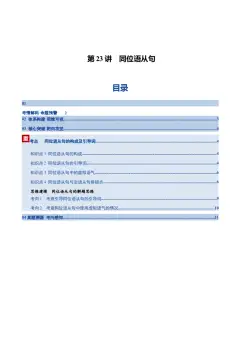
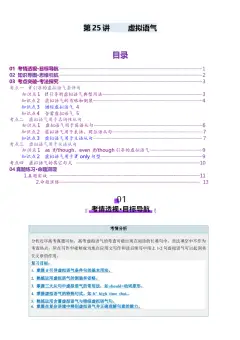
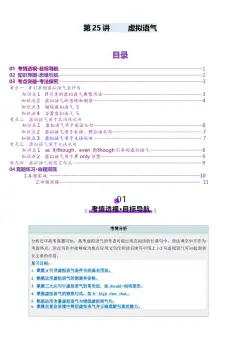
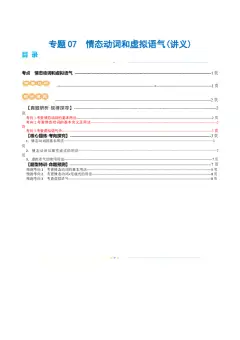
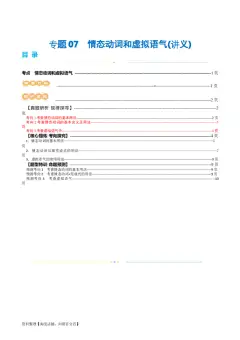
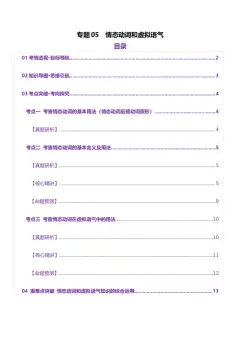
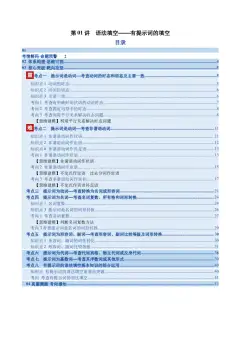
目录
01
考情解码·命题预警
2
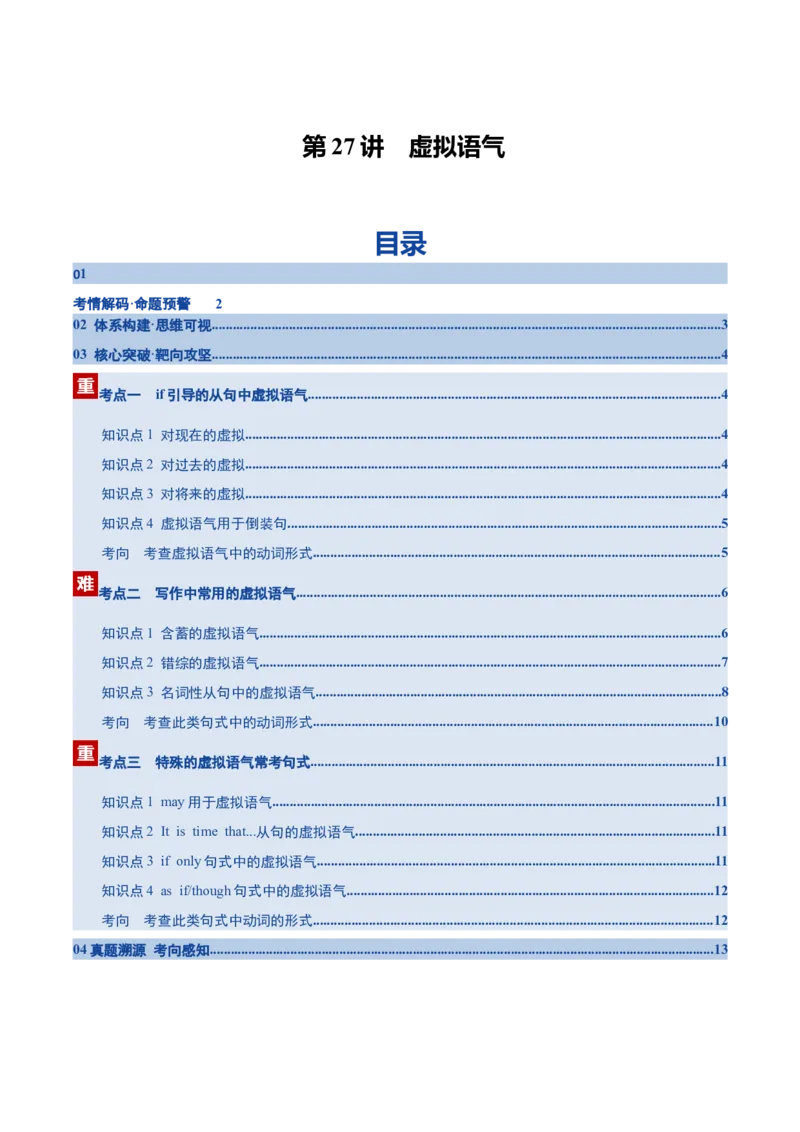
02 体系构建·思维可视.................................................................................................................................................3
03 核心突破·靶向攻坚.................................................................................................................................................4
考点一  if 引导的从句中虚拟语气......................................................................................................................4
知识点1 对现在的虚拟........................................................................................................................................4
知识点2 对过去的虚拟........................................................................................................................................4
知识点3 对将来的虚拟........................................................................................................................................4
知识点4 虚拟语气用于倒装句............................................................................................................................5
考向  考查虚拟语气中的动词形式....................................................................................................................5
考点二  写作中常用的虚拟语气.........................................................................................................................6
知识点1 含蓄的虚拟语气....................................................................................................................................6
知识点2 错综的虚拟语气....................................................................................................................................7
知识点3 名词性从句中的虚拟语气....................................................................................................................8
考向  考查此类句式中的动词形式..................................................................................................................10
考点三  特殊的虚拟语气常考句式...................................................................................................................11
知识点1 may 用于虚拟语气..............................................................................................................................11
知识点2 It is time that...从句的虚拟语气......................................................................................................11
知识点3 if only 句式中的虚拟语气.................................................................................................................11
知识点4 as if/though 句式中的虚拟语气.........................................................................................................12
考向  考查此类句式中动词的形式..................................................................................................................12
04 真题溯源 考向感知................................................................................................................................................13
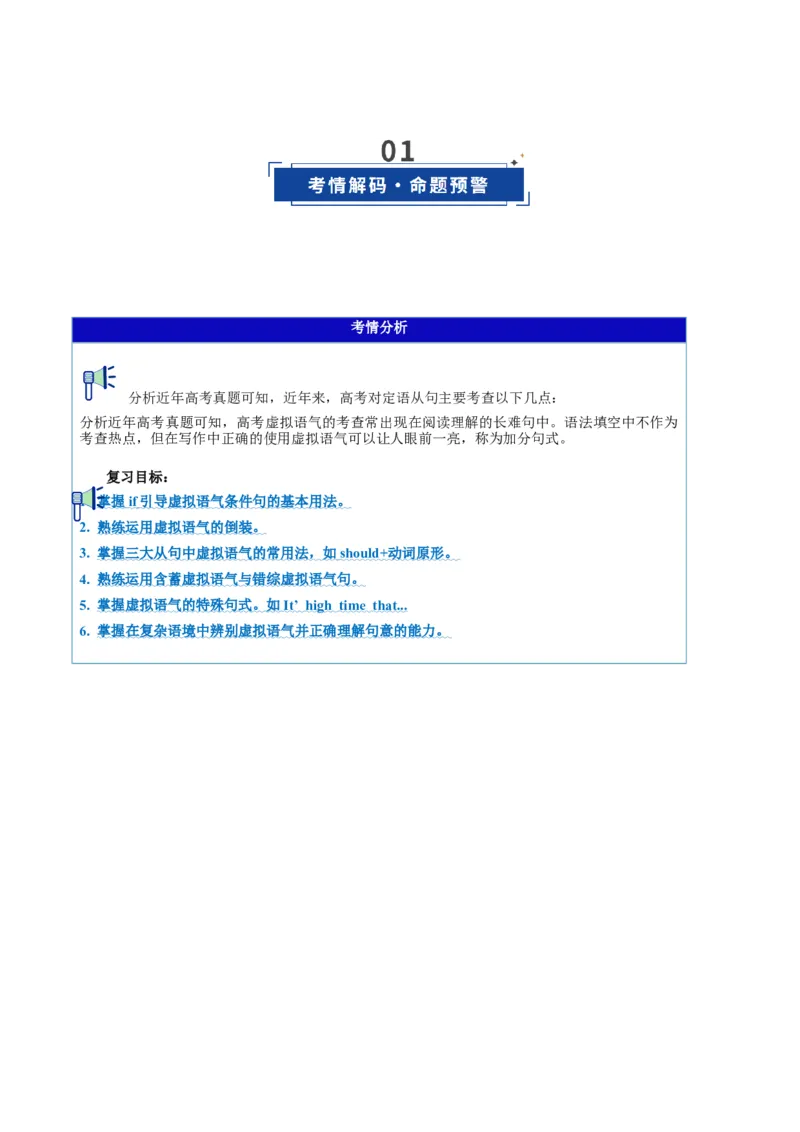
考情分析
分析近年高考真题可知,近年来,高考对定语从句主要考查以下几点:
分析近年高考真题可知,高考虚拟语气的考查常出现在阅读理解的长难句中。语法填空中不作为
考查热点,但在写作中正确的使用虚拟语气可以让人眼前一亮,称为加分句式。
复习目标:
1. 掌握

  if   引导虚拟语气条件句的基本用法。


2. 熟练运用虚拟语气的倒装。


3. 掌握三大从句中虚拟语气的常用法,如

  should+

 动词原形。


4. 熟练运用含蓄虚拟语气与错综虚拟语气句。


5. 掌握虚拟语气的特殊句式。如

  It  ’  high

  time

  that...


6. 掌握在复杂语境中辨别虚拟语气并正确理解句意的能力。


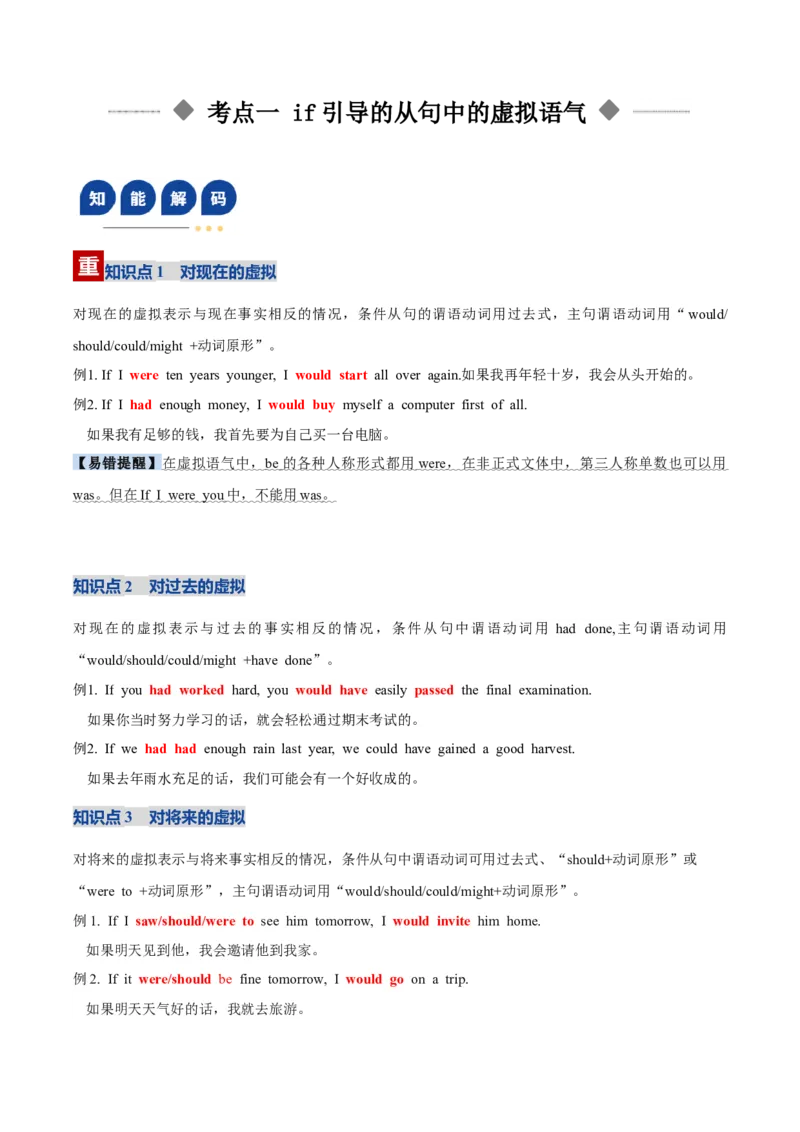
 考点一 if 引导的从句中的虚拟语气

知识点1  对现在的虚拟
对现在的虚拟表示与现在事实相反的情况,条件从句的谓语动词用过去式,主句谓语动词用“ would/
should/could/might +动词原形”。
例1. If I were ten years younger, I would start all over again.如果我再年轻十岁,我会从头开始的。
例2. If I had enough money, I would buy myself a computer first of all.
如果我有足够的钱,我首先要为自己买一台电脑。
【易错提醒】在虚拟语气中,

 be
  的各种人称形式都用

 were

 ,在非正式文体中,第三人称单数也可以用


was

 。但在

 If    I   were

   you

  中,不能用

  was

 。

知识点2  对过去的虚拟
对现在的虚拟表示与过去的事实相反的情况,条件从句中谓语动词用had done,主句谓语动词用
“would/should/could/might +have done”。
例1. If you had worked hard, you would have easily passed the final examination.
如果你当时努力学习的话,就会轻松通过期末考试的。
例2. If we had had enough rain last year, we could have gained a good harvest.
如果去年雨水充足的话,我们可能会有一个好收成的。
知识点3  对将来的虚拟
对将来的虚拟表示与将来事实相反的情况,条件从句中谓语动词可用过去式、“should+动词原形”或
“were to +动词原形”,主句谓语动词用“would/should/could/might+动词原形”。
例1. If I saw/should/were to see him tomorrow, I would invite him home.
如果明天见到他,我会邀请他到我家。
例2. If it were/should be fine tomorrow, I would go on a trip.
如果明天天气好的话,我就去旅游。
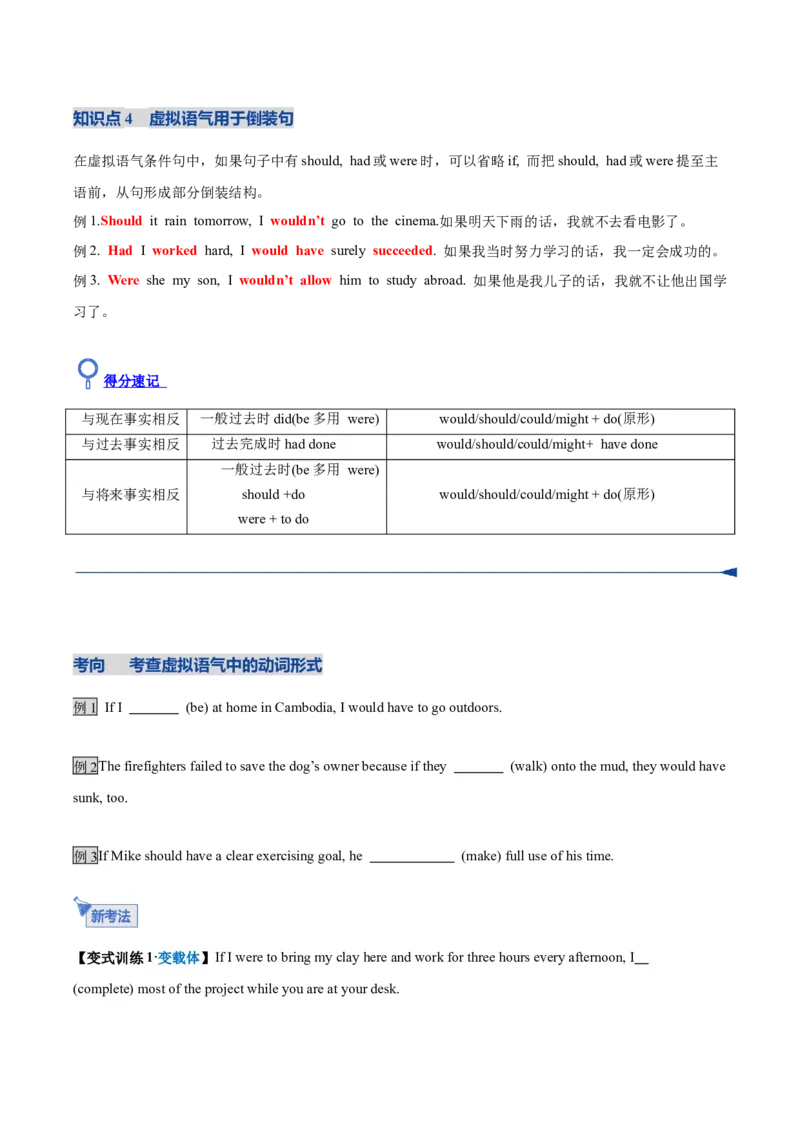
知识点4  虚拟语气用于倒装句
在虚拟语气条件句中,如果句子中有should, had 或were 时,可以省略if, 而把should, had 或were 提至主
语前,从句形成部分倒装结构。
例1.Should it rain tomorrow, I wouldn’t go to the cinema.如果明天下雨的话,我就不去看电影了。
例2. Had I worked hard, I would have surely succeeded. 如果我当时努力学习的话,我一定会成功的。
例3. Were she my son, I wouldn’t allow him to study abroad. 如果他是我儿子的话,我就不让他出国学
习了。
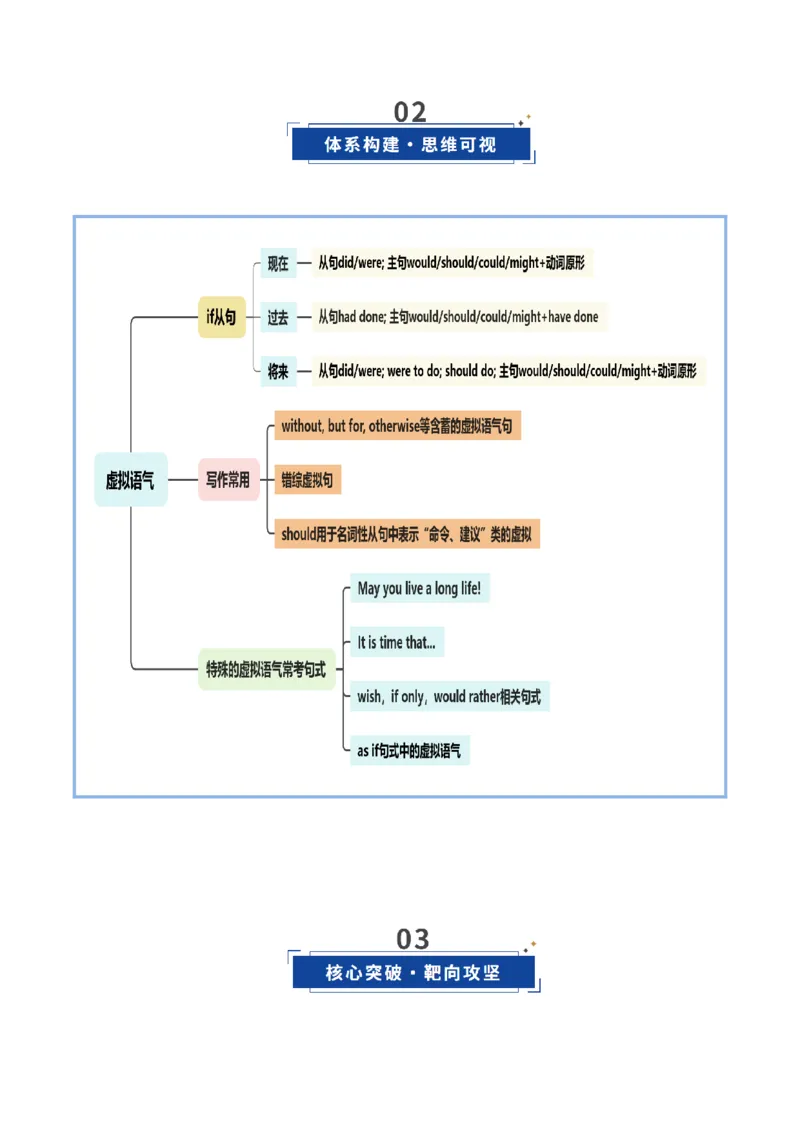
得分速记
与现在事实相反
一般过去时did(be 多用 were)
would/should/could/might + do(原形)
与过去事实相反
过去完成时had done
would/should/could/might+ have done
与将来事实相反
一般过去时(be 多用 were)
should +do
were + to do
would/should/could/might + do(原形)
考向   考查虚拟语气中的动词形式
例1 If I         (be) at home in Cambodia, I would have to go outdoors.
例2The firefighters failed to save the dog’s owner because if they         (walk) onto the mud, they would have
sunk, too.
例3If Mike should have a clear exercising goal, he              (make) full use of his time.
【变式训练1·变载体】If I were to bring my clay here and work for three hours every afternoon, I

(complete) most of the project while you are at your desk.
【变式训练2·变情景】If he had not been addicted to the cellphone when walking, he wouldn’t       (be) hit by
a car.
【变式训练3·变载体】If I                 (see) her next Monday, I would tell her about it.

  考点二  写作中常用的虚拟语气

在应用文写作如祝贺信和感谢信中及读后续写中,适当正确的使用虚拟语气句式,可以起到加分的作用。
在写作中通常会用到的虚拟语气有含蓄的虚拟语气、错综的虚拟语气等。
知识点1  含蓄的虚拟语气
含蓄条件句是指非真实条件句中的条件从句有时是暗含在上下文中的.含蓄条件句常见的表达方式有:
1. 介词及介词短语 but that, but for, without, with, under, under ... condition, supposing, on condition that, in
the past 等.
例1. But for air and water, there would be no life on the earth. (but for 提供了虚拟条件)
要是没有空气和水,地球上就没有生命。
例2. Without your help, I couldn't have achieved all this. (without your help 与事实相反)
没有你的帮助,我不可能做到这一切。
2. 连词otherwise, or, but 或分词短语表条件。
例1. He would have given you more help, but he was so busy.他本来可以给你更多帮助的,但他太忙了。
例2. Seize the chance, otherwise you would regret it. 抓住机会,否则你会后悔的。
例3.He felt very tired yesterday, or he would have helped you.他昨天很累,否则他会帮你。
例4.Given more time, we could have done it better.如果有更多的时间,我们就能做得更好。
3. 句子本身没有虚拟语气提示词,但是根据根据上下文推理可以出条件用虚拟语气.
例1. It would do you no good.这可能会对你没好处.
条件可能是if you should give up the job“如果你放弃这项工作的话
例2. They could have won.他们本来是会赢的.
条件可能是if they had been patient“如果他们有耐心的话”
例3. Such mistakes could have been avoided.这种错误完全能避免.
条件可能是if you had been more careful“如果你更加小心一点的话”
知识点2  错综的虚拟语气
当条件从句的行为与主句所表示的行为所发生的时间不一致时,主从句中动词的形式要根据它所表示的时
间作出相应的调整,我们称之为错综条件虚拟语气。

例1. If they had studied hard, they could do it easily now.(从句过去,主句现在)
如果他们以前努力学习的话,现在做得就会容易些了。
例2. If he had not taken my advice, he wouldn't do it much better like this.(从句过去,主句现在)
如果他过去不听我的建议,他就不会做得这么好了。
例3. If you had asked him yesterday, you would know what to do now. (You didn't ask him yesterday, so you
don't know what to do now.(从句与过去事实相反,主句与现在事实相反)
如果你昨天问了他,现在你就知道要做什么了.
例4. Of course, I would have preferred a different ending for Tom and Maggie Tulliver, but the ending they got
did make the most sense for them. 【2024 年全国甲卷】
当然,我更希望汤姆和玛吉·塔利弗有一个不同的结局,但他们得到的结局对他们来说是最有意义的。
知识点3  名词性从句中的虚拟语气
一、  用于wish 后的宾语从句表示与现在或过去的事实相反,或对将来的主观愿望,从句通常省略连词
that。
1. 表示对现在情况的虚拟,从句动词用过去式或过去进行式(be 动词一般用were)。
例:I wish I could argue with you.
2. 表示对过去情况的虚拟,从句动词常用"had 十过去分词"。
例: I wish I hadn't become so conscious of every little change.
3. 表示对将来的主观愿望,谓语动词形式为"would 十动词原形"。
例: I wish it would stop raining.
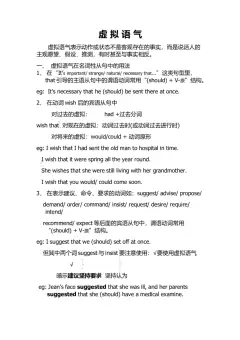
二、在suggest, demand, order, propose, insist, command, request 等动词后的宾语从句中,谓语动词用
“should + 动词原形”,表示建议、要求、命令等。
1. 一个“坚持”(insist)
2. 两个“命令”(order, demand)
3. 三个“要求”(require, request, demand)
4. 四个“建议”(suggest, advise, propose,recommend)
【易错提醒】suggest

 意为“暗示”,使用真实语气;意为“建议”,使用虚拟语气,结构使用

 should+

 动

词原形,

 should

 可以省。

 insist

 意为“坚持认为”,使用真实语气;意为“坚持要求”,使用虚拟语气,结


构使用

 should+

 动词原形,

 should

 可以省。


例1. What does the man suggest the woman do?【2021 年上海卷听力】
    男士建议女士做什么?
例2. He recommended that she do some research and talk to dentists about what a healthier candy would
contain.【2019 年北京卷】他建议她做一些研究,和牙医谈谈更加健康的糖果中含有什么物质。
例3. The authorities insist that the discussions must not be linked to any other issue.(坚持认为事实)
   官方坚持这些讨论绝不能和任何别的问题联系起来。
例4. I insist that you go with me.(坚持要求做某事)我坚持要你跟我一起去。
三、.would rather+从句,是一个常用的虚拟语气句型。


例1.John wants to see me today. I would rather he came tomorrow than today.
约翰今天想去看我。我宁愿他明天来看我而不是今天。(句中came 不是表示过去而是表示将来)
例2.The manager would rather his daughter did not work in the same office.(表示现在)
经理宁愿他的女儿不在同一个办公室工作
例3.I would rather he had visited us yesterday.(表示过去)
     我宁愿他昨天来看我们了。
【易错提醒】表示某人愿自己做某事

 ,would rather

 后用动词原形

 。

例1.  I would rather stay at home than go out today.
   我今天宁愿呆在家里也不愿出去。
一般过去时表示现在或者将来
过去完成时表示过去的动作
would rather +that(从句)
例2. They would rather work than live on welfare.
     他们宁愿工作而不愿靠社会保障金生活。
四、虚拟语气用于表语从句、同位语从句
表示“建议、请求、命令”等主观意向的名词作主语时,其后的表语从句或同位语从句需用虚拟语气,形
式为(should)+动词原形。常见的有:advice, suggestion, proposal(提议),order, demand, desire, request,
requirement, recommendation, aim, wish, necessity 等。
例1. It is an order that for every tree cut down two more (should) be planted.(同位语从句)
要求每砍伐一棵树,就要补栽两棵树.
例2. The manager put forward a suggestion that we should have an assistant.(同位语从句)
经理建议我们应该有一个助手。
例3. My advice is that you should send a few soldiers to help them.(表语从句)
      我的建议是我们应派几个战士去增援他们
五、虚拟语气用于主语从句
1. 在"It is important (strange, natural, necessary)that…"这类句型里,that 所引导的主语从句中的谓语动词常
用 “ should+ 动词原形” 结构表示惊奇、惋惜、怀疑等语气。这类形容词有:advisable(

 合理


的
  ),appropriate,

   compulsory(

 必须做的

 ),crucial(

 决定性的

 ),desirable(

 理想的

 ),essential,

   imperative(

 迫切


的
  ),important,

  incredible(

 惊人的

 ),natural,

  necessary,

  possible,

  preferable(

 更好的

 ),probable,

  strange,

  urgent,


vital 等.
例1. It is important that we (should) think before we decide. 三思而后行是非常重要的。
例2. It is necessary that every student (should) work hard. 每个学生(应该)努力工作。
2.“It is/was+名词或名词短语+that+sb+(should)+动词原形...”常见的名词或短语有a pity, a shame, no
wonder 等。
例1. It is no wonder that he (should) miss the train. 他错过了那列火车并不奇怪。
例2. It's a pity that he (should) refuse to accept the offer. 他拒绝接受提供的东西真是令人遗憾.
【名师提醒】如果不表示惊奇等情感

 ,that
  从句也可用陈述句语气

 . 如
  :It is a pity that you can't swim.


考向  考查此类句式中的动词形式
例1 The official demanded that foods and other supplies           (send) to the disaster area immediately.
例2My suggestion is that the problem                  (discuss) at the meeting as soon as possible.
【变式训练1·变载体】It’s suggested in the report that government expense          (reduce) to increase
teachers’ salaries.
【变式训练2·变载体】What do you think of his proposal that the meeting             (put) off to next week?

  考点三  特殊的虚拟语气常考句式

知识点1  may 用于虚拟语气
表示“祝愿”时,常用“may+主语+动词原形+其他”结构
例1. May you have a good journey!祝你一路顺风!
例2. May your youth last for ever!祝你青春永驻!
例3. May you succeed!祝你成功!
例4. May you make greater progress!祝你取得更大进步!
知识点2  It is time that...从句中的虚拟语气
在"It is high time (that) ......."句型中,谓语动词常用虚拟语气表示将来,动词形式一般用过去式,意思是
“该干某事的时候了”。
例1. It’s (high) time we did housework.是时候我们做家务了。
例2. It is high time that we laid great emphasis on the wildlife protection.
=It is high time that we should lay great emphasis on the wildlife protection.
我们对野生动物保护加以高度重视的时候到了。
知识点3  if only 句式中的虚拟语气
if only 引导的感叹句中虚拟语气用法与wish 的虚拟语气用法一致.
与现在事实相反
过去时(be 用were)
If only I were better looking.要是我长得漂亮些就好了.
If only I were as clever as you!要是我像你一样聪明该多
好啊!
与过去事实相反
过去完成时had done If only she hadn't driven so fast.要是她当时没有开那么快就好
了.
将来不大可能实现的愿望would/could/might+ do
If only it would stop raining.雨要是停了就好了.
If only he were here!
=How I wish he were here!要是他在这儿就好了。
知识点4  as if/though 句式中的虚拟语气
由as if 或as though 引导的状语从句表示比较或方式时。从句谓语形式为动词的过去式(be 用were)或
“had+过去分词”
例1. Don't treat me as if I were a child. 不要把我当作一个孩子来对待我。
例2. Amy talks about Rome as if he were a Roman.
艾米谈起罗马来好像他是罗马人一样.
  例3. Don’t handle the vase as if it were made of steel.【北京卷】
不要这么拿着这个花瓶,就好像它是钢制成似的。
【名师提醒】as
    if   引导的从句内容

 如
  果表示的事情可能会发生,那么方式状语从句中的谓语动词可用陈


述语气。
 例. It looks as if it is going to rain. 看起来要下雨。
考向  考查此类句式中的动词形式
例1 It’s high time that we             (devote) ourselves to environmental protection and ecological
improvement.
例2Sailors, even miles from the blasts, described feeling heat as if they           (go) from the shade into the
sun, and an intense flash of light even through dark goggles.
【变式训练1·变载体】If only              (become) a wonderful chef and run a restaurant on my own in the
future, where I could serve my guests with love and care.
【变式训练2·变载体】He stared at me in amazement as if I          (finish) something incredible.
1.【2023 年新高考I 卷】Melanie Bailey should have _______ the course earlier than she did
 A. designed
B. followed
C. changed
D. finished
2.【2018 年天津卷】Jane wishes that she ______ foreign trade instead of literature when she was in college.
A.studied
B.had studied
C.would study
D.might have studied
3.【2019 年天津卷】The workers were not better organized, otherwise they ________ the task in half the time.
A.accomplished
B.had accomplished
C.would accomplish
D.would have accomplished
4.【2016 年浙江卷】Had the governments and scientists not worked together, AIDS-related deaths ________
since their highest in 2005.
A.had not fallen
B.would not fall
C.did not fall
D.would not have fallen
5.【2015 年重庆卷】Without his wartime experiences, Hemingway____ his famous novel A Farewell to Arms.
A.didn’t write
B.hadn’t written
C.wouldn’t write
D.wouldn’t have written