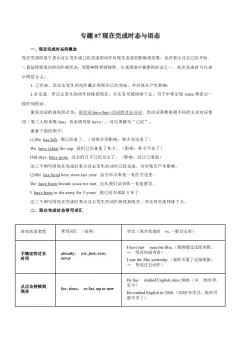
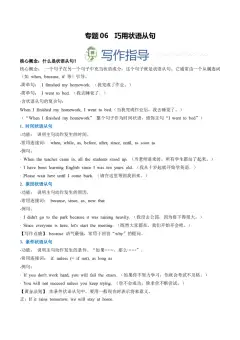
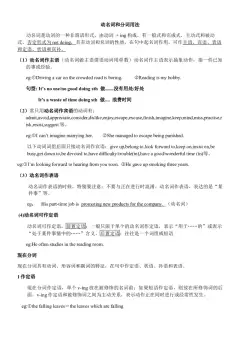
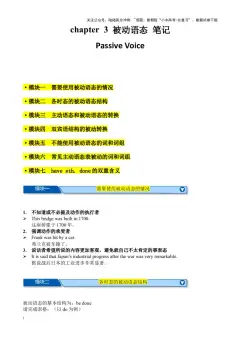
高中英语语法详解(讲义)chapter 3 分词
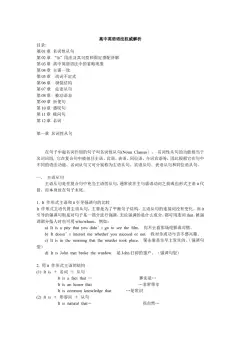
■

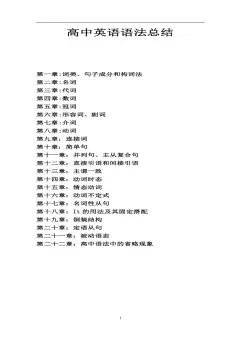
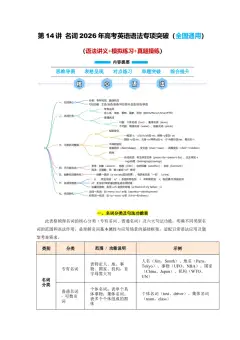
一、分词的构成
■

二、分词短语
■

三、分词的用法
■

四、分词独立结构
■
“
”

五、某些不及物动词+现在分词结构
■

六、分词的时态和语态
■

七、分词、不定式和动名词在用法上的区别
■

八、分词作定语和形容词作定语的比较
一、分词的构成
分词是一种非限定动词,不能单独在句中作谓语。它除了保留着
动词的特征外,还具有形容词和副词的作用,在句中可作定语和状
语,还可作表语、补语和独立成分。
分词有现在分词和过去分词两种:
现在分词——由“动词原形+-ing"构成,-e 结尾的单词要去掉
e,然后加-ing。例如:working, standing, learning, loving, obliging
sitting, worrying。
过去分词——由“规则动词原形+-ed"构成,-e 结尾的动词要去
掉e,然后再加-ed;不规则动词有特殊的形式,需要逐个记忆。例
如:worked, looked, turned, designed, obliged, loved, worried。
二、分词短语
分词仍保留着动词的某些特征,可以和其附属成分构成分词短
语。现在分词可以带自己的宾语、状语、表语、补语和逻辑主语
等,构成现在分词短语;过去分词可以带自己的状语、补语等,构
成过去分词短语。例如:
These new products made in China are good in quality.中国制造的这
些新产品质量好。
I found him packing up his things.我发现他正在收拾行李。
I left the house and went to Forest Road, sitting in the cab in the
greatest impatience until it arrived.我离家往森林路走去,急不可耐地
坐上出租马车,一直驶到目的地。
三、分词的用法
分词跟动词不定式、动名词一样,也可以用作句中的非谓语成
分。它具有形容词和副词的句法功能,在句中主要作定语和状语,
有时也作表语、补语和独立成分等。
(一)用作表语
1.分词作表语,总是跟在系动词之后,构成复合谓语。现在分
词作表语,表示主语所具有的特征。许多作表语的现在分词几乎已
经形容词化,可以用副词修饰,也可以有比较级形式。这类常见的
现在分词有amazing, amusing, annoying, astonishing, boring, charming
等。例如:
The development of our aviation industry is quite encouraging.我们
的航空工业的发展是非常令人鼓舞的。
What he says sounds more convincing.他说的话听起来更有说服
力。
The European scene began to look threatening again.欧洲局势再度
出现危险。
A few pages are wanting.有几处缺页。
The whole damned day had been humiliating.这一整天可坏透了,
令人丢脸。
2.过去分词作表语,表示主语所处的状态。作表语的过去分词
也几乎已经形容词化,可以被副词修饰,有比较形式。这类过去分
词常见的有accustomed, amazed, amused, astonished, bored, broken,
closed, decided, delighted, devoted 等。例如:
She is deeply read in the classics.她精通古典文学。
In the world things are complicated.世界上的事情是复杂的。
The river was swollen with the melted snows.雪融河涨。
Einstein's theory of relativity is known all over the world.爱因斯坦的
相对论是全世界都知道的。
He felt thoroughly disappointed.他感到完全失望了。
This article is well written.这篇文章写得好。
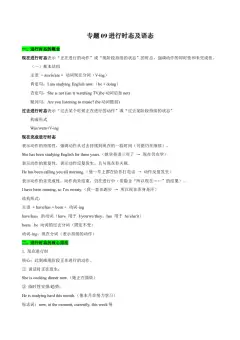
【注1】 分词作表语时,系动词除be 外还有appear, become,
come, get, go, grow, keep, remain, seem 等。例如:
The door remained locked.门仍然锁着。
The battery became exhausted after long use.电池用久后,电耗尽
了。
【注2 】分词作表语用时,相当于形容词,表示性质或状态;
进行时态和被动语态中的分词是谓语动词的组成部分,表示具体的
动作,两者不可混淆。例如:
The present situation is encouraging.(表语)目前的形势是令人鼓
舞的。
The present situation is encouraging us to stride forward in
production.(现在进行时)目前的形势正在鼓舞我们在生产上迈步前
进。
The problem is quite pressing.(表语)问题很紧迫。
She is pressing the button.(现在进行时)她正在按电钮。
We are all pleased.(表语)我们都很满意。
We are all pleased by the work done.(被动语态)所做的工作使我
们都很满意。
The glass plate is broken.(表语)玻璃板破了。
The glass plate was broken by him.(被动语态)玻璃板被他打破
了。
(二)用作定语
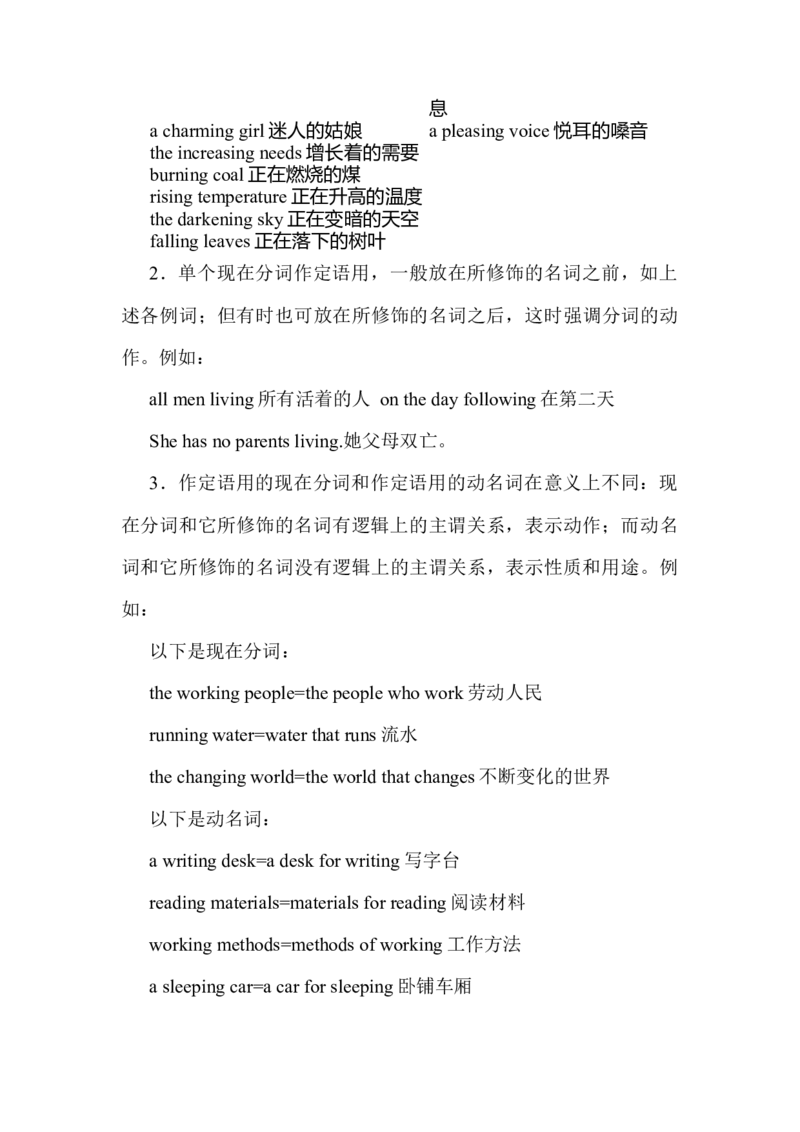
1.现在分词作定语时,表示它所修饰的名词是分词行为的实际
发出者,是主谓关系,是主动的行为,往往兼有正在进行的含义。
例如:
developing countries 发展中国家
boiling water 正在沸腾的水
a moving object 移动的物件
exciting news 振奋人心的消
息
a charming girl 迷人的姑娘
a pleasing voice 悦耳的嗓音
the increasing needs 增长着的需要
burning coal 正在燃烧的煤
rising temperature 正在升高的温度
the darkening sky 正在变暗的天空
falling leaves 正在落下的树叶
2.单个现在分词作定语用,一般放在所修饰的名词之前,如上
述各例词;但有时也可放在所修饰的名词之后,这时强调分词的动
作。例如:
all men living 所有活着的人 on the day following 在第二天
She has no parents living.她父母双亡。
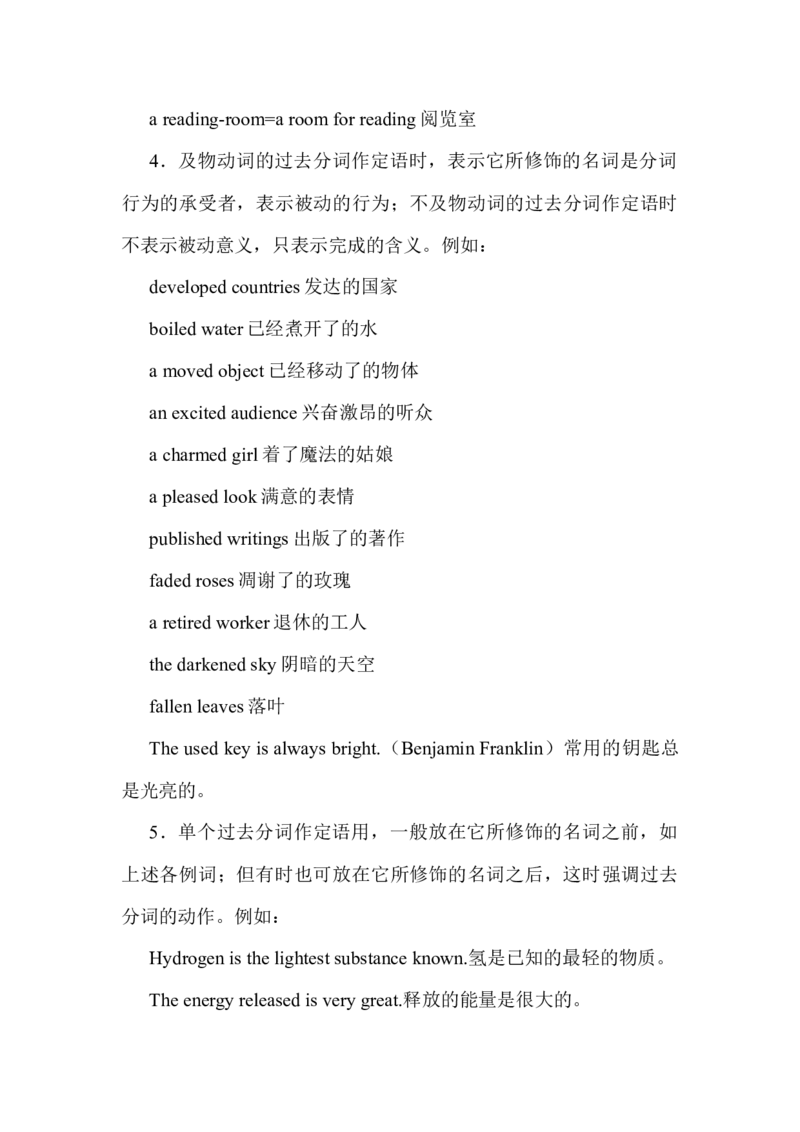
3.作定语用的现在分词和作定语用的动名词在意义上不同:现
在分词和它所修饰的名词有逻辑上的主谓关系,表示动作;而动名
词和它所修饰的名词没有逻辑上的主谓关系,表示性质和用途。例
如:
以下是现在分词:
the working people=the people who work 劳动人民
running water=water that runs 流水
the changing world=the world that changes 不断变化的世界
以下是动名词:
a writing desk=a desk for writing 写字台
reading materials=materials for reading 阅读材料
working methods=methods of working 工作方法
a sleeping car=a car for sleeping 卧铺车厢
a reading-room=a room for reading 阅览室
4.及物动词的过去分词作定语时,表示它所修饰的名词是分词
行为的承受者,表示被动的行为;不及物动词的过去分词作定语时
不表示被动意义,只表示完成的含义。例如:
developed countries 发达的国家
boiled water 已经煮开了的水
a moved object 已经移动了的物体
an excited audience 兴奋激昂的听众
a charmed girl 着了魔法的姑娘
a pleased look 满意的表情
published writings 出版了的著作
faded roses 凋谢了的玫瑰
a retired worker 退休的工人
the darkened sky 阴暗的天空
fallen leaves 落叶
The used key is always bright.(Benjamin Franklin)常用的钥匙总
是光亮的。
5.单个过去分词作定语用,一般放在它所修饰的名词之前,如
上述各例词;但有时也可放在它所修饰的名词之后,这时强调过去
分词的动作。例如:
Hydrogen is the lightest substance known.氢是已知的最轻的物质。
The energy released is very great.释放的能量是很大的。
He gave us a clear idea of the problems involved.他对涉及的问题给
了我们一个清楚的概念。
A penny saved is a penny gained.(Thomas Fuller)省下一分钱等
于得到一分钱。
The ore used is of high grade.所用的矿石是高品位的。
We can form metals into shapes required.我们能把金属做成所需要
的形状。
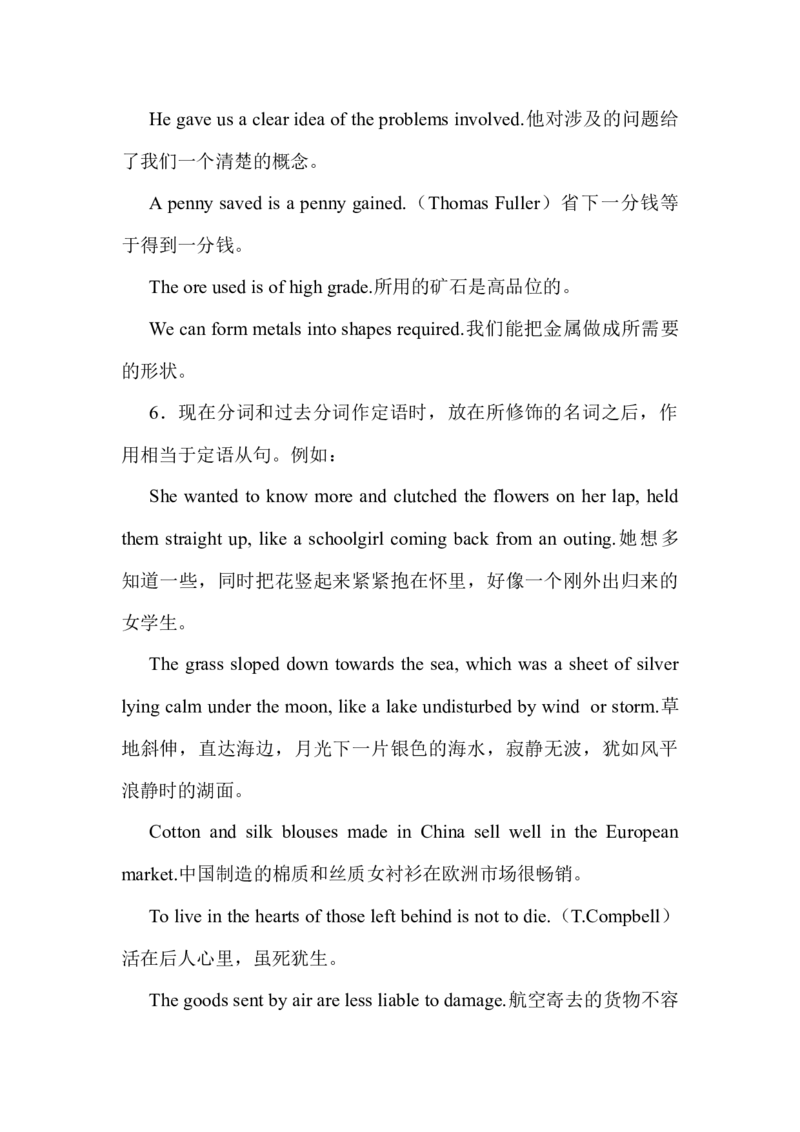
6.现在分词和过去分词作定语时,放在所修饰的名词之后,作
用相当于定语从句。例如:
She wanted to know more and clutched the flowers on her lap, held
them straight up, like a schoolgirl coming back from an outing.她想多
知道一些,同时把花竖起来紧紧抱在怀里,好像一个刚外出归来的
女学生。
The grass sloped down towards the sea, which was a sheet of silver
lying calm under the moon, like a lake undisturbed by wind or storm.草
地斜伸,直达海边,月光下一片银色的海水,寂静无波,犹如风平
浪静时的湖面。
Cotton and silk blouses made in China sell well in the European
market.中国制造的棉质和丝质女衬衫在欧洲市场很畅销。
To live in the hearts of those left behind is not to die.(T.Compbell)
活在后人心里,虽死犹生。
The goods sent by air are less liable to damage.航空寄去的货物不容
易损坏。
Only a life lived for others is a life worthwhile.(A.Einstein)只有为
他人而活的生命才是有价值的生命。
There are already a number of enterprises jointly run by Chinese and
foreign partners.已经有了一些中外合资企业。
Love built on beauty, soon as beauty, dies.(J.Donne)建立在美色
之上的爱情,也会像美色一样很快消逝。
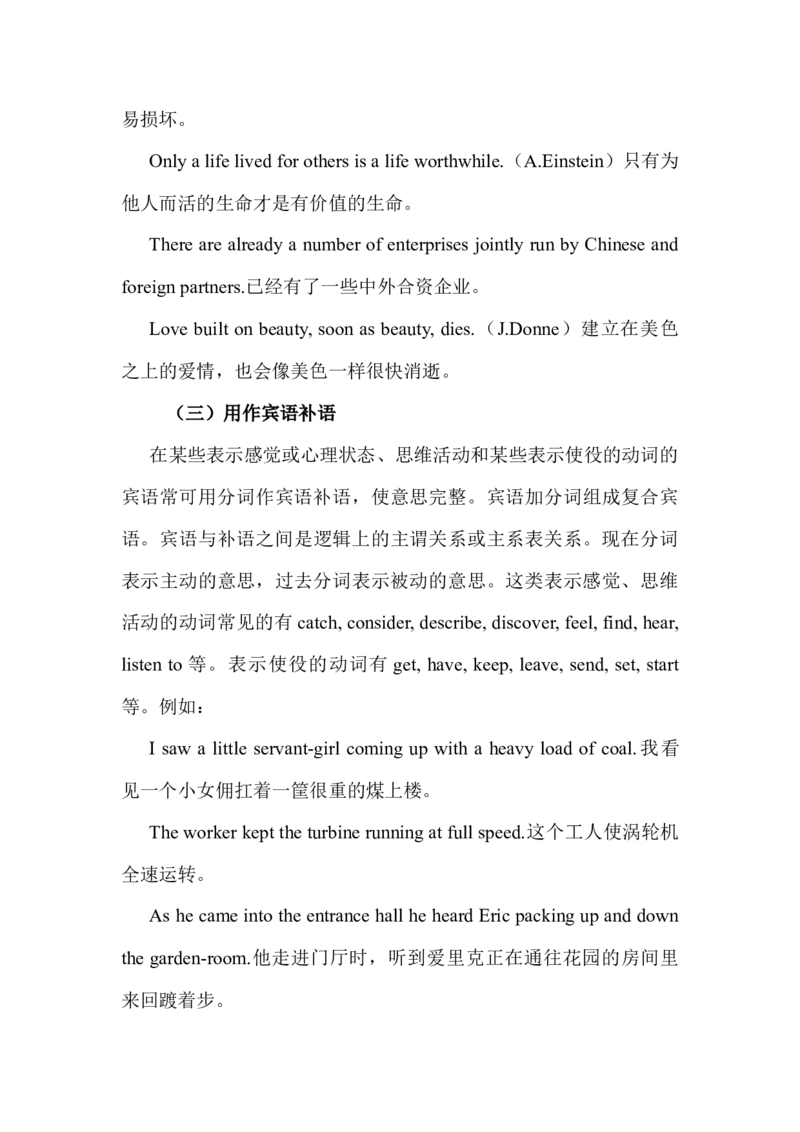
(三)用作宾语补语
在某些表示感觉或心理状态、思维活动和某些表示使役的动词的
宾语常可用分词作宾语补语,使意思完整。宾语加分词组成复合宾
语。宾语与补语之间是逻辑上的主谓关系或主系表关系。现在分词
表示主动的意思,过去分词表示被动的意思。这类表示感觉、思维
活动的动词常见的有catch, consider, describe, discover, feel, find, hear,
listen to 等。表示使役的动词有get, have, keep, leave, send, set, start
等。例如:
I saw a little servant-girl coming up with a heavy load of coal.我看
见一个小女佣扛着一筐很重的煤上楼。
The worker kept the turbine running at full speed.这个工人使涡轮机
全速运转。
As he came into the entrance hall he heard Eric packing up and down
the garden-room.他走进门厅时,听到爱里克正在通往花园的房间里
来回踱着步。
I imagined a ship bravely fighting a turbulent sea.(A.Berwick)我
想象着一艘船正在汹涌澎湃的大海上英勇搏斗。
Through the kitchen window she could see a hawk riding the early
evening updrafts.她从厨房窗户望出去,看见一只鹰正乘着黄昏的风
扶摇而上。
Please do not understand me as having lost hope.请不要以为我已失
去了希望。
You must make yourself respected.你必须使自己得到别人尊重。
We like the disputes settled.我们愿意这些争端得到解决。
At that time we were there and saw it done.那时候我们在那里,见
到了这件事做完。
We must get our products examined.我们得(请人)把产品检验一
下。
Please keep me informed of the latest developments in biochemistry.
请把生物化学方面的最新发展告诉我。
【注1】 在动词have 或get 后面用分词作宾语补语,即“have/
get sth.+分词”结构,表示:
(1)动作是由别人来完成。例如:
I got my watch repaired.我的手表(请人)修好了。
有时可能由主语完成。例如:
We shall have the letter of credit opened soon.我们将很快开立信用
证。
(2)意外或不幸的遭遇。例如:
You'll get/have everyone asking you for money if they find out you've
won the prize.要是大家知道你得大奖,他们会向你要钱的。
The houses had their roofs ripped off by the gale.房屋被狂风吹掉了
屋顶。
(3)won't have 表示句子中主语不允许某种情况发生。例如:
I won't have you taking care of an invalid for the rest of your life.
(M.Bowker)我不想让你这辈子照料一个废人。
I won't have my friend laughed at.我不允许我的朋友被耻笑。
【注2 】用分词(短语)作宾语补语,表示在某个时候动作正
在发生,着眼于动作的进行过程;用不定式,则只是陈述事实,着
眼于动作的完成。例如:
I saw them doing an experiment this morning.我看见他们今天早晨
正在做实验。
I saw them do an experiment.我看见过他们做实验。
We heard her singing at that time.我们听见她那个时候正在唱歌。
We heard her sing.我们听见了她歌唱。
(四)用作主语补语
在分词(短语)作宾语补语的句子中,当宾语变成主语时(句中
谓语用被动语态),则原来的宾语补语变成主语补语。例如:
A little servant-girl was seen coming up with a heavy load of coal.有
人看见一个小女佣扛着一筐很重的煤上楼。
The turbine was kept running at full speed.这台涡轮机保持全速运
转。
All the doors were found locked.所有的门被发现都锁着。
They should be kept informed of the latest developments in
biochemistry.应该让他们了解生物化学方面的最近发展情况。
(五)用作状语
分词(短语)可以作状语、修饰谓语动词,表示动作发生的时
间、原因、目的、结果、方式、条件、让步或伴随情况,相当于相
应的状语从句或并列分句。分词短语作状语,可放在句首、句末或
句中,用逗号分开。句子的主语也是分词的逻辑主语,二者是主动
关系时,用现在分词;二者是被动关系时,用过去分词。
1.作时间状语——相当于时间状语从句。通常位于句首,表示
分词所表示的动作一发生,谓语动词所表示的动作立即发生。如果
两个动作同时发生,多用“when 或while+分词”结构;如果分词
的动作发生在谓语动词所表示的动作之前或之后,可在分词前加
before 或after。例如:
Arriving at the airport, the distinguished guest was warmly
welcomed.
到达机场时,贵宾受到热烈欢迎。
Walking into the bedroom, toweling off, she noted it was a little after
ten.披着毛巾走进卧室时,她注意到已经十点过了一点儿。
Thinking only of myself for a moment, I'm not sure I make the right
decision.在只想到我自己一个人时,我不敢肯定我做出了正确的决
定。
Once installed, this heater operates automatically.一旦安装好后,这
台加热器就自动运转。
When visiting a strange city, I like to have a guide-book with me.访问
一个陌生城市时,我喜欢随时带一本导游手册。
The ticket, when bought, will be immediately sent to you.票买到时会
立即送给你。
The book when finished will contain 200 pages.这本书写完时会有
200 页。
While using these high-precision instruments, we must be very
careful.当使用这些精密仪器时,我们必须非常小心。
2.作原因状语——可放在句首或句末,相当于原因状语从句。
例如:
Being busy, he will not come today.他因为忙,今天不会来。
Having been used for a long time, the bike needs oiling.这辆自行车
由于用了很长时间,需要上油。
Living on an isolated mountain farm, far from neighbors and stores,
he had to make do with what he had.(Arnold Berwick)他住在孤零零
的山区农场,远离世人和商店,什么都不得不凑合。
I began to be ashamed of myself, holding everything up so long.
(L.Hughes)我开始为自己耽误大家这么长时间而感到内疚。
Stunned by the news, he couldn't utter a word.他被这个消息惊呆
了,说不出一句话来。
Confined to bed, she needed to be waited on in everything.由于卧病
在床,她什么事情都需要人伺候。
The children, exhausted, fell asleep at once.孩子们因为太疲倦,马
上就睡着了。
The audience, greatly affected by this speech, all voiced their support
for the proposal.听众们为他的演讲深受感动,都支持这个建议。
3.作条件状语——可放在句首或句末。有时,分词前可加if 或
unless。相当于条件状语从句。例如:
Heating water, you can change it into steam.如果把水加热,就能把
它变成蒸汽。
Sit down, Emma.You will only make yourself more tired, keeping on
your feet.坐下吧,埃玛。你老站着,只会弄得你更累。
Reducing the flow of the current, the speed of the motor is
correspondingly decreased.如果减少电流的流动,发动机的速度就相
应地减慢。
Unless meeting with trouble, I'll be there on time.只要不遇到麻烦,
我将准时到那儿。
Going straight down the road, you will find the department store.如果
你顺着这条路一直走下去,你会找到那家百货公司。
Given more time, we could have done better.如果多给些时间,我们
就能做得更好一些了。
Compared with other products, the price of ours is very competitive.
(如果)与其他产品比较,我们产品的价格是非常有竞争力的。
Do not leave the building unless instructed.除非得到命令,否则别
离开这幢楼房。
Considered from this point of view, the question under discussion is
of great importance.从这个观点来考虑,所讨论的问题是非常重要
的。
God, we're so innocent and immature compared to her.天哪,我们跟
她相比多么天真,多么不成熟。
4.作结果状语——通常位于句末。有时可在分词前加thus,
therefore, only 等词。例如:
A letter has just come, relieving me from anxiety.信刚刚收到,我的
忧虑也消除了。
Her husband died three years ago, leaving her two children.她丈夫三
年前去世了,给她留下了两个孩子。
He thought that it was due to a water shortage so he applied more
water, only making things worse.他想这是缺水所致,于是多浇了水,
结果反而更糟。
They went out in such bad weather, caught in the downpour half way.
他们在这么坏的天气外出,结果在半路上遇上倾盆大雨。
5.作让步状语——可放在句首或句末;有时,分词前可加
though, although 或whether 等词。相当于让步状语从句。例如:
Granting the achievement to be great, we shouldn't be conceited.即使
取得很大成绩,我们也不应该自满。
Although living many miles away, he attended the course.尽管住在
许多英里外,他仍然来上课。
While not being optimistic, I have not given up all hope.我虽然不乐
观,但我并没有放弃一切希望。
Lover's hours are long though seeming short.情人的时光虽短犹长。
Given the same information, people often arrive at different
conclusions.即使给以同样的信息,人们往往得出不同的结论。
Complicated in design, the machine is easy to manipulate.这台机器
虽然设计复杂,但容易操作。
Ridden by fears, the girl plucked up her courage and opened the door.
这个女孩虽然害怕,但是仍然鼓起勇气,打开了门。
6.作目的状语。例如:
One day I left the family farmhouse and hiked up to Storvassdal,
looking for the large boulder.(A.Berwick)一天,我离开农场住处上
山去斯托瓦司戴尔湖,寻找那块大圆石。
We consulted many dictionaries, searching for a correct answer to our
question.我们查阅了许多词典,要给我们的问题找出一个正确的答
案。
So I sat there calmly in the hot, crowded church, waiting for Jesus to
come to me.(L.Hughes)于是我在闷热的、拥挤的教堂里静静地坐
着,静候耶稣到来。
7.作方式状语——通常放在句首或句末,偶尔放在句中(主语
和谓语动词之间)。有时,可在分词前加连词as if 或as though。例
如:
Don't be long unpacking.打开行李别占用太长时间。
Revolving round the sun the earth makes one complete revolution
every 365 days.地球365 天绕太阳转一圈。
They came running, crying out joyously in trilling girlish voices.
(L.O'Flaherty)她们边跑边喊,那少女的颤音好不欢快。
Leaning against the counter, she balanced on one leg, bent over, and
took off a boot.她靠着切菜台,用一只脚站着,俯身脱下一只靴子。
She looked out the window, as though thinking.她望着窗外,似乎在
思考。
He threw himself from his horse and lay still as if shot.他从马上掉下
来,一动不动地躺着,好像被打死似的。
Frustrated, she went back to her home.她大失所望回到了自己的
家。
8.作伴随情况状语——表示伴随的情况、陪衬性的动作或补充
说明,通常放在句末,相当于并列分句。例如:
The rocket got away from the earth, taking a satellite into space.火箭
离开地面,把卫星送上太空。
The computer works very fast, handling millions of data with the
speed of light.计算机工作得很快,用光的速度处理几百万计的数
据。
"Lotte, " I said, giving her my hand as my eyes filled with tears.“ 绿
蒂,”我说,并把手伸给她,我的眼里充满了泪水。
I said good-bye to my grandfather, not knowing I would never see
him again.(A.Berwick)我跟外祖父说再见,不知道将再也见不到他
了。
The father walked away slowly by the fence, whispering to himself in
a dry voice.(L.O'Flaherty)父亲顺着篱笆缓缓走开,声音沙哑地嘟
哝着说。
He completed his packing and then began to examine a map, looking
impatiently from time to time at his watch.他收拾好行李便开始查看地
图,时时不耐烦地看着表。
For many years such thought, accused of constantly, lay hidden  in her
bosom.许多年来,这种思想经常遭到非难,但却一直隐藏在她的心
里。
(六)用作插入语
分词(主要是现在分词)可用来修饰整个句子,表示说话人对整
个句子内容的态度或看法。通常放在句首,有时也可放在句中或句
末,用逗号与句中其他成分分开。这种结构已成固定词组,常见的
有:generally/frankly/strictly/broadly/roughly/seriously speaking, talking
of…, judging from/ by…, considering…, beginning with…等。例如:
I, frankly speaking, don't want to have anything to do with him.坦白
地说,我不愿意和他有任何往来。
Judging from the appearance, the machine must be of good quality.从
外表看来,这台机器的质量一定很好。
They did quite well, taking everything into consideration.从各方面来
看,他们做得相当好。
All things considered, it is a good plan.从全面考虑,这是个好计
划。
四、分词独立结构
当分词的逻辑主语跟句子的主语不一致时,则分词可以自己带逻
辑主语,用名词或代词表示,直接放在分词之前。该名词或代词与
分词构成逻辑上的主谓关系,形成一个整体,叫分词的复合结构。
这种带逻辑主语的分词结构,在句中常作状语。放在句首,一般
表示时间、原因或条件;放在句末,一般表示附加说明或伴随、陪
衬的动作。
这种结构须用逗号隔开,具有相对的独立性,所以也常称为分词
独立结构。
(一)作时间状语
The day's work being done, he went home.当天的工作做完后,他便
回家去。
The chops and potatoes being finished, the waiter takes away the
dishes.排骨和土豆吃完后,服务员把盘子收走了。
The authorities having arrived and taken the seats reserved for them,
the ceremony began.负责人已经到来,并坐在为他们保留的席位上,
典礼开始了。
The lathe oiled and regulated, the repairman packed up their tools and
went home.机床上了油、调整后,修理工就收拾工具回家去。
(二)作原因状语
So many students being absent, we decided to put the party off.由于
这么多学生缺席,我们决定了延迟晚会。
All the tickets having been sold out, they had to go away.全部票都已
售完,他们只好离开。
Christmas Day being a holiday, the shops were all closed.由于圣诞节
是假日,商店都关门了。
Her shirt caught on a nail, she could not move.她的衬衣被钉子钩
着,她动不了。
The question settled, they went back to their respective posts.问题解
决了,他们就回到各自的岗位上。
(三)作条件状语
Tomorrow being a holiday, I shall pay you a visit.如果明天是假日,
我会探望你。
Time permitting, we shall do the experiment tomorrow.如果时间允
许,我们明天将做实验。
Arthur gone, he would only be to make visits like other
acquaintances.如果阿瑟走了,就会允许他像其他相识的人一样来拜
访。
(四)作让步状语
Machine tools are built in various, their general construction being the
same.机床可造成各种类型,虽然它们的总体结构是一样的。
(五)作方式或伴随状语
They looked at each other, their eyes showing their hearts pain.他们
面面相觑,两对眼睛流露彼此内心的痛苦。
Francesca kept wiping her eyes, trying to see, the sunlight making
strange prisms from her tears.弗朗西丝卡不断地擦眼睛,使劲看,阳
光映着她的泪水照出各种奇怪的折光。
The two of them sit across from me, evening coming down outside,
light snow falling.他们两人坐在我对面,窗外夜幕渐渐降临,正下着
小雪。
As they talked on, the evening turned blue, light fog brushing the
meadow grass.他们谈着谈着,夜色变蓝了,薄雾擦过牧场的草。
Robert Kincaid was perspiring mildly, his top two shirt buttons
undone.罗伯特·金凯微微出着汗,衬衫的头两个扣子解开着。
One morning he stood in front of the tank, his nose almost pressed to
the glass.(Dreiser)一天早晨他站在柜子前,鼻子差不多贴在玻璃
上。
【注1】 分词being 在分词独立结构中往往省略。例如:
She was standing by the door to the porch, phone (being) in her left
hand.她站在通向游廊的门口,左手拿着电话。
He moved so easily that she was amazed at how quickly he went to
the porch and returned, melon (being) under his arm, four potatoes
(being)  in his hands.他行动特别轻盈,她简直惊讶他怎么来去这么
快,胳膊底下夹着西瓜,手里拿着四个土豆从廊下回来了。
He watched the heroes pass, his eyes (being) bright and eager.他看着
英雄们走过去,眼睛闪亮,满怀激情。
All things (being) considered, this motor is better than that one.从各
方面看,这台发动机比那台好些。
【注2 】分词独立结构在句中作状语时,有时可用介词with 或
without 引出。例如:
He stood there, with Harry turning over impatiently in the heat, and
stared.他站在那里凝视着,听凭哈里不耐烦地在热浪中转动。
With Mr. Ade taking the lead, they decided to set up a trading
company.他们以艾德先生为首,决定成立一个贸易公司。
With the flood water rising rapidly, the residents on the banks of the
river were evacuated.由于洪水迅速上涨,河流两岸的居民疏散了。
She sat in the corner, with tears streaming down her cheeks.她坐在角
落里,泪如泉涌。
She hoped she could slip it back without anybody noticing.她希望不
被人发觉就把它放回去。
The war was over, without a shot being fired.一弹未发,战争就结束
了。
Without a word more spoken, he left the room.他一句话也不说,就
离开了房间。
Without any grain left in the house, she had to go begging.家中没剩
下粮食,她只好去行乞。
在with 引导的分词独立结构中,如果逻辑主语是人称代词,要
用宾格。例如:
With him taken care of, we could go on with the work.【不能用he】
由于有人照料他,我们能够继续做这工作。
With her taking charge of the work, we are all sure of its success.
【不能用she】 因为由她来负责这工作,我们都相信它会做成功。
Fixing supper for a stranger, with him chopping turnips and therefore,
distance, beside you, removed some of the strangeness.为一个陌生人做
晚饭,让他切萝卜,同时也切掉了距离,人在你的身旁,缓减了一
部分陌生感。
with 引导的分词独立结构有时可用作后置定语。例如:
A little boy with two of his front teeth missing ran into the room.一个
掉了两颗门牙的小男孩跑进房间里。
He went into the room and saw a long wooden box with a few
blankets spread over it.他跑进了房间,看见了一个盖着几张毛毯的长
木箱子。
In my imagination, on foggy morning or afternoon with the sun
bouncing off northwest water, I try to think of where you might be in
your life and what you might be doing as I'm thinking of you.在雾蒙蒙的
早晨,或是午后太阳在西北方水面上跳动时,我常试图想象你在哪
里,在做什么。
五、“某些不及物动词+现在分词”结构
1.go 和有些不及物动词的现在分词连用,构成短语,作目的状
语。例如:
Last Sunday they went swimming by the seaside.上个星期天他们去
了海滨游泳。
We don't go hunting very often.我们不经常去打猎。
We often go walking.我们常常去散步。
Let's go shopping this afternoon.今天下午我们去买东西吧。
2.come, lie, sit, stand 和现在分词连用,常作方式状语。例如:
They came running, crying out joyously in trilling girlish voices.
(L.O'Flaherty)她们边跑边喊,欢快地发出少女般的颤音。
She lay thinking over the matter.她躺着思考这件事。
The man stood gazing at the sky.这个人站着凝视天空。
六、分词的时态和语态
(一)分词的时态
1.构成。
过去分词本身就有完成的意义,所以不再存在完成形式。
现在分词有一般式(现在时态)和完成式(完成时态)。一般式
的构成是“动词原形+-ing”;完成式的构成是“having+过去分
词”。
2.现在分词时态的用法。
(1)一般式。
(a)现在分词的一般式(现在时态)表示与句中的谓语动词同
时发生或分词的动作发生后,谓语动词的动作立即发生。例如:
Burning, fuel gives out heat.【同时发生】 燃料燃烧时发出热能。
Arriving at the station, the foreign guests were soon driven to the
guest house.【分词所表示的动作先发生】 外国来宾到达车站时,很
快就被车送到宾馆。
Tess went home to Marlott, not knowing what to think or do.苔丝惆
怅迷惘,不知所措,一路返回马洛特家里去。
They moved away.But the eldest son mused for a while looking over
the distant hills.(L.O'Flaherty)大家散开了。只是大儿子望着远山寻
思了一会儿。
(b)只是陈述事实,不着重强调发生的时间,即没有时间性。
例如:
We are brothers sharing weal and woe.我们是患难与共的兄弟。
A young man writing novels came to speak to us yesterday.一位写小
说的年轻人昨天来了给我们作报告。
(2)完成式。
现在分词完成式所表示的动作或所处的状态发生在谓语动词所
表示的动作之前,一般只能作时间状语或原因状语,极少用作定语
(除非它的先行词由不定代词修饰)。
(a)作时间状语。例如:
Having done his own job, he came here to help his classmates.做完了
自己的工作,他来到这里帮助同学们。
The guests having left, they resumed their discussion.客人离开后,
他们继续讨论。
Having finished his writing he took up hat and stick, and leaving the
paper behind him, carefully opened the door and descended to the
vestibule.写完后,他拿起帽子和手杖,把纸留在身后,小心打开
门,走下楼梯,到了门厅。
(b)作原因状语。例如:
Not having got an answer for a long time, he wrote another letter to
John.因为很长时间没有得到答复,他又给约翰写了一封信。
Having adopted the new method, the factory produced more
machines.由于采用了新方法,这间工厂生产了更多的机器。
(c)偶尔用作定语。例如:
Any student having handed in his paper must leave the classroom.
【先行词student 被不定代词any 修饰】 交了考卷的学生必须离开课
室。
Any man having witnessed the attack is under suspicion.任何目击这
次袭击的人都受到怀疑。
(二)分词的语态
1.构成。
过去分词本身就具有被动的意义,故不再存在被动形式。
由及物动词构成的现在分词具有被动形式,有语态上的区别,其
结构是:
一般式:“being+过去分词”。
完成式:“having been+过去分词”。
2.现在分词语态的用法。
(1)主动语态。
当现在分词的逻辑主语是现在分词动作的执行者时,该现在分词
要用主动语态。例如:
She could see the sun flashing off his silver bracelet.她看见他手上的
银镯子在阳光下闪烁。
She had not come forward, remaining still near the door.她并没有迎
上前来,仍是木然不动地站在靠近门口的地方。
(2)被动语态。
当现在分词的逻辑主语是该分词所表示的动作的承受者时,分词
要用被动形式。现在分词的被动语态有一般式和完成式,其时态意
义与主动语态相同。
(a)一般式——表示与句中谓语动词所表示的动作同时发生。
例如:
Do you see the house now being built on the hill?你看到山坡上现在
正在盖的房子吗?
Not being taught at school, he tried hard to make out the theories
through self-learning.因为在学校里没有学过,他努力通过自学来掌握
这些理论。
Being overheated, vacuum tube burn out easily.真空管过热就容易烧
毁。
(b)完成式——表示现在分词的动作发生在句中谓语动词所表
示的动作之前。例如:
Having been tried many times, this method proves to be highly
effective.经过了多次试验,这种方法证明是很有效的。
Having been discovered, radium was used in medicine.镭发现后就用
到医学上。
Having been invited to speak, I'll start making preparations tomorrow.
我被邀请了去发言,明天就开始做准备工作。
The patients having been examined, the doctor went to the laboratory.
检查病人后,这个医生就到实验室去了。
3.过去分词的用法。
如果表示过去动作的被动语态,或没有一定的时间,可用过去分
词。例如:
They found the library closed.他们发现图书馆关着。
With the help of such an instrument you can test new substance
formed.借助这样的一个仪器,你能够试验所形成的新物质。
Heated, the metal expands.金属受热就膨胀。
【注】 过去分词所表示的动作往往发生在谓语动词之前,与现
在分词的完成式颇为相似,有时两者可以互换。例如:
Having been tested many times, the metal is found very strong.这一
句可改为:
Tested many times, the metal is found very strong.这种金属经过多
次试验后,被发现很坚固。
七、分词、不定式和动名词在用法上的区别

1.动名词作主语通常表示比较抽象的、一般性的、已经实现的
行为,而不定式作主语表示比较具体的、某次的或将要实现的行
为。例如:
Smoking is harmful to health.【泛泛而言】 吸烟有害健康。
To complete that building in five months was a great achievement.
【具体的行为】 五个月盖成那幢楼房是一个了不起的成就。
Being invited to this university made me happy.【已经实现了的动
作】 受到邀请参观这所大学使我很高兴。
To invent a perpetual motion machine is impossible.【将要实现的行
为】 发明永动机是不可能的。
2.分词作表语在句中起形容词作用,说明主语的特征、性质或
状态。句中主语范围较广,可以是各类名词、短语等。作表语的现
在分词带宾语,但可用程度副词fairly, greatly, very, quite 修饰。主语
和表语不能相互调换位置。例如:
The situation both at home and abroad is very inspiring.国内外的形
势是非常令人鼓舞的。
The theory sounds quite convincing.这个理论听起来很有说服力。
The circuit is broken.电路断了。
She was more surprised than frightened.她并不怎么害怕,倒是吃了
一惊。
不定式作表语多数具有名词的性质,往往表示将来的行为,主语
和表语是对等关系,可以互换。动名词作表语,在句中也起名词作
用,表示事实,说明主语是什么,跟主语处于同等地位,主语和表
语可以互换;表语往往是经常性的一般行为;作表语的动名词可带
状语、宾语。例如:
The problem is how to charge the battery.【将来的动作】 问题是如
何给电池充电。
Her wish was to become an artist.【将来的行为】 她的愿望是成
为一个艺术家。
The real problem is getting to know the needs of the people.真正的问
题是了解人民的需要。
3.一些及物动词只能用不定式作宾语,另一些则只能用动名词
作宾语;还有另外一些既可用不定式、也可用动名词作宾语,其所
表示的意义没什么区别。此外,有少数常用的及物动词,其后用不
定式或动名词作宾语,其意义有明显差别;用不定式,表示其动作
在谓语动词的动作发生时尚未发生;用动名词,表示其动作在谓语
动词的动作发生前已经发生。例如:
I prefer to read/reading.我更喜欢阅读。
I mean to resign at once.【mean 后用不定式作宾语,作“打算”
解,句中主语指“人”。】 我打算马上辞职。
Accepting the job means living abroad.【mean 后用动名词作宾语,
作“意味着”解,句中主语指“事物”。】 接受这份工作意味着要
住在国外。
I regret to say I have to turn down your proposal.【regret 后用不定式
作宾语,作“抱歉”解。】 抱歉地说我不得不拒绝你的建议。
I regret having turned down your proposal.【regret 后用动名词作宾
语,作“后悔”解。】 我后悔拒绝了你的建议。
4.动名词可作介词宾语,与介词一起构成介词短语;这个介词
短语在句中多数用作状语,也可用作定语或表语。例如:
Advertising is necessary in selling products.(状语)销售产品需要
广告。
In those days she helped her family out by spinning thread.(状语)
在那些日子里,她靠纺线帮补家用。
There was little hope of reaching home before nightfall.(定语)黄
昏前到家的希望很小。
We are all for practicing economy.(表语)我们都赞成厉行节约。
5.单个分词作定语,一般放在所修饰的名词之前,偶尔也可放
在名词之后,强调动作。
现在分词与所修饰的名词有逻辑上的主谓关系,即所表示的动作
是该名词所做的,表示该名词的特征。例如:
a howling wolf (=a wolf that howls)一只嚎叫的狼
flowing water (=water which flows)流水
a moving body (=a body which moves)正在移动的物体
及物动词的过去分词与所修饰的名词有逻辑上的动宾关系,具有
被动和完成意义;不及物动词的过去分词具有主动和完成意义。例
如:
a broken cup 一个破茶杯
the excited crowd 激动的人
群
faded roses 凋谢的玫瑰
a car used 一辆用过的汽车
the questions involved 所涉及的问
题
动名词作定语时,放在所修饰的名词之前,动名词不能带状语。
动名词与所修饰的名词没有逻辑上的主谓关系,只表示该名词的用
途。例如:
drinking water (=water for drinking)饮用水
testing apparatus (=apparatus used for testing)试验仪器
a recording disc (=a disc for recording)一个录音磁盘
a bathing suit (=a suit for bathing)泳衣
building materials (=materials for building)建筑材料
不定式作定语,放在所修饰的名词之后,表示在谓语动词的动作
之后发生的动作。不定式与所修饰的名词之间可能是动宾关系、主
谓关系、同位关系或搭配关系等。例如:
a problem to solve【动宾关系】 一个要解决的问题
the man to go up into space【主谓关系】 进入太空的人
the task to expand the harbour【同位关系】 扩建港口的任务
the attempt to use the solar energy【搭配关系】 利用太阳能的 尝
试
6.分词作状语表示时间、原因、条件、方式、让步、结果或伴
随情况。例如:
Coming out of the service in 1945,he called National Geographic.
(时间)1945 年退伍后,他给《地理杂志》打了电话。
Growing up in a comfortable suburban home, my granddaughters
have been presented with a different situation.(A.Berwick)(原因)
我的两个孙女是在市郊的舒适住宅里长大的,她们面临一个迥然不
同的环境。
He listened, saying nothing, nodding in understanding occasionally.
(方式或伴随情况)他听着,不说话,有时点点头表示理解。
不定式作状语,主要表示目的和结果,偶尔也可表示条件或方
式。例如:
He went to the fields to spread manure over the vegetables.(目的)
他到田里给蔬菜施肥。
She made a long speech only to show her ignorance in the subject.
(结果)她作一个很长的演讲,只暴露了她在这门学科中的无知。
7.分词作补语时:现在分词表示动作正在进行,强调动作的连
续性和反复性;过去分词表示被动和动作完成的状态。要求分词作
补语的动词常见的有find, hear, feel, keep, notice, watch, have, get 等。
例如:
She felt her heart throbbing violently.(宾语补语)她感到自己的心
脏在剧烈地跳动。
She heard his voice coming back down the highway.她听见他的声音
从大路上传来。
We saw the electronic computer operating very well.我们看见了电子
计算机正在很好地运转着。
不定式作补语时,表示动作的全部过程已经结束,强调动作发
生的事实。例如:
She felt someone pat her on the shoulder.她觉得有人拍了拍她的肩
膀。
We saw the electronic computer operate well.我们看见了电子计算
机运转良好。
动名词作补语时的作用与名词相同,因此一定要用在谓语是要求
名词作补语的动词如call, name 等之后。例如:
We call this process testing.(宾语补语)我们把这个过程称为试
验。
This is called turning things upside down.这叫作把事情颠倒了。
8.分词和不定式都不能单独作谓语,但可作复合谓语的一部
分。
分词构成复合谓语,可有各种时态和语态:“be+现在分词”构
成现在进行时或过去进行时,“have+过去分词”构成现在完成
时,等等;“be+过去分词”构成被动语态。例如:
I suddenly realized that the man was speaking to me.(过去进行时)
我突然意识到那个人正在对我说话。
Man has now learned how to release energy from the nucleus of the
atom.(现在完成时)现在人类已经知道了怎样从原子核中释放能
量。
History is made by the people.(一般现在时的被动语态)历史是
人民创造的。
The tree in front of our house was struck by lightning.(一般过去时
的被动语态)我们屋子前面的那棵树为雷电所击。
不定式构成复合谓语时,多半表示主语的特征、计划、安排、约
定、打算、应该做的事或注定要发生的情况。例如:
The purpose of this chapter is to describe certain properties of pure
substances.【表示主语的特征】 这一章的目的是描述纯物质的某些
性能。
The project was to build a bridge here.【表示计划】 这个方案是
在这里建一座桥。
You are to come here tomorrow.【表示“必须,应该”】 你明天
必须到这里来。
I met him in 1980,I was not to meet him again for twenty years.
【表示注定、必然会发生的事】 我1980 年见过他,已经有20 年再
也没有跟他见过面。
八、分词作定语和形容词作定语的比较
分词作定语表示它所修饰的名词发出的或承受的动作,是从动作
方面来说明事物的特征;而形容词作定语,则是从形状、性质等方
面来说明事物的特征。例如:
Barking dogs seldom bite.【the dogs that bark】 爱叫的狗很少咬
人。
Her job was to take care of the wounded soldier. 【the soldier who
was wounded】 她的工作就是照料这个伤员。
A new large power plant will be built here next year.【new 和large
说明power plant 的性质和大小】 明年,一间新的、大的发电厂将在
这里兴建。