高中英语语法核心知识点详解(讲义)
Part 20 句式篇——定语从句
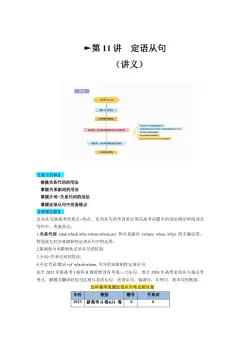
20.1 定语从句 Attributive Clauses
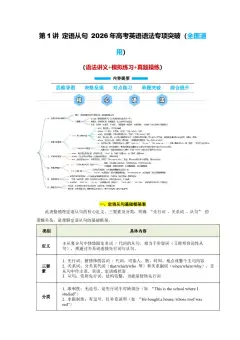
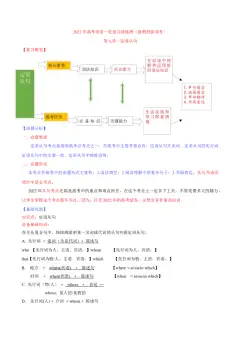
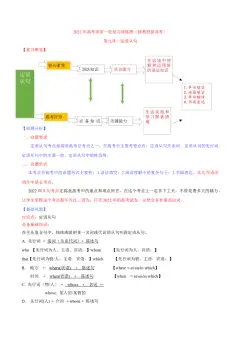
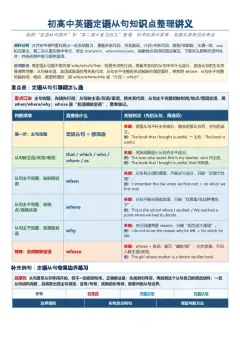
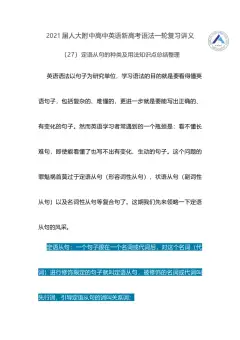
1. 定语从句概念
在句中起定语作用,修饰某一名词或代词,或修饰整个主句的从
句,叫做定语从句。被定语从句修饰的词叫先行词。定语从句通常
跟在先行词之后,由“关系词”引出,因此定语从句又可称为关系
分句。
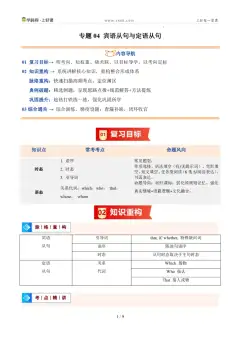
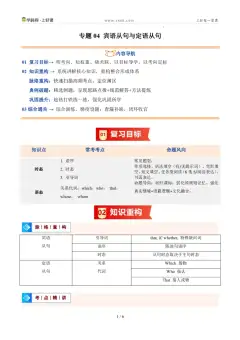
关系词可分为:
关系代词:which, that, who, whom, whose 等。
关系副词:when, where, why 等。
关系词常有3 个作用:
引导定语从句;代替先行词;在定语从句中担当一个成分,如主
语, 宾语, 定语和状语等。
The girl who is singing in the classroom is my sister.
在班里唱歌的那个女孩是我妹妹。
(the girl 是先行词,关系代词who 引导定语从句,同时在从句
中作主语。)
This is the room where Lu Xun once lived.
这是鲁迅曾经住过的房间。
(the room 是先行词,关系副词where 引导定语从句并在从句中
担任地点状语)
2. 关系代词引导的定语从句
关系代词所代替的先行词是表示人或物的名词或代词,并在从句
中充当主语, 宾语, 定语等成分。关系代词在定语从句中作主语时,
从句谓语动词的人称和数要和先行词保持一致。
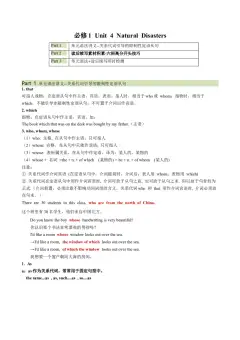
(1) who, whom, that
这些词代替的先行词是指人的名词或代词,who 作主语指人,
whom 作宾语指人,that 既可作主语又可作宾语(作宾语可以省
略),可以指人也可以指物。在从句中所起作用如下:
The boys who are playing football are from Class One.
正在操场上踢足球的男孩子是一班的。(who 在从句中作主语)
She is the girl whom/that I saw yesterday.
她就是我昨天见的那个女孩。(whom/that 在从句中作宾语)
The number of the people that/who came to China each year rises one
million.
来中国的人数每年增加一百万。(that/who 在句中作主语)
(2) whose 用来指人或物;若指物,它还可以同of which 互换,指
人的时候也可以用of whom 代替。
I have a classmate whose father is a doctor.
我有个同学的爸爸是医生。
Please give me the pencil whose (of which) color is green.
请把那根绿色的铅笔给我。
(3) which, that
它们所代替的先行词是指物的名词或代词,在从句中可作主语,
宾语等,作宾语时可以省略。
Computer game is something that is liked by most boys.
大多数男孩子都喜欢电脑游戏。(that 在从句中作主语)
Where is the book that I read this morning?
我今天早上读的书在哪里?(that 在从句中作宾语)
3. 关系副词引导的定语从句
常见的关系副词有:
why=for which
where=in/at/on/... which
when=during/on/in/... which
(1) when 指时间,在定语从句中作时间状语。
The time when we got together finally came.
我们在一起的时刻终于到来了。
I still remember the day when I first came to school.
我依然记得第一次来学校的那天。
(2) where 指地点,在定语从句中作地点状语。
Beijing is the city where I was born.
北京是我的出生地。
The house where I lived ten years ago has been pulled down.
我十年前住的房子已经倒塌了。
(3) why 指原因,在定语从句中作原因状语。
Please tell me why you are late.
请告诉我你为什么迟到了。
I don't know the reason why he looks unhappy today.
我不知道为什么他今天看起来不开心。
关系副词引导的从句可以由“介词 + 关系代词”引导的从句替
换。
The reason why/for which he refused the invitation is not clear.
他拒绝邀请的原因不清楚。
Great changes have taken place in the city where/in which I was born.
我出生的城市发生了很大的变化。
(4) 介词 + 关系代词引导的定语从句。
关系代词在定语从句中作介词宾语时,从句常由“介词 + 关系
代词”引导。
This is the school in which I studied two years ago.
我两年前在这个学校学习。
Do you remember the day on which we met each other?
还记得我们相遇的那天吗?
Tomorrow I will bring the magazine for which you asked.
明天我会把你要的杂志带来。
We'll go to hear the famous singer about whom we have often talked.
明天我们将要去听那个我们经常说起的歌手的演唱会。
注
1) 若介词放在关系代词前,关系代词指人时用whom,不可用
who 或者that;指物时用which,不能用that;关系代词是所有格时
用whose。
(×)The man who/that you talked with is my friend.
(√)The man with whom you talked is my friend.
和你说话的那个人是我的朋友。
(×)The plane in that we flew to Canada is very comfortable.
(√)The plane in which we flew to Canada is very comfortable.
我们去加拿大乘坐的飞机很舒适。
2) 含有介词的动词短语一般不拆开使用。例如:look for, look
after, take care of 等。
(×)This is the book for which I am looking.
(√)This is the book which/that I am looking for.
这就是我正在找的书。
3) “介词 + 关系代词”前可有some, any, none, both, all, neither,
most, each, few 等代词或者数次。
He loved his parents deeply, both of whom are very kind to him.
他很爱他的父母,他们对他很好。
In the basket there are quite many apples, some of which have gone
bad.
篮子里有很多苹果,其中一些已经坏了。
There are forty students in our class, most of whom are from big
cities.
我们班有40 个学生,大多数是来自大城市。
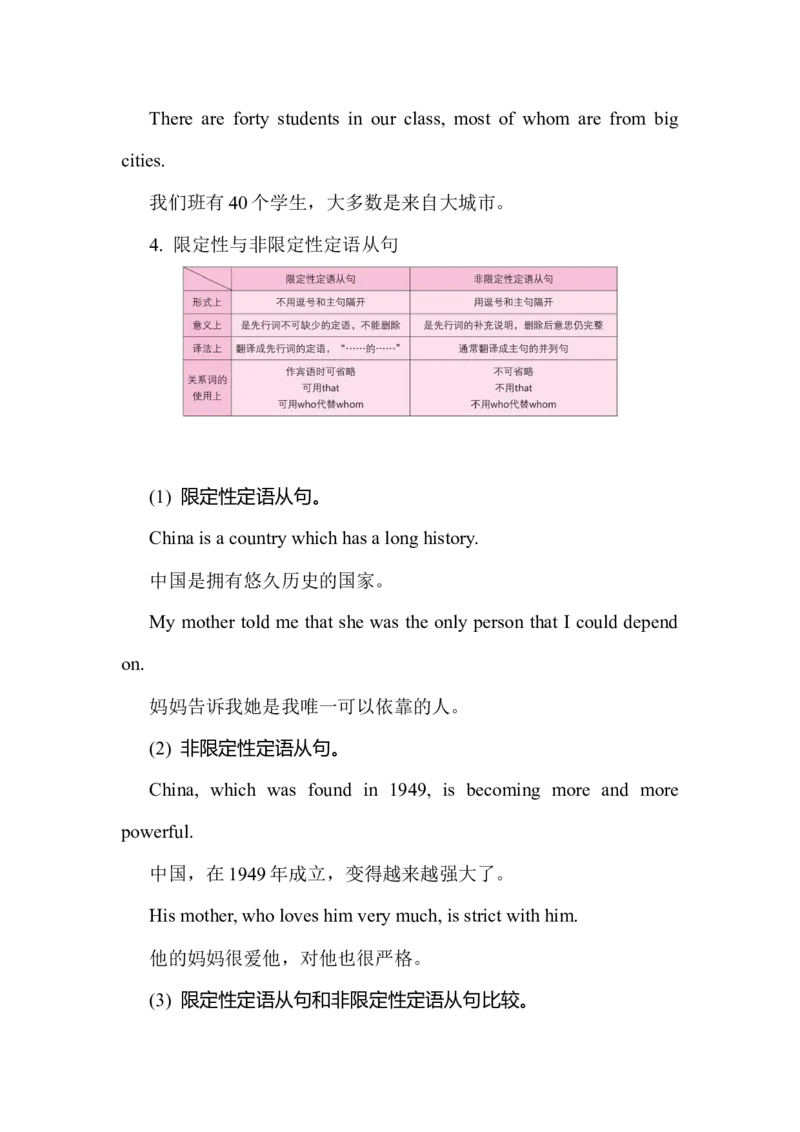
4. 限定性与非限定性定语从句
(1) 限定性定语从句。
China is a country which has a long history.
中国是拥有悠久历史的国家。
My mother told me that she was the only person that I could depend
on.
妈妈告诉我她是我唯一可以依靠的人。
(2) 非限定性定语从句。
China, which was found in 1949, is becoming more and more
powerful.
中国,在1949 年成立,变得越来越强大了。
His mother, who loves him very much, is strict with him.
他的妈妈很爱他,对他也很严格。
(3) 限定性定语从句和非限定性定语从句比较。
My sister who is a teacher always encourages me to study hard.
我那当老师的姐姐经常励我好好学习。(限定性定语从句,我还
有其他的姐姐)
My sister, who is a teacher, always encourages me to study hard.
我的姐姐是老师,她常常鼓励我好好学习。(非限定性定语从
句,我只有一个姐姐)
(4) 限制性定语从句只能用that 的几种情况。
1) 当先行词是anything, everything, nothing(something 除外),
few, all, none, little, some 等代词时,或者是由every, any, all, some, no,
little, few, much, each 等修饰时,只能用that,但有时可以省略。
Have you taken down everything (that) Mr. Li said?
你记下了李先生说的一切了吗?
There seems to be nothing (that) seems impossible for him in the
world.
对他来说,世界上似乎没有什么事是不可能的。
All that can be done has been done.
所有能做的都做了。
There is little (that) I can do for you.
我几乎不能为你做什么。
2) 当先行词前面有who, which 等疑问代词时,只能用that。
Who is the man that is standing there?
正站在那儿的那个人是谁?
Which is the T-shirt that fits me most?
哪件T 恤衫最适合我?
3) 当先行词被形容词最高级修饰时,只能用that。
This is the best film that I have seen.
这是我看过的最好的一部电影。
4) 当形容词被the very, the only, the same, the last 修饰时,只能用
that。
This is the very good dictionary that I want to buy.
这就是我想买的那本很实用的字典。
After the fire in his house, the old car is the only thing that he owned.
他家遭遇火灾之后,他仅剩那辆旧车。(当先行词指人时,偶尔
也可以用who)
Wang Hua is the only person in our school who will attend the
meeting.
我们学校仅有王华将去参加会议。
5) 当先行词被序数词修饰时,只能用that。
The first place that they visited in London was the Big Ben.
他们在伦敦首先参观的是大本钟。
6) 当关系代词在定语从句中作表语时,只能用that。
The village is no longer the one that it used to be 10 years ago.
乡村已经不再是10 年前的样子了。
7) 当先行词既有人,也有物时,只能用that。
The writer and his works that you told me about are admired by us all.
我们所有人都羡慕你告诉我的那位作家和他的作品。
(5) 关系代词as 和which 引导的非限制性定语从句。
as 和which 引导非限制性定语从句,有相同之处也有不同之处。
具体情况是:
1) as 和which 都可以在定语从句中作主语或者宾语,代表前面整
个句子。
He married her, as/which was natural.
他娶了她,这很自然。
He was honest, as/which we can see.
他很诚实,我们都能看到。
2) 当先行词被such, the same 修饰时,常用as。
I have never heard such a story as he tells.
我从没听过他讲的这个故事。
He is not such a fool as he looks.
他(实际上)不是看起来那么傻。
This is the same book as I lost last week.
这本书和我上周丢的那本一样。
3) 当先行词由the same 修饰时,偶尔也会用that 来引导定语从
句,但是和由as 引导的定语从句意思不同。
I wore the same dress that I wore at Tom's wedding.
我穿着在汤姆婚礼上穿过的那条裙子。
I wore the same dress as my young sister wore.
我和我妹妹穿着一样的裙子。
4) as 引导非限制性定语从句,可放在主句之前,或者主句之后,
甚至可以切割一个主句;which 引导的非限制性定语从句只能放在主
句之后。另外,“…………”as 有正如,正像的意思。
As is known to all, China is a developing country.
众所周知,中国是发展中国家。
He is from the south, as we can see from his accent.
从他的口音,我们可以知道他是从南方来的。
John, as you know, is a famous writer.
正如你所知,约翰是一个著名的作家。
He has been to Paris more than several times, which I don't believe.
我不相信他去过巴黎很多次。
Tom was always late for school, which made his teacher angry.
汤姆上学总是迟到,这让老师很生气。
注 当主句和从句存在逻辑上的因果关系时,常用which。
5. 定语从句与同位语从句的区别
(1) 定语从句由关系代词或者关系副词引导,关系词在句中充当
成分,有时可以省略;同位语从句主要由that 引导,在句中一般不
充当成分;句子也可以由when, where, how, why, whether, what 等词
引导,并充当成分。
The news he told me is true.
他告诉我的消息是真的。(定语从句)
The problem that we are facing now is how we can collect so much
money.
我们现在面临的问题是如何筹集巨额资金。(定语从句)
The problem how we can collect so much money is difficult to solve.
我们如何筹集巨额资金的问题是很难解决的。(同位语从句)
(2) 定语从句修饰先行词,它和先行词是修饰关系。
同位语从句说明先行词的具体内容,是补充说明的关系。
The plane that has just taken off is for London.
刚刚起飞的航班是飞往伦敦的。(定语从句)
The fact that he has been dead is clear.
他已经死了的事实很明确。(同位语从句)
(3) 同位语从句和先行词一般可以用be 动词发展成一个完整的句
子,而定语从句不可以发展成一个完整的句子。
The idea that we could ask the teacher for advice is wonderful.
我们可以请老师给点建议的主意不错。(同位语从句)
The idea was that we could ask the teacher for advice.
这个主意是我们可以请老师给点建议。(同位语从句的先行词 +
was + 同位语从句)
The fact that the moon moves around the earth is known to all.
月亮绕着地球转的事实众所周知。(同位语从句)
The fact is that the moon moves around the earth.
事实是月亮绕着地球转。(同位语从句的先行词 + is + 同位语
从句)