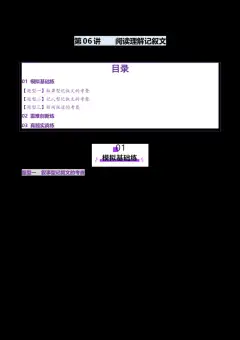
必做的10 篇经典阅读理解—记叙文
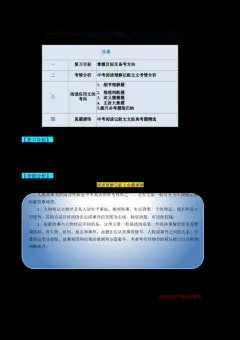
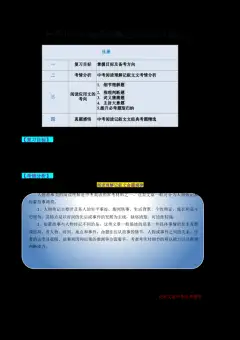
目录
经典试题01------------------------------------------------------------善意的力量
经典试题02------------------------------------------------------------环境保护
经典试题03---------------------------------------------走出自己的舒适区,践行自我成
长
经典试题04------------------------------------------------------------传播中医传统文化
经典试题05------------------------------------------------------------校园生活
经典试题06------------------------------------------------------------人生感悟
经典试题07------------------------------------------------------------微小善举的力量
经典试题08------------------------------------------------------------励志追梦的人生故事
经典试题09------------------------------------------------------------维护环境与正义
经典试题10------------------------------------------------------------重建社区联系
01
Every morning at 7:15, the flower lady appears at the 86th Street subway entrance. Her name is Maria,
though people usually call her la señora de las rosas. For twenty-three years, rain or shine, she has sold single roses
from a metal cart for $2 each.
I first noticed her during my chaotic freshman year in college. Rushing to catch the train one October day, I
tripped over a loose sidewalk brick, dropping my textbooks everywhere. Before I could react, Maria was beside me,
gathering the pages with hands weathered by decades of work. “Be careful, my kid,” she said softly, pressing a rose
into my palm (手心). “Today needs beauty.”
考前必做经典10 题
That rose sat in a coffee cup on my dormitory desk for weeks. When it withered ( 凋谢), I returned to buy
another — and ended up listening to Maria’s stories between customers. She had immigrated ( 移居) from
Colombia at sixteen, raised three children as a single mum, and kept this corner colourful with flowers even after
the increase in rent forced her to close her actual shop.
Last winter, Maria disappeared for two weeks. Regular customers whispered worries until a New York Post
reporter discovered the truth: she’d used her savings to pay a neighbor’s medical bill. When she reappeared,
wearing an oversized coat, the line at her cart stretched around the block. Strangers brought bottles of hot
chocolate; a ballet dancer performed pirouettes for her amusement.
On my graduation day, I brought Maria a handmade crown of flowers. She laughed, her wrinkles deepening
like sunlit petals(花瓣), and pinned it above her usual seat.
Now, as a teacher, I tell my students about the woman who turned a simple street corner into a sanctuary of
kindness. For twenty-three years, she didn’t just sell roses  —  she spread hope, warmth, and the quiet magic of
caring for strangers, proving beauty lives in ordinary hearts.
1.What is the function of paragraph 1?
A.To introduce the conflict of the story. B.To highlight the theme of the story.
C.To present the image of the character. D.To describe the status of the character.
2.Why did Maria press a rose into the author’s palm in paragraph 2?
A.To make a friend. B.To offer comfort.
C.To explain beauty. D.To secure a customer.
3.What can be inferred about Maria from paragraph 4?
A.Her family shaped her kindness. B.Her kindness earned her deep respect.
C.Her actions encouraged more donations.
D.Her reliance on neighbors grew over time.
4.Why are Maria’s wrinkles compared to sunlit petals in paragraph 5?
A.To reflect the hardships of her life.
B.To describe her natural aging.
C.To suggest her love for her flower business. D.To reveal her shining inner beauty.
词数:318  话题:善意的力量  浸润人文情怀  体裁:记叙文
02
A few years ago, teenager Mia Heller came across an article in her local newspaper about ongoing water
quality issues in her neighborhood in Warrenton, Virginia. Tests had revealed that the water available for daily
consumption was highly polluted by microplastics. Not long after that, Heller’s parents invested in a water filtration
system at her home. The system, however, comes with high price tags and constant upkeep. Seeing her mother
replace the water filter membranes (膜) time and again, Heller set out to find a better solution.
By early January of 2025, after testing in her garage and kitchen and overcoming obstacles, she had a
working prototype (原型). “It was essentially just a container,” she says. Within the container was her filtration
system, Heller chose a reusable magnetic (磁性的) oil called ferrofluid to selectively bind to microplastics as water
flows through her filtration system. While her model successfully filtered out the microplastics from the water in
two simple steps, the system still required constant maintenance, as it did not self-recycle the ferrofluid.
Determined to find an answer, Heller continued experimenting. About five trials later, she found the perfect
solution. Her current prototype, which is about the size of a standard bag of flour, consists of three modules. The
first unit, about a liter in volume, holds the polluted water inside it, while the second stores the magnetic oil-based
ferrofluid. The core process takes place in the third module, which is much smaller. “A magnetic field pulls the
microplastics out of the water, and the ferrofluid is recovered and reused in a closed circle,” explains Heller.
According to her tests, her prototype successfully removed 95.52 percent of microplastics from the water and
recycled 87.15 percent of the ferrofluid. Traditional drinking-water treatment plants remove about 70 to more than
90 percent of microplastic components. “The result is an affordable, low-waste filtration system without the use of
a solid membrane,” says Heller.
For her innovation, Heller was a finalist in the 2025 Regeneron International Science and Engineering Fair,
the world’s largest global science competition for high school students.
1.What directly drove Heller to seek a better solution?
A.Local water pollution.
B.High household expenses.
C.Frequent maintenance.
D.Inspiration from a newspaper.
2.What is the key for the current prototype?
A.Its special container.
B.Its two-step filtration.
C.Its three-module structure.
D.Its closed-circle recycling.
3.Which of the following best describes Heller according to the text?
A.Careful and considerate.
B.Curious and cautious.
C.Responsible and creative.
D.Ambitious and cooperative.
4.What can we learn from Heller’s story?
A.A change is as good as a rest.
B.Great minds think alike.
C.April showers bring May flowers.
D.Small savings can add up.
词数:348  话题:环境保护  体裁:记叙文
03
At 76, I’d long considered myself too set in my ways to try anything new. My life ran like a well-oiled
machine, scheduled and safe. Every day followed the same simple routine without any unexpected changes. But my
granddaughter’s simple question — “Grandma, when did you last do something that scared you?” — forced me to
step outside my comfort zone and rethink my attitude towards life.
Three old friends and I signed up for a weekend pottery workshop. I’d never touched clay in my life, and the
thought of shaping it with my own trembling hands filled me with unease. On the first morning, our instructor
encouraged us to give up perfection and embrace imperfection. She told us that mistakes in clay could always be
repaired and turned into special beauty. I struggled to centre the clay on the wheel, my hands unskillful and
awkward. More than once, the lump of earth twisted out of shape.
Yet as the hours passed, something shifted. I stopped worrying about making a “good” pot and began to
enjoy the quiet connection with the warm, damp clay. I focused on the gentle movement of my hands and the
smooth feeling under my fingers. When my first rough bowl took shape, I felt a burst of pride I hadn’t known in
decades.
On the final day, we were asked to carve a single word into our work that represented what we’d gained.
Most chose “joy” or “courage”. I carved “unfrozen”. To me, it meant letting go of the fear that I was too old to
grow and daring to start a new journey.
Our instructor looked at our creations and smiled. “You haven’t just made pots,” she said. “You’ve rewritten
your own stories.” Those words stayed with me long after the workshop ended. I realized growth doesn’t retire with
age; it only waits for the courage to begin again and discover a better self.
1.What made the author decide to take the pottery workshop?
A.Her friends’ strong persuasion.
B.Her granddaughter’s question.
C.Her dream of making a bowl.
D.Her hope to change her routine.
2.How did the author feel while making her first bowl?
A.Anxious initially but proud later.
B.Confident and calm all the way.
C.Curious yet soon uninterested.
D.Frustrated and discouraged halfway.
3.Why did the author carve “unfrozen” into her work?
A.To show her love for pottery.
B.To remember her granddaughter.
C.To express her inner change.
D.To praise the instructor’s help.
4.What can we infer from the text?
A.Growth is still possible for the elderly.
B.Perfection is the key to making good pots.
C.The author was good at shaping clay at first.
D.The instructor taught basic pottery skills quickly.
词数:320  话题:走出自己的舒适区,践行自我成长  体裁:记叙文
04
I’m Kate. Like many people in the UK, I grew up with a very narrow understanding of health. If I felt
anxious or tired, I just kept going. If I had a headache, I took painkillers. There was very little thought given to why
symptoms appeared or how to live in a way that might prevent them from happening. It wasn’t until my early
thirties, while working in a high-stress advertising job, that everything caught up with me. I was completely burnt
out.
One of the most alarming symptoms I was experiencing at the time was unusual heartbeats — loud uneven
throbs (跳动) that shook my chest every few minutes. I went to the hospital and was told doctors could do nothing,
except to keep an eye on it in case it caused problems later in life. There was no mention of emotional tension. No
questions about how I was dealing with stress. That was the moment I turned to acupuncture (针灸).
I didn’t know much about it, but something about it felt right. And that first treatment marked the beginning
of a deep and lasting change. Through acupuncture treatments, I found a kind of calm I hadn’t experienced in years.
My mind cleared, my body felt stronger, and those frightening heartbeats became less and less noticeable. I had
discovered a whole new way of seeing health and life.
That experience sparked my interest. I began reading everything I could about acupuncture: not just the
practical benefits, but the basic philosophy. I discovered that Chinese medicine is more of a way of understanding
ourselves and the world. It teaches that our health isn’t something to hand over to someone else to fix. It’s
something to respect and tend to every day, through our food, our emotional lives, our ability to respond to stress,
and our relationship with nature and the seasons.
1.How did Kate treat health issues early on?
A.Ignoring the root causes.
B.Taking painkillers regularly.
C.Stopping work when feeling tired.
D.Keeping a healthy lifestyle.
2.What made Kate turn to acupuncture?
A.Her heartbeats becoming more frequent. B.Doctors’ advice to keep an eye on it.
C.Her high-stress advertising job.
D.Doctors’ failure to address her stress.
3.What happened to Kate after her first acupuncture?
A.She lost trust in doctors.
B.She loved reading acupuncture books.
C.She experienced inner peace.
D.Her heartbeats returned to normal.
4.What does Kate think of Chinese medicine?
A.It tries to reveal mental factors.
B.It offers a new way to understand life.
C.It works better than Western medicine.
D.It requires daily food control.
词数:313  话题:传播中医传统文化  体裁:记叙文
05
Jennifer Hodges is a third-grade teacher. She says her students don’t just sit at desks every day. They do a lot
of practical learning, such as raising coho salmon (银鲑) and then releasing them into a lake. It’s through a program
called Salmon in the Classroom, established by the Alaska Department of Fish and Game.
Coho salmon lay eggs in the fall, when many schools start. The eggs remain in the classroom for about six
months before they are released into lakes. Though many of her students often see salmon in their backyard, few
are familiar with them. Hodges says, “With this project, they have a whole different perspective because they know
what it takes to actually go through the life stages of a salmon.”
One of the biggest challenges in raising coho salmon, however, is their sensitivity to water temperature. With
global warming becoming increasingly serious, learning about climate change is more crucial now than ever. In
2025, the Arctic had its warmest year on record. These concepts can seem abstract to third graders, but raising
salmon makes them concrete, since salmon require cold water to survive.
During the months when the salmon are in the classroom, students like to sit by the tank to observe, and
calculate when the eggs will turn into fry (鱼苗) based on the temperature of the tank. To them, it’s not practicing
math problems; it’s predicting the future.
Each year in May, Hodges takes her students on the Salmon Field Trip, where they get to release the salmon
they’ve raised in class. This trip imparts wisdom about life and nature, helping them grasp vital lessons they can
never learn from textbooks alone.
“The most memorable part is getting to say goodbye. We release the salmon after watching them hatch from
eggs and grow into fry while taking care of them,” says a boy, Fisher. “I can’t be more excited at that moment.”
1.What is the main purpose of Salmon in the Classroom?
A.To get salmon’s eggs for food.
B.To keep salmon in the backyard.
C.To teach the salmon life cycle in depth. D.To increase the salmon population in lakes.
2.What does raising salmon make students aware of?
A.The urgency of understanding climate change.
B.The importance of observing salmon regularly.
C.The difficulty of predicting climate conditions.
D.The necessity of mild weather for salmon survival.
3.What does the underlined word “imparts” in paragraph 5 mean?
A.Recalls.
B.Conveys.
C.Requires.
D.Evaluates.
4.How does Fisher find releasing the fish?
A.An easy job.
B.A painful story.
C.A worrying moment.
D.A fantastic experience.
词数:321  话题:校园生活  体裁:记叙文
06
The moment I slid into the car, Mom hit me with the news: I was to spend the afternoon with Grandpa while
she attended a meeting. My protest was immediate, but in vain, as Dad was also away on business.
When we entered Grandpa’s apartment, he sat before the television. Not long after Mom left, an awkward
stillness settled between us. When I tried to find a comfortable position on the worn sofa, my foot hit something
solid under the furniture, and I pulled out a wooden box. Grandpa glanced over, “Oh — my chess set.” I really
didn’t know Grandpa used to play chess. I just knew a boy in my class played and entered tournaments.
After a thoughtful pause, he offered to teach me. Grandpa introduced each piece — the king’s deliberate
steps, the queen that “zips all over”, knights tracing L-shaped paths. He made me name them all and demonstrate
their moves repeatedly, correcting my bad moves with unexpected patience.
During our first game, he explained every move, revealing strategic possibilities and warning against traps. I
was confused by the interconnected nature of the game — how each move opened countless possibilities. Just when
I thought I’d made a smart move, he would capture my piece. Eventually, he announced checkmate, my king
cornered and immobile. Game after game, I lost, but each lasted a little longer.
Mom’s return interrupted our game. “Chess? Did you take it easy on him, Dad?”
“Absolutely not. That’s not how learning works.”
She shot him a disapproving glance, but Grandpa added, “He did well. He learned a lot.”
Grandpa was right. The game revealed a truth beyond the board — life, like chess, is a web of connections
where each choice shapes what follows. The rigid lines between us had softened, replaced by something unspoken
yet real. When I thanked Grandpa for the chess lesson, he smiled in recognition — the first time I could ever
remember seeing him do so.
1.What was the relationship between the author and his Grandpa before that afternoon?
A.Distant.
B.Close.
C.Bitter.
D.Harmonious.
2.What does the underlined word “checkmate” most likely mean?
A.A person who checks the result.
B.A situation where no move remains.
C.A position where the king stays.
D.A move that captures one of the knights.
3.Why wouldn’t Grandpa go easy on the author?
A.To express his disapproval.
B.To help the author improve quickly.
C.To reveal a truth to the author.
D.To show interconnected nature of the game.
4.What is the best title for the passage?
A.A Strict Grandpa.
B.A Connecting Web.
C.A Newly-formed Bond.
D.A Pleasant Chess Lesson.
词数:329  话题:人生感悟  体裁:记叙文
07
Do I think the sky is falling? Sort of.
The game of life is hard, and a lot of us are playing hurt. I ache for the world but naturally I’m mostly
watching the Me Movie, where balance and strength are beginning to fail. What can we do as the creaking (嘎吱响
的) elevators of age slowly go down? The main solution is to get outside every day, ideally with friends. Old
friends — even thoughts of them — are my comfort.
Recently I was walking along a beach with Neshama. We go back 50 years. She is 84, short and strong.
Every so often, she bent down somewhat cautiously and picked up small items into a small cloth bag. “What are
you doing?” “I’m picking up micro litter. I try to help where I can.”
I reminded her of an old story. A great warhorse found a tiny sparrow (麻雀) struggling to straighten a bent
tree in the wind. The horse laughed and doubted its power, but the sparrow replies, “One does what one can.” This
is what older age means; we do what we can.
We continued our walk. Neshama bent to pick up bits of litter and started to slip, but I caught her and we
laughed. We are so physically vulnerable in older age. We have caught each other a lot and have come through
some periods of darkness and overwhelming losses, but friendship makes it all a rowing machine for the soul. We
can take it as long as we feel and give love, and laugh gently at ourselves as we fall apart. We know by a certain age
the great lies in our life — if you do or achieve this or that, you will be happy and rich. No. Love and service make
us rich.
1.What does the author think of her present life?
A.She enjoys making new friends.
B.She feels more struggles over aging process.
C.She finds it challenging to handle family crises.
D.She wants others to learn from her life experiences.
2.What message does the story of the sparrow convey?
A.Age makes small efforts less meaningful over time.
B.Strength in numbers is necessary to change the world.
C.Even the smallest action will contribute to a bigger result.
D.Every small action counts, no matter how insignificant it seems.
3.What does the underlined phrase “a rowing machine” most probably mean?
A.A tool that brings physical exercise and strength.
B.An endless routine that traps people in life troubles.
C.A spiritual support that helps get through hardships.
D.A burden that wears people down mentally over time.
4.What can be the best title for the text?
A.Dark Days, Heavy Hearts
B.Little Steps, Full Hearts
C.Fading Age, Fading Strength
D.Old Friends, Forever Homes
词数:303  话题:微小善举的力量  体裁:记叙文
08
Have you ever let circumstances convince you that your dreams are out of reach? Nancy Solari’s life is a
powerful answer to that doubt — she turned blindness, loss, and hardship into a life of purpose, proving that
“vision” has little to do with sight.
At 10, Nancy watched The Oprah Winfrey Show and knew she wanted to be a host. She later studied
Broadcasting and Psychology, building an early career in production and on-air reporting. But at 16, a diagnosis of
Retinitis Pigmentosa — a degenerative eye disease — changed everything. Her vision faded slowly: first, reading
teleprompters became a struggle, then faces blurred, until she was legally blind. She also faced domestic violence,
family tensions, and painful personal loss, each challenge strengthening her resilience.
One thing that sets Nancy apart is the way she connects with people in interviews. Instead of depending on
prewritten notes, she prepares by listening closely and allowing guests’ stories of heartbreak and success to shape
the conversation. “I don’t read notes,” she once shared. “The dialogue unfolds naturally, and guests often find it
therapeutic.”
Today, Nancy’s influence reaches far beyond broadcasting. She hosts The Living Full Out Show, a radio and
TV platform reaching millions, and founded Nonprofit MVP, a TV competition that offers exposure and prizes to
worthy nonprofits. As a coach and speaker, she encourages people to turn obstacles into opportunities. For Nancy,
“Living Full Out” — her life’s mantra ( 信条) — means trusting in faith, asking for help when necessary, and
refusing to let adversity define her story.
Her journey teaches us a timeless lesson: Our greatest limitations are often the ones we accept. With purpose
and courage, even the darkest challenges can become the foundation of our brightest achievements.
1.Why does the author mention The Oprah Winfrey Show in paragraph 2?
A.To introduce the history of broadcasting.
B.To show Nancy’s early interest in psychology.
C.To identify the source of Nancy’s career dream.
D.To compare Nancy’s hosting style with Oprah’s.
2.How does Nancy make her interviews special?
A.By using detailed prewritten notes.
B.By developing conversations naturally.
C.By inviting famous guests to her show.
D.By focusing on guests’ success stories.
3.Which of the following can best describe Nancy?
A.Determined and influential.
B.Humorous and relaxed.
C.Quiet and dependent.
D.Strict and doubtful.
4.What message does this text mainly convey?
A.Media work needs special skills.
B.Loss can prevent personal growth.
C.Purpose and courage beat hardship.
D.Success depends on public support.
词数:291  话题:励志追梦的人生故事  体裁:记叙文
09
Back in 2003, Erica Fernandez was just a kid helping 20 adults take care of the beach. They overheard a plan
to build a processing station for natural gas 14 miles off the coast of Oxnard. The plant would send over 200 tons of
air pollution per year to Erica’s community. Not only that, the station would take in millions of gallons of seawater
per day to cool its generators, and discharge the water more than 15 degrees centigrade hotter than the surrounding
ocean. This hot wastewater would cause serious harm to the surrounding ecosystem, killing tiny creatures and small
fish critical to the survival of marine mammals and fisheries.
Erica cared too much to stay silent. She joined her friends in weekly protests at the office of the natural gas
company. Prospects of stopping the project did not look good. The governor was in favor of it, and so were the
powerful state commissions that would have to approve it. “The word on the street was that there was nothing we
could do.”
Behind the scenes, however, opposition was growing, so Erica became the spokesperson for the youth of the
town. She regularly walked her neighborhood along the route of the proposed pipeline, using a hula hoop to show
people the size of the pipe that would pass by their houses. She talked to the media, and stories about the dangers of
the proposed facility began appearing in the press. “We made thousands of phone calls and sent thousands of
postcards telling the governor why this facility was a bad idea.” In July 2007, the governor made an unexpected
move: He turned down the project. Erica and her friends won!
As only the second person in her family to go to college, Erica wants to become an environmental lawyer so
she can fight for the environment and for the rights of communities. She wants other young people to speak out
when they see something wrong, even if they feel shy about it at first. She likes to quote the words of her role
model, César Chávez: “We are the future. The future is ours.”
1.What can be learned about the to-be-built processing station?
A.It is well-equipped.
B.It is energy-saving.
C.It is climate-damaging.
D.It is ecologically-unfriendly.
2.Why does the author mention the authorities’ response in paragraph 2?
A.To express Erica’s desperate mood.
B.To show the great barriers Erica faced.
C.To illustrate the power of public voice.
D.To stress the support from the government.
3.Which of the following can best describe Erica?
A.Determined and responsible.
B.Pioneering and curious.
C.Adventurous and aggressive.
D.Creative and industrious.
4.What message is mainly conveyed through Erica’s story?
A.Teamwork leads to success.
B.Bravery eventually pays off.
C.Speaking out makes a difference.
D.Actions speak louder than words.
词数:355  话题:维护环境与正义  体裁:记叙文
10
Oregon forests were the playground of my childhood, and our house there had a wide wraparound porch that
started from the front door and finally extended the entire length of the back of the house. That porch — and
indeed, almost every porch — was a place to gather and party, a place where neighbors stood as they dropped off
dishes, a place where we sat in the soft sun of a spring afternoon and told stories and whispered rumors and made
up tales of what lived deeper in the woods.
This was, I think, the beginning of my fascination with the front porch. If a house is a place where we learn
to create a home, then a front porch is an in-between space, a borderland that lets us keep some things at arm’s
length, while inviting other things close, a place that is at once public and private.
I remember my grandmother sitting there as she enjoyed the cooling air of a summer evening and talked to
my parents, my aunts, my uncles, and all the cousins old enough for ‘adult’ conversation. As neighbors walked by
they would pause, they would chat, they would check in with one another. These were not organized events. They
were a part of everyday life.
However, when did the front porch begin to disappear? When did we retreat inside, each confined to our own
spaces, with no care for what was happening outside our front doors? It feels like this change has come about
gradually, and been accompanied by challenges like loneliness, and a breakdown of our community ties — and I
can’t help but think they must be connected.
When I investigate community care and mutual aid, I am surprised by the types of actions that are suggested
for those looking to build stronger communities. An incomplete list: get to know your neighbors, socialize with
those who live nearby, share childcare duties, teach one another new skills.
You see, we’ve always known how to do this work. It is nothing new. Nothing radical. Nothing revolutionary
— it can be as simple as stepping out of our doors and sitting on our own front porch.
1.What was the porch like in the author’s childhood memories?
A.A family-only reunion spot.
B.A quiet corner for reading stories.
C.A lively center of social activities.
D.An occasion-specific party place.
2.Why does the author mention her grandmother and neighbors in paragraph 3?
A.To recall previous porch-events.
B.To show porch activities as daily life.
C.To highlight the porch’s decline.
D.To stress the close family relationship.
3.What led to the disappearance of front porches?
A.A link to weaker community ties.
B.A reflection of improved lifestyles.
C.A result of limited housing space.
D.A shift toward indoor entertainment.
4.What message does the passage convey?
A.The unavoidable decline of face-to-face interactions.
B.The necessity of formal events for neighborhood ties.
C.The insignificance of porches in modern community building.
D.The power of simple daily acts in fostering community bonds.
词数:363  话题:重建社区联系  体裁:记叙文