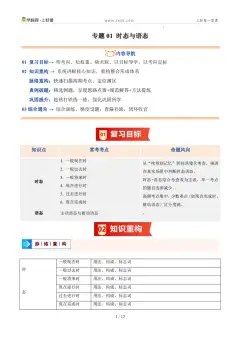
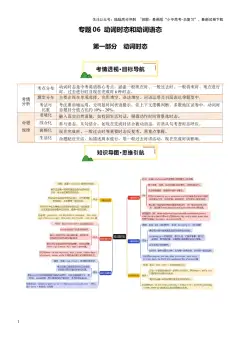
专题13 动词时态语态1(现在时)
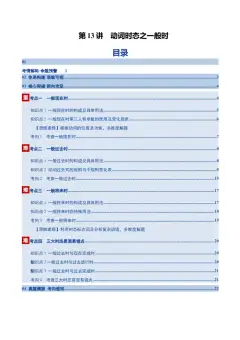
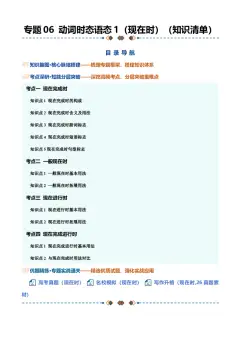
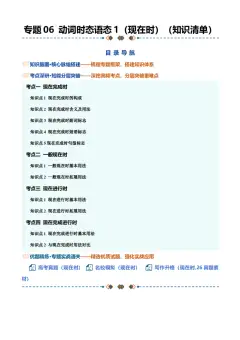
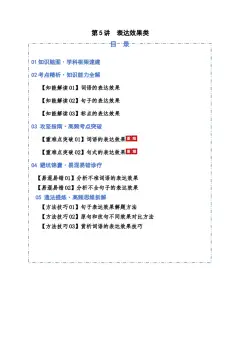
目录
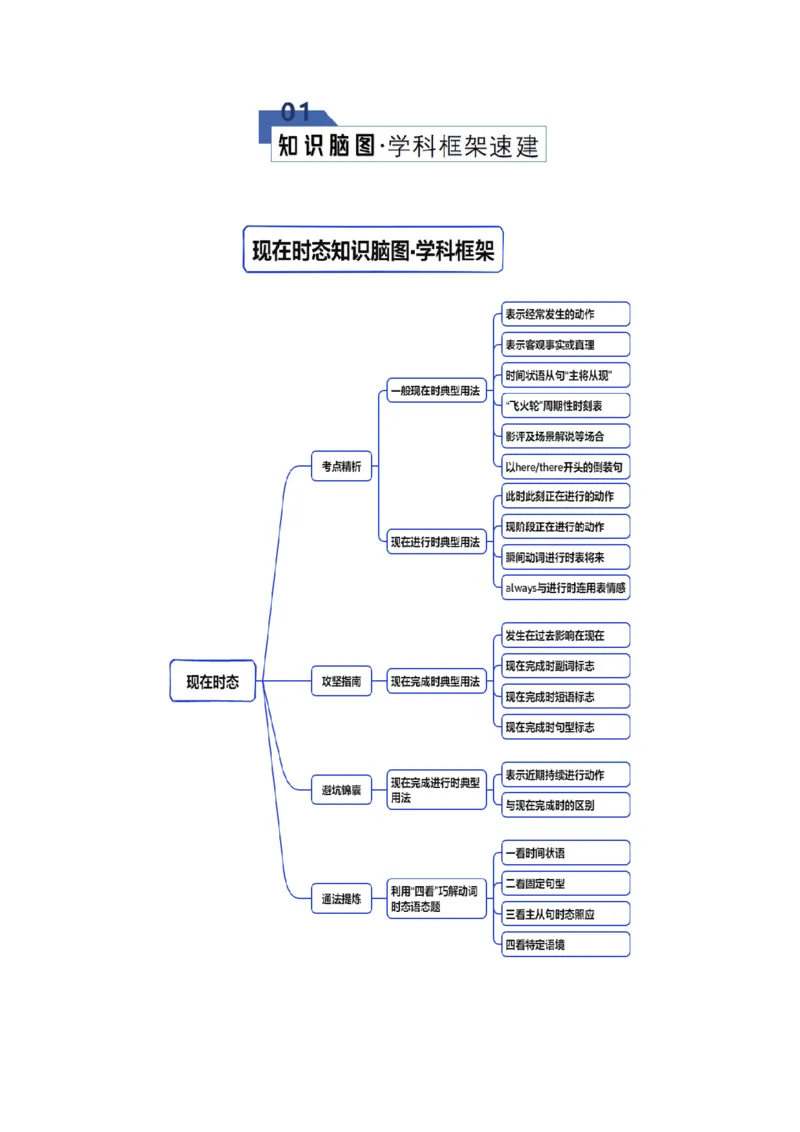
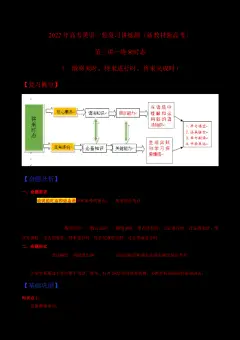
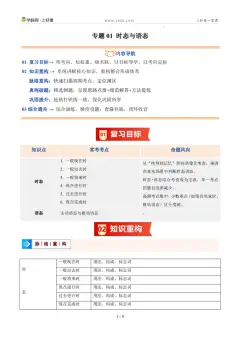
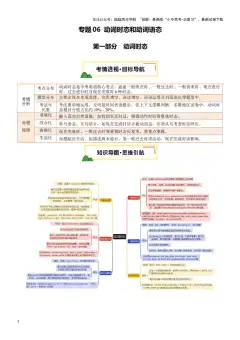
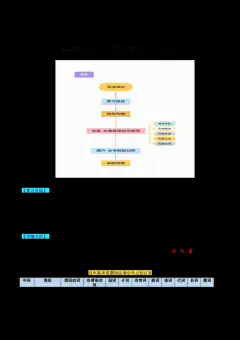
01 知识脑图·学科框架速建
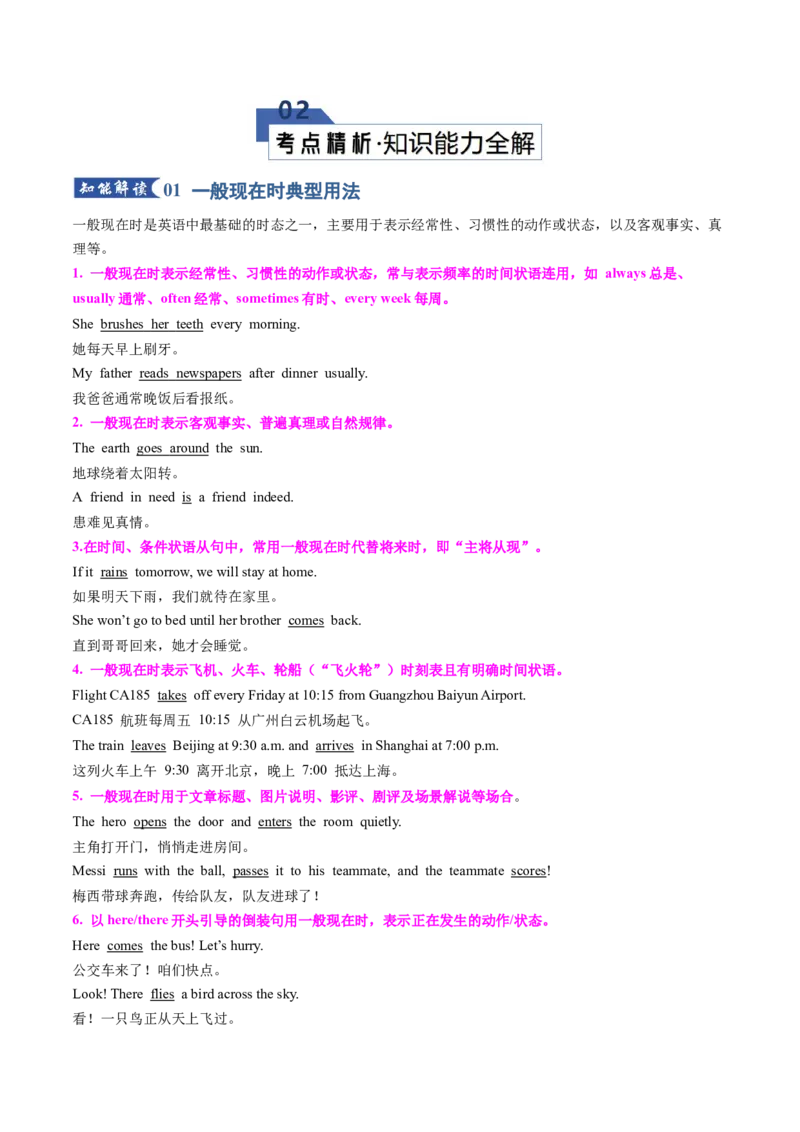
02 考点精析·知识能力全解
【知能解读01】一般现在时典型用法
【知能解读02】现在进行时典型用法
03 攻坚指南·高频考点突破
【重难点突破01】现在完成时典型用法
04 避坑锦囊·易混易错诊疗
【易混易错01】现在完成进行时典型用法
05 通法提炼·高频思维拆解
【用法拓展】利用“四看”巧解动词时态语态题
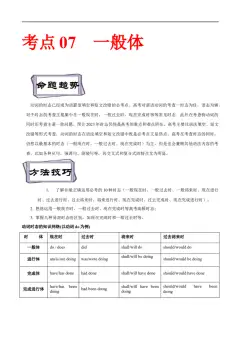
01 一般现在时典型用法
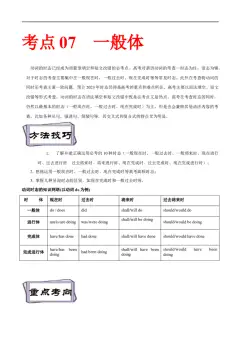
一般现在时是英语中最基础的时态之一,主要用于表示经常性、习惯性的动作或状态,以及客观事实、真
理等。
1. 一般现在时表示经常性、习惯性的动作或状态,常与表示频率的时间状语连用,如 always 总是、
usually 通常、often 经常、sometimes 有时、every week 每周。
She brushes

   her
    teeth

  every morning.
她每天早上刷牙。
My father reads

   newspapers

  after dinner usually.
我爸爸通常晚饭后看报纸。
2. 一般现在时表示客观事实、普遍真理或自然规律。
The earth goes

   around

  the sun.
地球绕着太阳转。
A friend in need is a friend indeed.
患难见真情。
3.在时间、条件状语从句中,常用一般现在时代替将来时,即“主将从现”。
If it rains tomorrow, we will stay at home.
如果明天下雨,我们就待在家里。
She won’t go to bed until her brother comes back.
直到哥哥回来,她才会睡觉。
4. 一般现在时表示飞机、火车、轮船(“飞火轮”)时刻表且有明确时间状语。
Flight CA185 takes off every Friday at 10:15 from Guangzhou Baiyun Airport.
CA185 航班每周五 10:15 从广州白云机场起飞。
The train leaves Beijing at 9:30 a.m. and arrives in Shanghai at 7:00 p.m.
这列火车上午 9:30 离开北京,晚上 7:00 抵达上海。
5. 一般现在时用于文章标题、图片说明、影评、剧评及场景解说等场合。
The hero opens the door and enters the room quietly.
主角打开门,悄悄走进房间。
Messi runs with the ball, passes it to his teammate, and the teammate scores!
梅西带球奔跑,传给队友,队友进球了!
6. 以here/there 开头引导的倒装句用一般现在时,表示正在发生的动作/状态。
Here comes the bus! Let’s hurry.
公交车来了!咱们快点。
Look! There flies a bird across the sky.
看!一只鸟正从天上飞过。
【跟踪训练】在空白处填入1 个适当的单词或括号内单词的正确形式。
1.On Monday mornings, it usually          (take) me an hour to drive to work although the actual distance is
only 20 miles.
2.As a rational person, of course, one always          (have) a reason to act on the strength of some reasons.
3.With more knowledge        (come) a deeper, more wonderful mystery.
4.It will be a long time before he          (recover) from his present troubles.
5.What            (puzzle) Lily’s friends is why she always has so many crazy ideas.
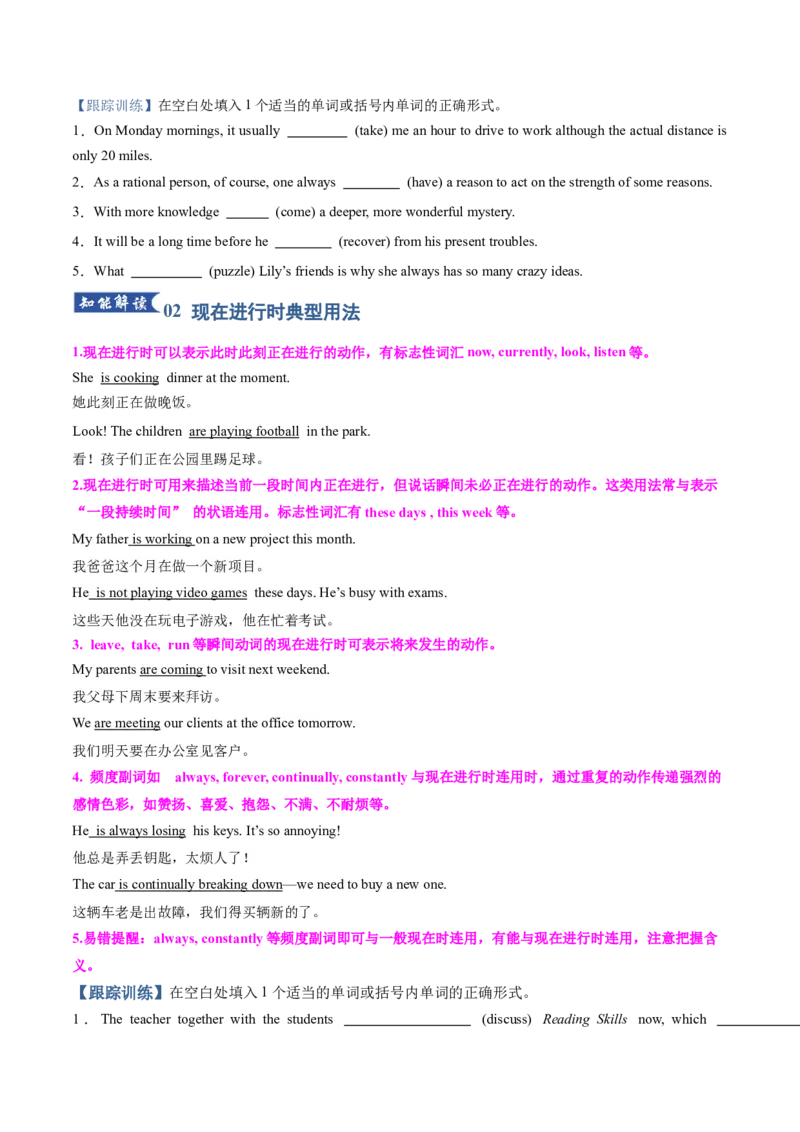
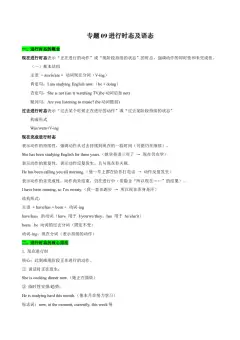
02 现在进行时典型用法
1.现在进行时可以表示此时此刻正在进行的动作,有标志性词汇now, currently, look, listen 等。
She is cooking dinner at the moment.
她此刻正在做晚饭。
Look! The children are playing football in the park.
看!孩子们正在公园里踢足球。
2.现在进行时可用来描述当前一段时间内正在进行,但说话瞬间未必正在进行的动作。这类用法常与表示
“一段持续时间” 的状语连用。标志性词汇有these days , this week 等。
My father  is working

   on a new project this month.
我爸爸这个月在做一个新项目。
He is not playing video games these days. He’s busy with exams.
这些天他没在玩电子游戏,他在忙着考试。
3. leave, take, run 等瞬间动词的现在进行时可表示将来发生的动作。
My parents are coming

   to visit next weekend.
我父母下周末要来拜访。
We are meeting our clients at the office tomorrow.
我们明天要在办公室见客户。
4. 频度副词如 always, forever, continually, constantly 与现在进行时连用时,通过重复的动作传递强烈的
感情色彩,如赞扬、喜爱、抱怨、不满、不耐烦等。
He is always losing his keys. It’s so annoying!
他总是弄丢钥匙,太烦人了!
The car  is continually breaking down

 —we need to buy a new one.
这辆车老是出故障,我们得买辆新的了。
5.易错提醒:always, constantly 等频度副词即可与一般现在时连用,有能与现在进行时连用,注意把握含
义。
【跟踪训练】在空白处填入1 个适当的单词或括号内单词的正确形式。
1 .The teacher together with the students              (discuss) Reading Skills now, which

(publish) in America last year.
2.Caring for the environment is becoming more and more important, because the earth’s natural resources

__________(run) out.
3.There is my mother’s picture. Look! My mother_________ (cook). She often cooks delicious meals for my
family.
4.We’re taking the train, leaving the day before the October holiday begins. We           (arrive) at 9:30 a. m.
and will start sightseeing right away, so I hope we sleep well on the train!
5.The water supply has been cut off now because the workers              (repair) one of the main pipes.
01 现在完成时典型用法
1.现在完成时表示过去发生的动作对现在造成的影响或结果。
I have known him since we were children.
我从小就认识他。
So far, they have won three games.
到目前为止,他们赢了三场比赛。
2.现在完成时常见副词标志:recently/lately 最近already 已经。
We have already visited that museum twice.
我们已经去过那个博物馆两次了。
They haven’t contacted me recently.他们最近没联系过我。
3.现在完成时常见短语标志:so far/up to now/up till now/do date 到目前为止;for 20 years 二十年;since
2023 自从2023 年以来;in/over the past five weeks 在过去五周内。
To date, the project has cost more than we expected.
到目前为止,这个项目的花费超出了我们的预期。
Over the past five weeks, she has read 10 books.
在过去五周内,她读了 10 本书。
4.现在完成时常见句型标志:It is the first time that….; It has been….since ….; the +最高级+名词+that 从句。
It is the first time that she has eaten Sichuan hotpot.
这是她第一次吃四川火锅。
It has been a month since she moved to New York.
自从她搬到纽约已经一个月了。
That

 i s the worst storm that

  we have experienced in years.
那是我们多年来经历过的最严重的暴风雨。
【跟踪训练】在空白处填入1 个适当的单词或括号内单词的正确形式。
1.During the last three decades, the number of people participating in physical fitness programs __________

(increase) sharply.
2.In recent years, many big cities        (give) up the custom of lighting firecrackers on the Spring Festival to
avoid air pollution.
3.It’s the first time that the most active volcano in the world, Mauna Loa in Hawaii,          (erupt) in almost
40 years.
4.Since 1984, dozens of countries and regions from all over the world           (join) in the festival.
5.Over the past few years, more and more middle-class families            (attach) great importance to a high
quality education.
01 现在完成进行时典型用法
1.现在完成进行时表示一个近期内时断时续、重复发生的动作,常和for,since 引导的时间状语连用。
She has lived in London for 5 years.
她在伦敦住了 5 年,强调 “住” 的状态持续到现在,可能继续住。
She has been living in London for 5 years.
她在伦敦住了 5 年,强调 “一直在住” 的过程,更突出持续性。
2. 现在完成进行时和现在完成时的用法比较
现在完成进行时
现在完成时
示例
表示动作的重复
一般不表示
重复性
Have you been meeting him recently? 你最近常和他见面吗?
Have you met him recently? 你最近见到过他吗?
含有感情色彩
一般是平铺
直叙
I have been waiting for you for two hours. 我一直等了你两个小时。
(表示不满)
I have waited for you for two hours. 我等了你两个小时。(说明事实)
强调事情的过程
强调事情结
果
Who has been eating the oranges? 谁一直在吃这些桔子呀?(还剩余
一些)
Who has eaten the oranges? 谁把桔子吃光了?(强调吃得一个不剩)
【跟踪训练】在空白处填入1 个适当的单词或括号内单词的正确形式。
1.This organic farm           (produce) fine Italian olive oil since 1917. It will provide more high-quality
olive oil in the future.
2.Chinese researchers          (experiment) with hydroponics since the 1970s and will continue to do so.
3.Mary             (work) really hard on her book for three days and thinks she will have finished it by
Friday.
4.We         (grow) a lot of vegetables in the garden since last spring, which provides fresh produce for our
family.
5.China’s high-speed railways           (grow) from 9,000 to 25,000 kilometres over the past few years.
 利用“四看”巧解动词时态语态题
一看时间状语, 按图索骥,对号入座。
时间状语类型
对应时态
示例标志词
经常性、习惯性动作
一般现在时
often, usually, every day
过去某一具体时间
一般过去时
yesterday, last week, in 2020
将来某一时间
一般将来时
tomorrow, next month, in + 将来时间
过去某时正在进行
过去进行时
at 8 last night, when + 过去时
从过去持续到现在
现在完成时
since + 时间点,for + 时间段,recently
过去的过去
过去完成时
by + 过去时间,before + 过去时
例题 1:We ______ (have) a meeting every Monday morning.
时间状语 “every Monday morning”表示 “经常性动作”→ 一般现在时。
答案:have
例题 2:By the end of last term, we ______ (learn) 3000 English words.
时间状语 “by the end of last term”(到上学期末)表示 “过去的过去”→ 过去完成时。
答案:had learned
二看整个固定句型, 依据其特定用法作答。
在动词时态语态题中,许多固定句型有其特定的时态搭配规则,掌握这些 “固定句型的特定用法” 能快
速锁定答案。
例题 1:It is the third time that she ______ (win) the prize.
主句为 “it is”→ 从句用现在完成时。
答案:has won
例题 2:It was the first time that we ______ (travel) abroad.
主句为 “it was”→ 从句用过去完成时。
答案:had traveled
例题 3:No sooner ______ (she finish) the report than the boss asked for it.
否定词 “no sooner” 位于句首,主句倒装;动作“finish”在“asked”之前→过去完成时倒装。
答案:had she finished
三看主从句时态照应, 依据其用法作答。
1. 主句谓语动词是现在或将来时,从句谓语动词可以用任何需要的时态。
I'll tell you what

   I   will

   be
    doing

   at    8    o'clock

   tomorrow

 . 我会告诉你明天8 点我将在做什么。
2. 主句谓语动词是一般过去时,从句谓语动词需用相应的过去时态。
She told me that

   she

   was

   watching

   TV

   at    8    o'clock

   last

   night

 . 她告诉我她昨晚8 点在看电视。
3. 主句谓语动词是一般过去时,从句表示客观真理时其时态不用改变。
Our physics teacher said that

   light

   travels

   faster

   than

   sound

 . 我们的物理老师说光比声音传播得快。
四看特定语境照应, 依据其用法作答。
语法填空科技类多用一般现在时,故事经历类多用一般过去时。
【跟踪训练】在空白处填入1 个适当的单词或括号内单词的正确形式。
1.In the past few years, online learning          (become) a significant part of the university and college
experience.
2.I        (intend) to call on you, but was prevented from doing so.
3.Hardly          the police received the emergency call when they rushed to the scene.
4.It is the first time that I                (participate) in the voluntary activity themed Traditional Chinese
Culture.
5.He is the only one of the students who           (be) a winner of scholarship for three years.
一、单项填空(高考真题)
1. (2025 全国一卷)“The players’ personalities            (reveal) during the game, and one’s weaknesses are
exposed to the opponent,” she adds.
2.(2025 浙江1 月卷)The concept           (be) certainly not new – men have been renting good suits for
动词时态语态(1)综合能力提升
decades – but for female shoppers, it is just taking off.
3.(2024 新课标I 卷)Further, the Silk Route Garden around the greenhouse           (walk) visitors
through a journey influenced by the ancient Silk Road, by which silk as well as many plant species came to
Britain for the first time.
4.(2025 北京卷)Some choices are quick, while others take more thought. Usually, better outcomes ________
(achieve) through a thorough understanding of strategies like risk tolerance.
5.(2024 浙江1 月卷)Over the last two years, some supermarkets __________ (start) selling chicken or salad in
packs designed with two halves containing separate portions (份).
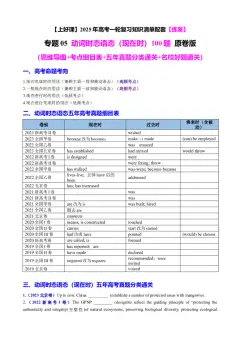
6.(2023 北京卷)Up to now, China __________ (establish) a number of protected areas with mangroves.
7.(2022 北京卷)The use of those plastics


  (increase) by 300% since 2019. The world won’t survive
if this situation continues.
8.(2021 北京卷)There __________ (be) a dramatic rise in the number of extreme weather events over the past
20 years, caused largely by rising global temperatures, according to a new report from the United Nations.
9.(2022 全国甲卷)In the last five years, Cao _________ (walk) through 34 countries in six continents, and in
2016, he reached the top of Kilimanjaro, Africa’s highest mountain.
10.(2022 北京卷)The use of those plastics _________ (increase) by 300% since 2019. The world won’t survive
if this situation continues.
二、现在时态与语法填空
(24-25 高一下·江苏·期末)阅读下面短文,在空白处填入1 个适当的单词或括号内单词的正确形式。
Hidden among     1     (tower) trees in Shuikou village, Xu Dan’s homestay attracts an uninterrupted
flow of urban residents seeking calmness and tradition.
At the main courtyard of her rural house in Changxing county of Huzhou city in East China’s Zhejiang
province, lies a peaceful pool so clear     2     it looks like a mirror of the sky,     3     a small wooden
boat gently drifting. Arched stone bridges span the water to link scattered courtyards and winding paths that
meander through small artificial mountains, each rock carefully     4     (place) to echo the harmony of classic
Chinese gardens.
Tea artisans in flowing robes perform age-old rituals — steeping, pouring, and presenting the tea with
graceful movements. Guests     5     (welcome) not only with warmth but also a ceremonial tea treat: three
flavors, each filled with special meaning. “The sweet tea, crafted from     6     (fragrance) guihua blossoms
and delicate mandarin slices, symbolizes an abundant and joyful life. The salty tea is a mix of smoked beans, dried
carrots, sesame seeds, orange peel, and crushed tea leaves that     7     (honor) the hard work of harvest and
the earthy     8     (rich).” Xu says as she warmly welcomes guests in late April.
Finally, the plain tea, simple and pure, lingers with     9     fresh aftertaste that reminds people of the
essence of true friendship — like plain tea, friendship should be honest and genuine, cherished deeply for      10
it is, she explains.