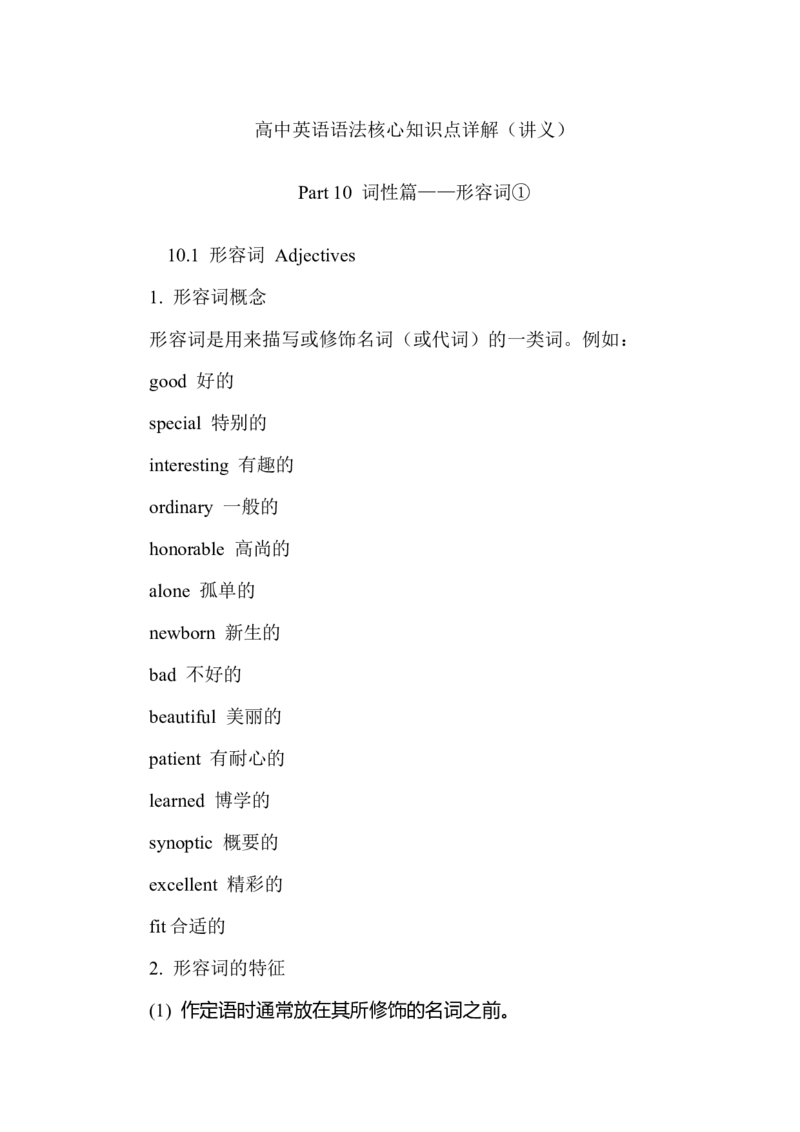
高中英语语法核心知识点详解(讲义)
Part 10 词性篇——形容词①
10.1 形容词 Adjectives
1. 形容词概念
形容词是用来描写或修饰名词(或代词)的一类词。例如:
good 好的
special 特别的
interesting 有趣的
ordinary 一般的
honorable 高尚的
alone 孤单的
newborn 新生的
bad 不好的
beautiful 美丽的
patient 有耐心的
learned 博学的
synoptic 概要的
excellent 精彩的
fit 合适的
2. 形容词的特征
(1) 作定语时通常放在其所修饰的名词之前。
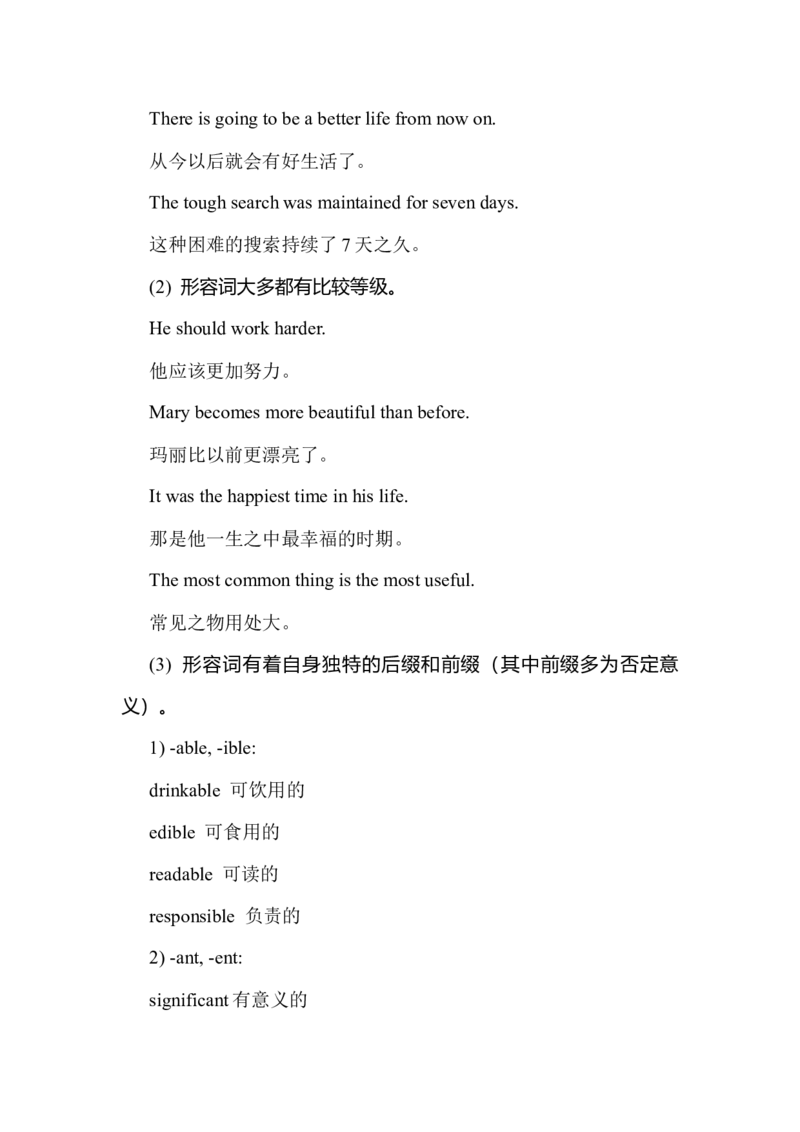
There is going to be a better life from now on.
从今以后就会有好生活了。
The tough search was maintained for seven days.
这种困难的搜索持续了7 天之久。
(2) 形容词大多都有比较等级。
He should work harder.
他应该更加努力。
Mary becomes more beautiful than before.
玛丽比以前更漂亮了。
It was the happiest time in his life.
那是他一生之中最幸福的时期。
The most common thing is the most useful.
常见之物用处大。
(3) 形容词有着自身独特的后缀和前缀(其中前缀多为否定意
义)。
1) -able, -ible:
drinkable 可饮用的
edible 可食用的
readable 可读的
responsible 负责的
2) -ant, -ent:
significant 有意义的
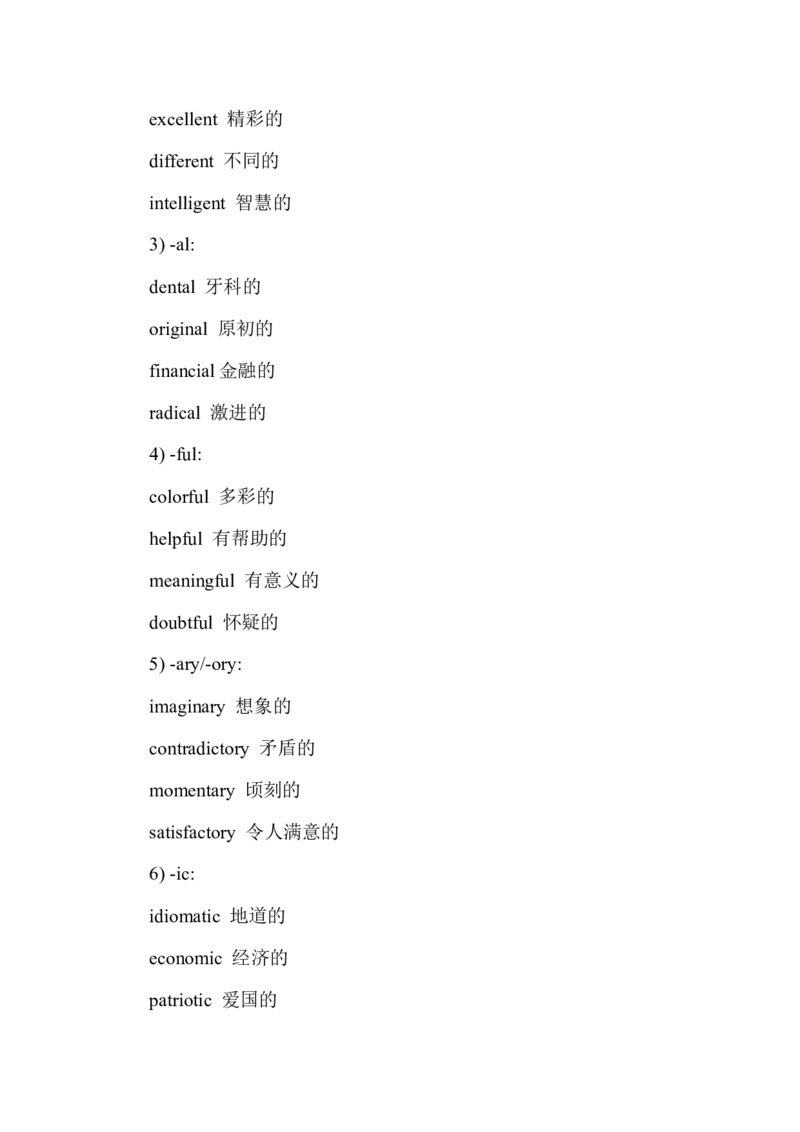
excellent 精彩的
different 不同的
intelligent 智慧的
3) -al:
dental 牙科的
original 原初的
financial 金融的
radical 激进的
4) -ful:
colorful 多彩的
helpful 有帮助的
meaningful 有意义的
doubtful 怀疑的
5) -ary/-ory:
imaginary 想象的
contradictory 矛盾的
momentary 顷刻的
satisfactory 令人满意的
6) -ic:
idiomatic 地道的
economic 经济的
patriotic 爱国的
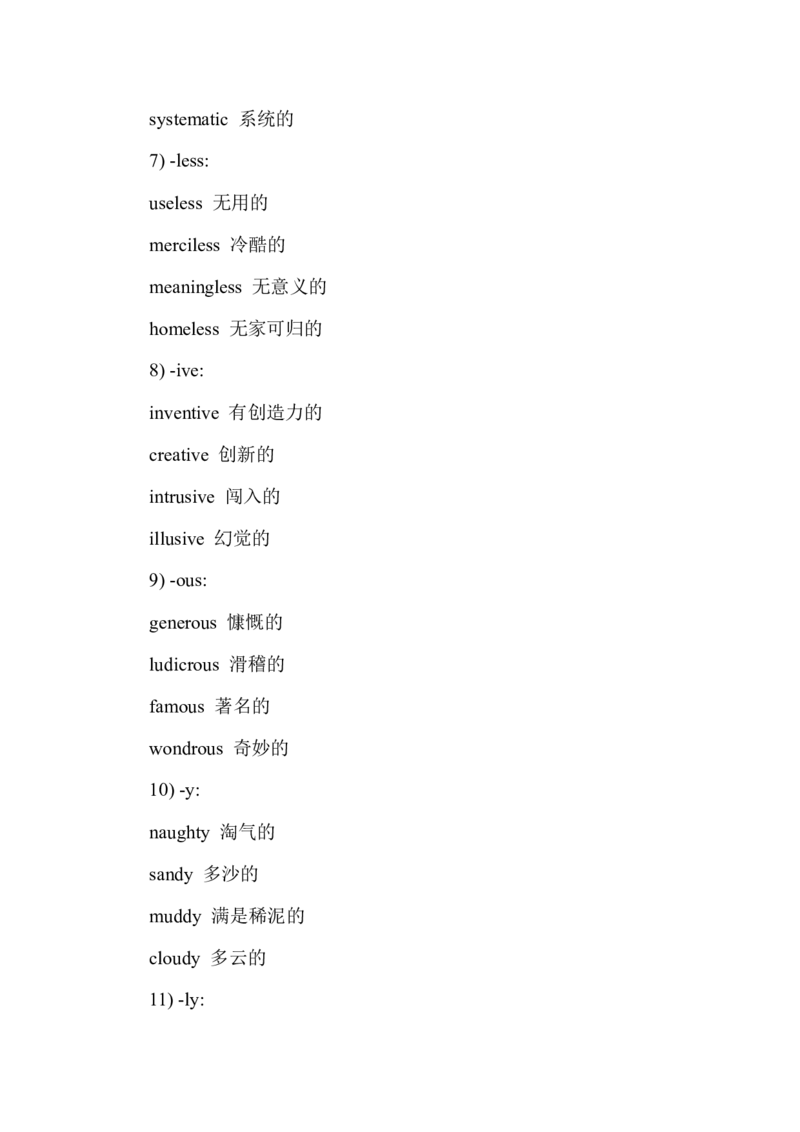
systematic 系统的
7) -less:
useless 无用的
merciless 冷酷的
meaningless 无意义的
homeless 无家可归的
8) -ive:
inventive 有创造力的
creative 创新的
intrusive 闯入的
illusive 幻觉的
9) -ous:
generous 慷慨的
ludicrous 滑稽的
famous 著名的
wondrous 奇妙的
10) -y:
naughty 淘气的
sandy 多沙的
muddy 满是稀泥的
cloudy 多云的
11) -ly:
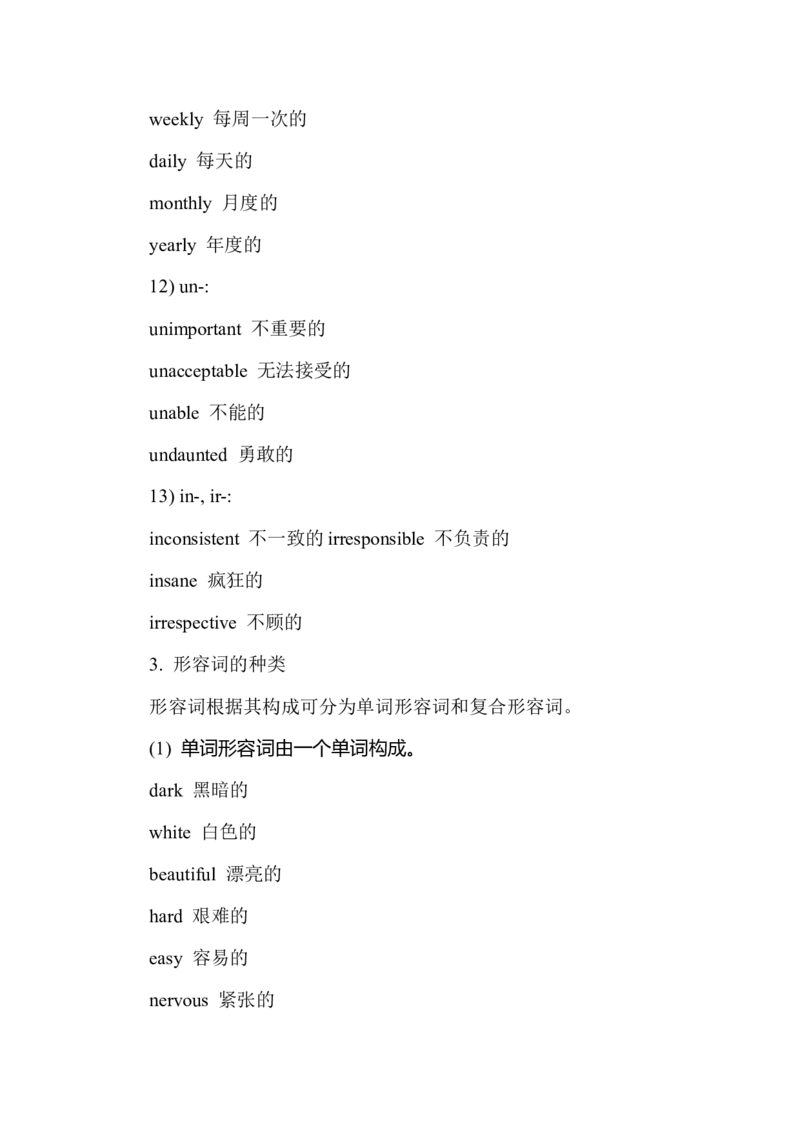
weekly 每周一次的
daily 每天的
monthly 月度的
yearly 年度的
12) un-:
unimportant 不重要的
unacceptable 无法接受的
unable 不能的
undaunted 勇敢的
13) in-, ir-:
inconsistent 不一致的irresponsible 不负责的
insane 疯狂的
irrespective 不顾的
3. 形容词的种类
形容词根据其构成可分为单词形容词和复合形容词。
(1) 单词形容词由一个单词构成。
dark 黑暗的
white 白色的
beautiful 漂亮的
hard 艰难的
easy 容易的
nervous 紧张的
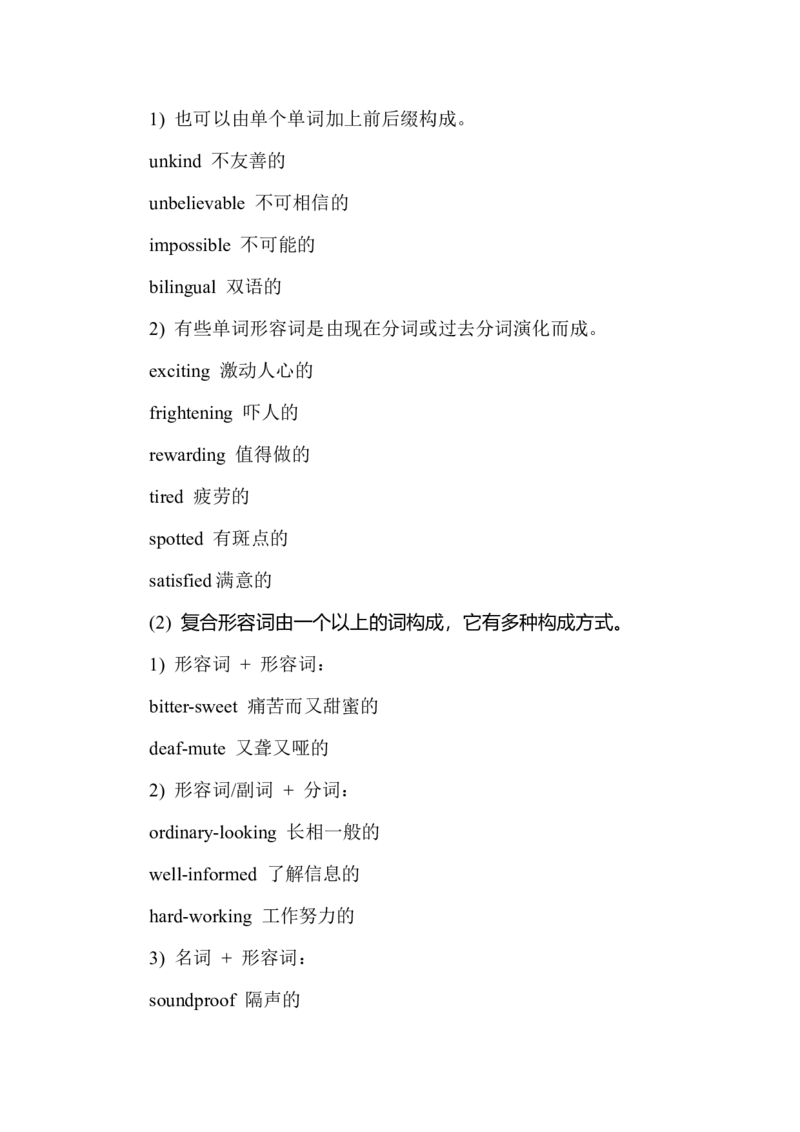
1) 也可以由单个单词加上前后缀构成。
unkind 不友善的
unbelievable 不可相信的
impossible 不可能的
bilingual 双语的
2) 有些单词形容词是由现在分词或过去分词演化而成。
exciting 激动人心的
frightening 吓人的
rewarding 值得做的
tired 疲劳的
spotted 有斑点的
satisfied 满意的
(2) 复合形容词由一个以上的词构成,它有多种构成方式。
1) 形容词 + 形容词:
bitter-sweet 痛苦而又甜蜜的
deaf-mute 又聋又哑的
2) 形容词/副词 + 分词:
ordinary-looking 长相一般的
well-informed 了解信息的
hard-working 工作努力的
3) 名词 + 形容词:
soundproof 隔声的
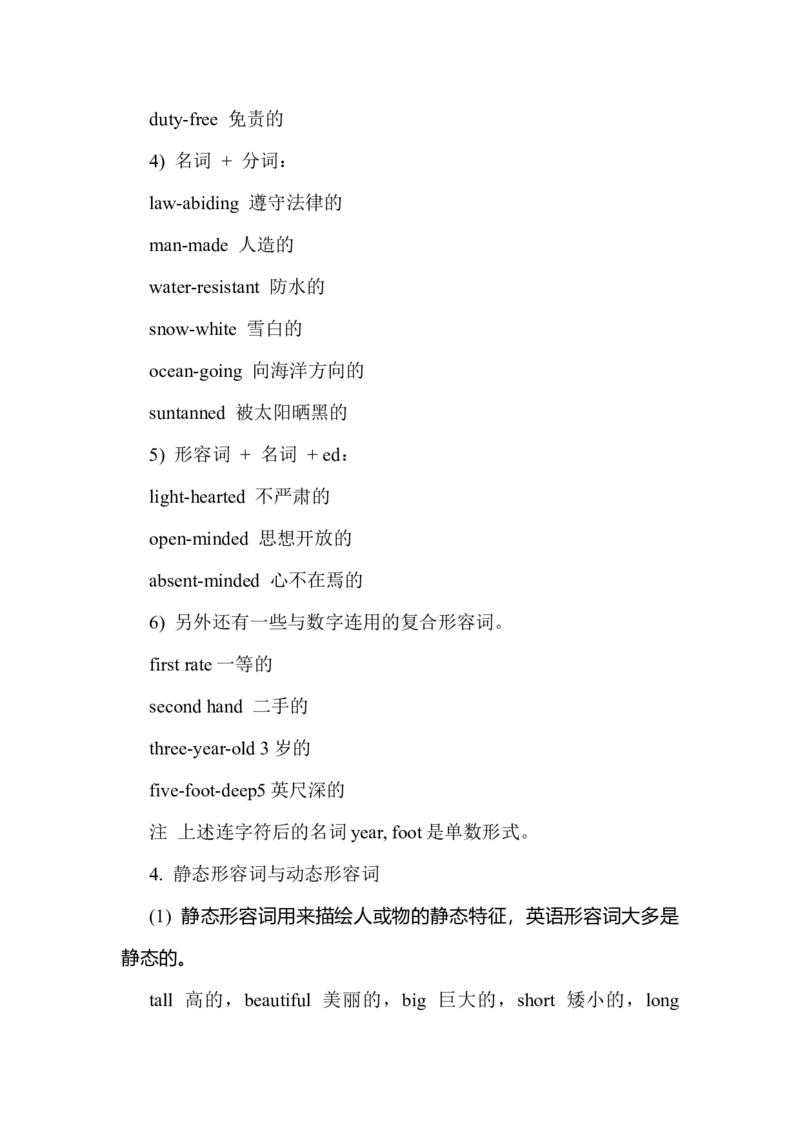
duty-free 免责的
4) 名词 + 分词:
law-abiding 遵守法律的
man-made 人造的
water-resistant 防水的
snow-white 雪白的
ocean-going 向海洋方向的
suntanned 被太阳晒黑的
5) 形容词 + 名词 + ed:
light-hearted 不严肃的
open-minded 思想开放的
absent-minded 心不在焉的
6) 另外还有一些与数字连用的复合形容词。
first rate 一等的
second hand 二手的
three-year-old 3 岁的
five-foot-deep5 英尺深的
注 上述连字符后的名词year, foot 是单数形式。
4. 静态形容词与动态形容词
(1) 静态形容词用来描绘人或物的静态特征,英语形容词大多是
静态的。
tall 高的,beautiful 美丽的,big 巨大的,short 矮小的,long
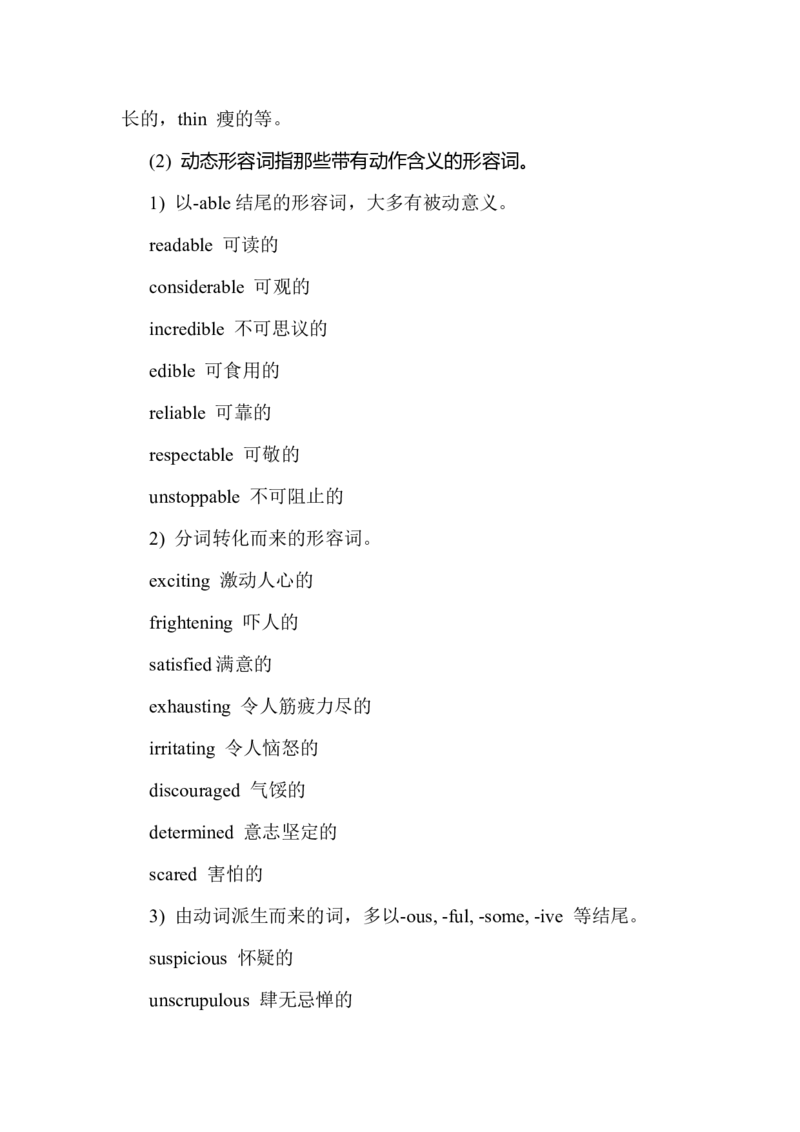
长的,thin 瘦的等。
(2) 动态形容词指那些带有动作含义的形容词。
1) 以-able 结尾的形容词,大多有被动意义。
readable 可读的
considerable 可观的
incredible 不可思议的
edible 可食用的
reliable 可靠的
respectable 可敬的
unstoppable 不可阻止的
2) 分词转化而来的形容词。
exciting 激动人心的
frightening 吓人的
satisfied 满意的
exhausting 令人筋疲力尽的
irritating 令人恼怒的
discouraged 气馁的
determined 意志坚定的
scared 害怕的
3) 由动词派生而来的词,多以-ous, -ful, -some, -ive 等结尾。
suspicious 怀疑的
unscrupulous 肆无忌惮的
careful 小心的
helpful 有帮助的
creative 创造性的
troublesome 麻烦的
abusive 侮辱性的
talkative 喋喋不休的
(3) 区别动态形容词和静态形容词主要有以下两个标准:
1) 动态形容词可以用进行时,而静态形容词没有进行时。
可以说She is being witty. 她在耍小聪明。因为witty 在这里是动
态形容词。但不能说She is being pretty. 因为pretty 是静态形容词。
2) 动态形容词可受主观控制,用于祈使句和使役结构中,而静
态形容词不能这样使用。
可以说Be careful. 要小心。Be patient. 耐心点。但不能说Be
tall./Be fat。因为这里的careful,patient 是动态形容词,而tall 和fat
是静态形容词。
可以说I persuaded him to be generous. 我说服了他,让他大方
点。但不能说I persuaded her to be pretty. 因为这里的generous 是动
态形容词,而pretty 是静态形容词。
5. 等级形容词与非等级形容词
(1) 等级形容词可以用来进行比较,故有比较级和最高级。
good 好
great 伟大的
important 重要的
better 更好
greater 更伟大的
more important 更重要的
best 最好
greatest 最伟大的
most important 最重要的
(2) 非等级形容词不具有可比较的性质,故没有比较级和最高
级。这些形容词通常用来表示事物的类别, 来源,或一种极端, 唯一
的性质,是不能进行比较的。
absolute 绝对的
only 唯一的
empty 空的
unique 独一无二的
monthly 按月的
dead 死亡的
asleep 睡着的
excellent 精彩的
wrong 错误的
matchless 无可匹敌的
full 满的
circular 圆形的
alive 活着的
English 英语的
woolen 羊毛的
original 原始的
perfect 完美的
weekly 每周一次的
horizontal 水平的
living 有生命的
6. 形容词比较级结构
(1) 形容词的比较等级
英语里形容词有3 个比较等级,即原级, 比较级和最高级。
1) 一般说来,表示程度相同,即“和……一样……”时用原
级。
It is as beautiful as paradise in Heaven.
这里如天堂般美丽。
This room is as broad as it is long.
那个房间长宽相等。
2) 将程度不同的二者进行比较,即表示“ 比… … 更
(还)……”时用比较级。
Oil is lighter than water.
油比水轻。
Action speaks louder than words.
行动胜于言辞。
3) 表示“最……”时用最高级。
She is the best girl for the paperwork.
她是最适合做这项文书工作的女孩。
He is the most versatile of actors.
他是最为多才多艺的演员。
(2) 形容词比较级和最高级的规则形式
形容词比较等级的规则变化如下表:
(3) 形容词比较等级的不规则形式
英语里有些形容词和副词的比较等级变化是不规则的,如下页
表:
针对上表形容词用法小解析:
1) 其中many, much, little, few 也可用作限定词或不定代词。
2) little 表示“小的”时,其比较级和最高级可与small 相同。
3) further 现在多用作原级形容词,意为“进一步的”,也可用作
动词,表示“促进”。而farther/farthest 通常用来表示距离。
We must await further developments.
我们必须等待事态的进一步发展。
I plan to further my study.
我计划继续深造。
Go farther and fare worse.
适可而止。
4) elder 和eldest 多指兄弟姐妹之间的长幼关系,且不与than 连
用。
My elder brother prefers computer.
我哥哥更喜欢计算机。
The burden fell on the eldest son.
担子落在了长子身上。
5) later 和latest 指时间上较晚,最晚或较近,最近,而latter 和
last 分别指两者中的后者和多者中的最后一个。
He realized his fault much later in his life.
后来他才意识到自己的错误。
This is the latest hairstyle.
这是最新发型。
I prefer the former design to the latter.
我比较喜欢前者的设计方案,不喜欢后者。
It was the last leaf on the vine.
它是长春藤上最后的一片叶子了。
(4) 没有比较级和最高级的形容词
有些形容词本身具有无法比较的含义。
1) 表示“极限;主次”的形容词。
extreme 极端的
main 主要的
major 主要的
basic 基本的
primary 首要的
2) 表示“完全;特别”的形容词。
almighty 全能的
omnipresent 无所不在的
absolute 绝对的
universal 普遍的
full 满的
perfect 完美的
3) 表示“处所;方位;时间”的形容词。
forward 向前的
ahead 前面的
backward 向后的
present 当前的
daily 每天的
4) 表示几何形状的词。
oval 椭圆的
circular 圆形的
vertical 垂直的
triangular 三角的
horizontal 水平的
5) 表示“材料;性质;国籍”的形容词。
silken 丝质的
woolen 羊毛的
right 正确的
true 真实的
mortal 终有一死的
English 英国的
6) 表示“状态”的形容词。
ashamed 羞愧的
afloat 漂浮的
aboard 在船(车)上
dead 死亡的
blind 盲的
naked 裸体的
7) 表示“独一无二”的形容词。
sole 唯一的
only 唯一的
unique 独一无二的
single 单身的
注 在现代英语口语中,这些形容词也并不是绝对的没有比较等
级,例如,在非正式文体中,可以说:
He always thinks he is more right than I am.
他总是认为他的看法比我的更正确。
My brother felt he was more Chinese than I because he was brought
up in Beijing.
我哥哥感觉自己比我更像个中国人,因为他是在北京长大的。
7. 形容词比较级用法
(1) 形容词比较等级的基本用法
1) 形容词的原级比较,常用as… as 结构。
This desk is just as wide as that old one.
这张书桌正好和那张旧书桌一样宽。
否定的原级用not as… as…或not so… as, 二者区别不大。
You are not as tall as he.
你没有他高。
Guangzhou is not as clean as Shanghai.
广州没有上海那么干净。
① 当进行比较的形容词在句中和不定冠词同时作定语时,不定
冠词须放在形容词之后。
He is a boy as humorous as Tom.
他和汤姆一样是幽默的男孩子。
② 上下文意义较清晰时,(not) as/so… as 结构中的as 从句可省
去。
To work with these people, you have to be as wise and as
hardworking.
和这些人一起工作,你们必须和他们一样努力,一样聪明。(句
尾省去了as they are)
2) 形容词的比较级常用“比较级 + than”的结构。
Enemies behind the scene are more dangerous than those on the stage.
幕后的敌人比台上的更危险。
Indoor pools are usually cleaner than outside pools.
室内游泳池比室外泳池要干净些。
否定比较级和否定原级一样,也用not as/so… as,也可用less…
than 的结构。
Tom is not as honest as John.
Tom is less honest than John.
汤姆不如约翰那样诚实。
① 在对两者进行比较时,可以用“the + 形容词(副词)比较级
+ of + 比较对象”的结构,相当于“比较级 + than”,但这种比较级
前要加the,含有选择的意思。
It is the better of the two.
它是两者中较好的那个。
This girl is the prettier of the two.
在这两个女孩中,这个女孩更漂亮些。
② 如果比较结构和名词连用,则名词一般放在as… as 结构的中
间,即“as + 形容词 + 名词+ as”。
Our class has as many students as that one.
我们班和那个班的学生一样多。
She has read as many books as her brother has.
她读的书和他哥哥读的一样多。
3) 形容词的最高级常用“the + 形容词/副词最高级 + 比较范
围”结构。
① 比较范围用短语或从句表达。
George is the oldest of the three.
乔治是3 人当中年龄最大的一个。
That is the most numerous library I have ever seen.
那是我所见过的藏书最多的图书馆。
② 最高级的比较范围还可用of 短语表示。
His behavior is the worst of any boss in the world.
他的行为是世界上所有老板中最差的。
He knows the most of all.
他在所有人中懂得最多。
③ 形容词最高级的否定也可用the least。
This is the least exciting movie I have ever watched.
这是我所看到过的最不精彩的电影。
(2) 形容词比较等级的修饰语用法
1) as/so… as 结构前可以用just, quite, almost, nearly, half 等词在程
度上加以修饰。
This story was quite as interesting as we had thought.
这个故事和我们想的一样精彩。
The bike is not half so new as mine.
这辆自行车还没我的一半新。
2) 比较级前可用many, much, far, a little, a bit, slightly, a great
(good) deal, a lot, completely 等词语表示比较的程度。
She speaks English far better than me.
她说英语远比我说得好。
This test was slightly more difficult than the last one.
这次的测试比上次的稍微难一点。
She felt a great deal (much) more healthy after physical exercise.
锻炼过后,她觉得身体好多了。
I couldn't afford basic necessities, much less a car.
我连生活必需品都买不起,更不用说买车了。
注 如果形容词的比较级后面有名词,则修饰语也要能与名词搭
配,即many 和a few 等与可数名词搭配,much 和a little 等与不可数
名词搭配。例如:
I hope I can get a few more gifts.
我希望能得到更多的礼物。
3) 表示“因此而更加……”时则用“all/so much/none 等 + the +
比较级 +(表示原因的状语)”,这种结构之后不再接than 引导的
比较状语从句。
His dishonesty hurt her all the more because she loved him so much.
她如此爱他,这使得他的谎言伤她更深。
He lost his left leg in the war, but things got none the worse for it.
他在战争中失去了左腿,但情况并没有因此而更糟。
4) 在一定的上下文中,原因状语可省略。
If it is the truth, all the better (for it).
如果那是真的,就更好了。
If we can go there together, so much the better (for it).
如果我们能一起去,就更好了。
5) 比较级前可用not… any 和no 来修饰。
The boy couldn't move any further.
那个男孩一步也走不动了。
I can't go on walking. I'm tired out.
我不能继续走了。我已经筋疲力尽了。
There is no more time left.
没时间了。
Those documents are no longer available.
那些文件现在找不到了。
No sooner had she drunk the milk than she fell into asleep.
她一喝完牛奶就睡着了。
注 not… any more than 和no more… than 结构不表示比较,而表
示“和……同样都不”。例如:
She doesn't like drinking tea any more than I do.
她和我一样都不喜欢喝茶。
I know no more literature than I know music.
我不懂文学,同样也不懂音乐。
6) 比较级前可用“数词 + 名词”构成的名词短语,或用比较级
+ by 短语表示确定的量。
This land is 3 square meters bigger than that one.
=This land is bigger than that one by 3 square meters.
这块地比那块大3 平米。
7) 比较级可与even, still, yet 等副词连用表示“更加”。
Ten years later, this city became even prosperous than I remembered
it.
10 年后,这座城市变得比我记忆中更繁华了。
To pass the exam, you need to study still harder.
要通过考试,你需要更加努力学习。
The environment here was yet worse after some factories were built.
一些工厂建立后,这里的环境更糟了。
8) 最高级可被序数词以及much, by far, nearly, almost, by no
means 等词语所修饰。
This is the second longest river in the world.
这是世界上第二长河。
Of the three students Susan is much the most beautiful.
3 个学生中苏珊绝对是最漂亮的。
Of the three students Susan is almost the most beautiful.
3 个学生中苏珊几乎是最漂亮的。
Of the three students Susan is by no means the most beautiful.
3 个学生中苏珊绝不是最漂亮的。
(3) 形容词比较等级的省略
1) as 引导的含有比较等级结构的从句的省略
①as 引导的含有比较等级结构的从句,可省略整个谓语部分,保
留主语。
The boy is as smart as his father (is).
那个男孩和他父亲一样聪明。
② 可省略部分谓语(常是谓语动词)或表语,保留主语和be 动
词,情态动词和助动词。He was as happy as his friend was (happy).
他和他朋友一样快乐。
The farmer has planted as much apple trees as pear trees he has
(planted).
那个农民种的苹果树和梨树一样多。
③ 不可省略的情况
a. 当不同性质进行比较时,比较成分不可省略。
His words seemed as rude as it was impolite.
他的言语似乎粗鲁且不礼貌。
b. 有些as… as 结构是固定说法。
as much as, as well as, as far as, as far back as(在过去)
as long as, as good as, as soon as, as often as not
2) than 引导的含有比较等级结构的从句的省略
① 可以省去整个谓语部分,保留主语。
The little girl eats less than a chicken (does).
那个小女孩吃的比小鸡还少。
We lived in this village longer than anyone else (has lived).
我们在这个村子住的时间比任何人都长。
② 可省去部分谓语部分,保留主语和be, have 或助动词。
Chinese Tai Chi is not so complex as it was.
太极拳不再像以前那么复杂。
They had made more progress than you have (done).
他们比你们进步得快。
③ 这种比较从句中的be, have 或助动词可移至主语之前,进行
倒装。
The man is more skillful than are others.
这个人比其他人技术熟练。
They have done more homework than have all the other students.
他们做的作业比其他学生都多。
④ 比较从句可省去主语和部分谓语,保留宾语。
Reading more books will do you more good than (it will do you)
harm.
多读书对你利大于弊。
⑤ 比较从句可省去主语和部分谓语,保留修饰语。
It was much warmer in the afternoon than (it was) in the evening.
中午比晚上要暖和得多。
⑥ 比较从句可以省去主语(或将than 看作代词作主语用),保
留谓语部分(这种结构多用于正式文体中)。
Don't take more than is necessary for your living.
别带太多生活不需要的东西。
Don't drink more than is good for your health.
别喝太多酒,会伤身体。
It might be more beautiful than seems to be.
它比看上去更漂亮。
⑦ 比较从句可以省去宾语。
That's a little more than I wanted (to pay).
那比我期望的价钱高了一点。
⑧ 在一定的上下文中,整个than 从句可以省略。
It is even darker today (than it was yesterday).
今天比昨天还要黑。
⑨ 在一些比较省略结构中,than 之后可用动词不定式。
I prefer to work than to rest.
我宁愿工作也不想休息。
To give is better than to receive.
给予比获取更有意义。
注
a. 有些固定词组的than 之后须接不带to 的不定式。
He would rather play than work.
他宁可玩,也不愿工作。
b. 虽然相同成分多省略,但动词短语中的介词却不可省略。
He is fonder of playing than of working.
比起工作,他更喜欢玩。
3) 形容词最高级用作表语强调事物品质时应省去定冠词。
This is most inconvenient.
这可太不方便了。
Happiness is our highest well-being.
幸福是我们的最高福祉。
4) 如果形容词前的most 相当于very,并无比较含义,则省去定
冠词the。这种最高级叫做绝对最高级(不重读)。
It is a most glorious task.
这是一项极其光荣的任务。
She played a most inglorious part.
她扮演了一个极不光彩的角色。
most 如作“大多数”解时,仍须重读,试比较:
Most clever students have now entered university.
一些聪明的学生已经进入大学。(most 不重读,等于very)
Most clever students have now entered university.
大多数聪明的学生已经进入大学。(most 重读,意为“大多
数”)