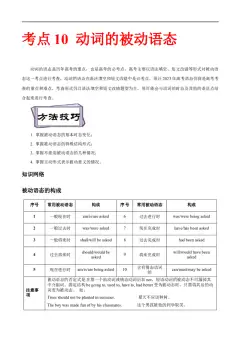
高考英语时态 — 过去完成时态(主动+被动)(原卷版)
高考考情解读
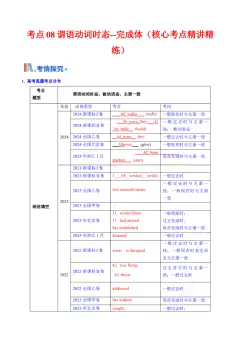
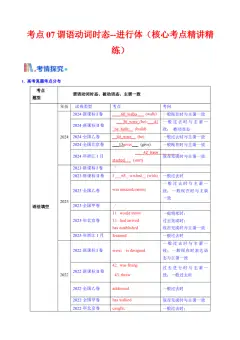
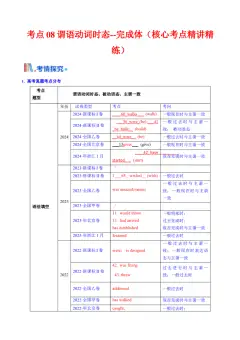
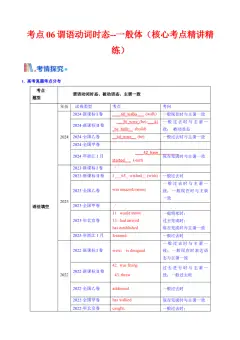
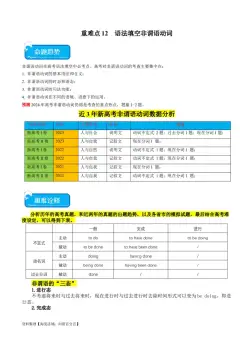
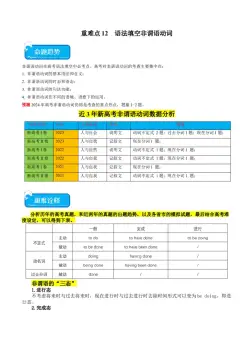
题型考查分布
在新高考与全国卷体系中,过去完成时是时态体系的核心难点,属于“过去的过去”
语境下的必考语法点,考查频率低于现在完成时,但难度更高,多结合语境辨析设题,贯
穿全题型。
语法填空:高频考查过去完成时的动词过去分词变形、被动语态结构(had been
done)、时态混搭辨析(与一般过去时、过去进行时),多在复合句、语境逻辑较强的句
子中设空,每套试卷考查0–1 空,属于易错难点。
阅读理解:过去完成时多用于叙事类、故事类语篇,强调“某一过去动作之前已经完
成的动作”,明确动作发生的先后顺序;被动语态多用于强调“过去的过去”中动作的承
受者,直接影响长难句逻辑分析和文章脉络理解。
书面表达:主要用于读后续写,侧重衔接过去的两个动作(先发生的用过去完成时,
后发生的用一般过去时),理清叙事逻辑、增强故事连贯性;被动语态的合理使用的能提
升作文严谨度,避免句式单一,贴合“过去动作的先后关系”的叙述需求。
核心考点与高频易错点
核心考点
1. 过去完成时(主动+被动)的基础结构与语境标志;
2. 过去完成时与一般过去时、过去进行时的高频辨析(核心难点);
3. 过去完成时被动语态的构成、变形规则及句式转换;
4. 过去完成时表“过去的过去”的三大核心用法(动作先后、结果影响、持续状态);
5. 过去完成时在复合句(状语从句、宾语从句)中的应用(高考高频场景)。
高频易错点
1. 过去完成时与一般过去时语境混淆(未判断出“过去的过去”,单纯用一般过去时表先
后动作);
2. 过去完成时被动语态漏写been 或had(核心丢分点);
3. 误将“过去的过去”语境理解为“现在的过去”,误用现在完成时替代过去完成时;
4. 过去分词变形错误,与现在分词、动词原形混淆(同现在完成时,但考查更隐蔽);
5. 复合句中,主句与从句时态搭配错误(如主句用过去完成时,从句误用现在完成时)。
高考命题趋势分析
1. 命题侧重“语境辨时态”,不再单独考查机械结构,依托叙事类、故事类语篇(读后续
写素材、阅读理解记叙文),重点考查“过去两个动作的先后顺序”判断,弱化单纯结构
记忆。
2. 侧重过去完成时与一般过去时的混搭考查,偶尔结合过去进行时,核心是让考生通过语
境判断“哪个动作先发生、哪个后发生”,强化逻辑分析能力。
3. 被动语态多结合复合句、长难句设题,重点考查had been done 的结构运用,侧重“过去
的过去中,动作被完成后对后续过去动作的影响”。
4. 紧扣读后续写实用导向,注重过去完成时在梳理叙事逻辑、衔接动作先后中的运用,避
免“时态混乱、动作顺序不清”的写作错误,是高分作文的核心得分点之一。
过去完成时态核心精讲
一、基本结构(主动语态)
1. 主语 + had + 动词过去分词(done)(核心:无论主语单复数,均用had,无have/has
变化)
2. 人称搭配:所有主语(I/We/You/They/He/She/It/单复数名词/不可数名词)→ had + done
3. 否定式:主语 + had + not + 动词过去分词;缩写:had not → hadn’t
4. 疑问式:Had + 主语 + 动词过去分词?
二、语境标志(高频必考,核心区分于现在完成时)
过去完成时的核心是“过去的过去”,即动作发生在“另一个过去动作”之前,常搭配以
下语境标志,无需像现在完成时那样依赖明确时间词,重点看“动作先后”:
1. 时间状语从句标志:before + 过去时间/过去从句、by the end of + 过去时间(by the end
of last year、by 2023)、by the time + 过去从句、until + 过去时间;
2. 动作先后标志:先发生的动作(过去完成时)→ 后发生的动作(一般过去时),常用
already、yet、just、ever、never(此时均指“在另一个过去动作之前”);
3. 语境提示:句子中明确有两个过去动作,且能判断出“一个动作在另一个动作之前完
成”,无需时间词(高考最常考场景)。
三、核心用法(结合高考语境,重中之重)
核心原则:过去完成时 = 过去的过去,即动作发生在“过去的某个时间点或过去的某个
动作”之前,强调“先完成、后发生”的逻辑关系。
1. 表示在过去某一动作之前已经完成的动作(最核心用法,高考语法填空、读后续写高
频),侧重动作的先后顺序,后发生的动作常用一般过去时。
例句1(基础):When I arrived at the station, the train had already left.(我到达车站时,火
车已经开走了。—— 先开走(过去完成时),后到达(一般过去时))
例句2(高考真题改编):By the time he was 10, he had learned 1000 English words.(到他
10 岁时,他已经学了1000 个英语单词。—— 先学单词(过去完成时),后到10 岁(一般
过去时))
2. 表示过去某一时间段内,在另一个过去动作之前已经完成的动作(侧重“截止到过去某
一时间,动作已完成”),常搭配by the end of + 过去时间。
例句1(基础):By the end of last month, we had finished all the exams.(到上个月月底,我
们已经完成了所有考试。—— 截止到上个月月底(过去时间),动作已完成)
例句2(高考真题改编):She had lived in this city for 5 years before she moved to Beijing.
(在她搬到北京之前,她已经在这座城市住了5 年了。—— 先住5 年(过去完成时),后
搬家(一般过去时))
3. 表示过去某一动作对另一过去动作造成的影响或结果(类似现在完成时,但影响局限于
“过去”),常搭配just、yet、never 等标志词。
例句1(基础):He hadn’t eaten anything before he went to bed, so he felt hungry at night.(他
睡觉前没吃任何东西,所以晚上觉得饿。—— 过去没吃饭(过去完成时),对过去睡觉后
的状态造成影响)
例句2(高考真题改编):She had never seen such a beautiful place before she visited Guilin.
(在去桂林之前,她从未见过这么美的地方。—— 过去没见过(过去完成时),对过去参
观时的感受造成影响)
4. 在复合句(宾语从句、状语从句)中,当主句为一般过去时,从句动作发生在主句动作
之前,从句用过去完成时(高考高频场景)。
例句1(宾语从句):He said he had finished his homework.(他说他已经做完作业了。——
主句said 是过去时,从句“做完作业”发生在said 之前,用过去完成时)
例句2(状语从句):After she had read the letter, she cried.(她读完信后,哭了。—— 先
读信(过去完成时),后哭(一般过去时),after 引导的从句表先发生的动作)
四、特殊考点(高考易错点,区分于现在完成时)
1. 过去完成时与一般过去时的核心区别(高考最高频辨析,必考点):
  一般过去时:表“过去单纯的动作”,不强调与其他过去动作的先后,只说明动作发生
在过去;
  过去完成时:表“过去的过去”,必须有“另一个过去动作”作为参照,强调动作发生
在参照动作之前。
例句对比(高考易错):
 He finished his homework last night.
①
(一般过去时,只说明“昨晚完成作业”,无其他参
照动作)

 He had finished his homework before his mother came back last night.
②
(过去完成时,有参
照动作“妈妈回来”,强调“完成作业”在“妈妈回来”之前)
2. 过去完成时与现在完成时的核心区别(高考易错混淆):
  现在完成时:动作发生在“过去”,持续到“现在”或对“现在”有影响(参照点是
“现在”);
过去完成时:动作发生在“过去的过去”,持续到“过去”或对“过去”有影响(参照点
是“另一个过去动作”)。
例句对比(高考易错):
 He has lived in this city for 5 years.
①
(现在完成时,参照点是“现在”,现在仍住在这儿)

 He had lived in this city for 5 years before he moved to Shanghai.
②
(过去完成时,参照点是
“搬到上海”(过去动作),住的动作在搬家之前,现在可能不住在这儿了)
3. 瞬间动词与延续性动词的用法(同现在完成时,高考易错):
瞬间动词(come、go、leave、buy 等)不能用于过去完成时与for/since(接过去时间)连
用表“持续”,需转化为延续性动词;否定式除外。
例句(正确):He had been away for 3 days before he came back.(他回来之前,已经离开3
天了。—— away 为延续性状态)
例句(错误):He had left for 3 days before he came back.(正确转化:He had been away for
3 days before he came back.)
高频转化对照表(同现在完成时,高考必考):
leave → be away;buy → have;borrow → keep;die → be dead;join → be a member of/be
in;start/begin → be on;finish → be over;come → be here;go → be away
4. 无需用过去完成时的场景(高考易错点,避免过度使用):
① 当两个过去动作按时间顺序依次发生,且用and、then、first...then...等连接时,两个动
作均用一般过去时(无需强调先后,语境已明确)。
例:He got up, brushed his teeth and went to school.(他起床、刷牙、去上学,动作依次发
生,均用一般过去时)
② 当“过去的过去”语境不明确,且无参照动作时,不用过去完成时,用一般过去时。
五、必考易错点 + 高频丢分点总结
1、核心概念易错(基础丢分重灾区)
混淆“过去的过去”vs“单纯过去动作”
错:He had watched a film last night.(last night 是单纯过去时间,无参照动作,不用过去完
成时)
对:He watched a film last night. / He had watched a film before he went to bed last night.
规避:无参照动作的单纯过去时间(yesterday、last week、in 2023)搭配一般过去时;有
参照动作(before、by the time 等),且动作在参照动作之前,用过去完成时。
混淆“过去完成时”vs“现在完成时”
错:He has finished his homework before his mother came back.(参照动作“came back”是过
去时,动作在其之前,应用过去完成时)
对:He had finished his homework before his mother came back.
混淆“瞬间动词”vs“延续性动词”(与for/since 连用)
错:She had bought this book for 2 years before she lost it.(buy 是瞬间动词,不能与for 连
用)
对:She had had this book for 2 years before she lost it.
例外:瞬间动词的否定式可与for/since(接过去时间)连用,如:I hadn’t seen him for 3
years before I met him yesterday.(我昨天见到他之前,已经三年没见过他了。)
2、过去分词变形「高频丢分点」(同现在完成时,考查更隐蔽)
规则变形(必考)
1. 一般动词,直接加-ed:work→worked、play→played、read→read(发音变化)
2. 以e 结尾,直接加-d:take→taken、write→written、dance→danced
3. 重读闭音节(辅+元+辅),双写末尾辅音字母加-ed:stop→stopped、plan→planned、
fit→fitted
4. 以“辅音字母+y”结尾,变y 为i 加-ed:study→studied、carry→carried、try→tried
易错变形对比(考试高频挖坑)
do→done(不规则) vs work→worked(规则)
take→taken(不规则) vs make→made(不规则)
run→run(不规则,原形=过去式=过去分词) vs walk→walked(规则)
lie→lain(表“躺”,不规则) vs live→lived(规则)
高频不规则过去分词(高考必考,同现在完成时):see→seen 、eat→eaten 、
drink→drunk、go→gone、come→come、write→written、break→broken、speak→spoken、
forget→forgotten
3、否定 / 疑问句结构易错(考试高频挖坑)
漏写had
错:He not finished his homework before his father came. / They finished their homework
already before class.
对:He had not finished his homework before his father came. / They had finished their
homework already before class.
疑问句语序错误
错:Finished you your homework before you went out? / Had you finished your homework?
对:Had you finished your homework before you went out?(补充参照动作,语境完整)否定
句缩写错误
正确缩写:had not→hadn’t
错:had not→had’t
4、特殊句式 & 固定场景易错
1.by the end of + 过去时间,主句必须用过去完成时(高考高频考点)
 By the end of last term, we had learned 2000 new words.
✅
(正确)

 By the end of last term, we learned 2000 new words.
❌
(错误,无had)
2. before/after 引导的时间状语从句,动作先后明确时的时态搭配
 After she had finished her work, she went home.
✅
(正确,先完成工作,后回家)

 She went home after she finished her work.
✅
(正确,after 已明确先后,从句可用一般过去
时,主句用一般过去时)
 After she finished her work, she had gone home.
❌
(错误,逻辑颠倒)
3. 宾语从句中,主句为一般过去时,从句动作在主句之前,从句必须用过去完成时

 He told me he had seen the film twice.
✅
(正确,“看电影”在“告诉”之前)
 He told me he has seen the film twice.
❌
(错误,从句用了现在完成时)
六、过去完成时万能做题步骤
1. 判语境:找到句子中的“两个过去动作”,判断是否存在“过去的过去”(一个动作在
另一个过去动作之前完成);或看到by the end of + 过去时间、before + 过去从句等标志
词,直接锁定过去完成时。
2. 定had:无论主语单复数,均用had,无需根据主语变化(区别于现在完成时
的have/has)。
3. 变过去分词:根据动词变形规则,正确写出过去分词(重点记忆高考高频不规则分词,
避免变形错误)。
4. 看句式:
否定句:had + not + 过去分词(缩写hadn’t);
一般疑问句:Had + 主语 + 过去分词?(答语:Yes, 主语 + had. / No, 主语 +
hadn’t.);  特殊疑问句:特殊疑问词 + had + 主语 + 过去分词?
七、高频考点答题模板
模板1:过去的过去(两个动作先后,先发生用过去完成时)
结构:先发生动作(主语 + had + 过去分词)+ 后发生动作(主语 + 一般过去时)(常
用before、after 连接)
例:She had left before I arrived. / After he had eaten breakfast, he went to school.
模板2:截止到过去某一时间,动作已完成
结构:主语 + had + 过去分词 + by the end of + 过去时间 / by the time + 过去从句
例:We had finished the project by the end of last month. / By the time she was 8, she had learned
to play the piano.
模板3:过去动作对另一过去动作的影响
结构:主语 + had + 过去分词(影响动作),so + 主语 + 一般过去时(结果动作)
例:He hadn’t studied hard, so he failed the exam.
模板4:宾语从句中,主句过去时,从句过去完成时
结构:主句(主语 + 一般过去时)+ that + 从句(主语 + had + 过去分词)
例:She said that she had finished her homework.
模板5:否定 & 疑问万能公式
 否定:主语 + hadn’t + 过去分词
例:He hadn’t seen that film before. / They hadn’t arrived by 7 o’clock last night.
疑问:Had + 主语 + 过去分词?
例:Had you finished your work before you left? / Had he lived here for a long time before he
moved?
八、核心避坑复盘
1. 无“过去的过去”语境(无参照动作、无by the end of + 过去时间等标志),绝对不用
过去完成时,用一般过去时。
2. 过去完成时的核心是“先后顺序”,先发生的用had done,后发生的用did,不可颠
倒。
3. 过去完成时被动语态,必须加had 和been(核心坑):had + been + 过去分词,不可漏
写任何一个。
4. 瞬间动词(buy、leave、die 等)不可与for/since(接过去时间)连用表持续,需转化为
延续性动词;否定式除外。
5. 宾语从句中,主句为一般过去时,从句动作在主句之前,从句必须用过去完成时,不可
用现在完成时。
6. by the end of + 过去时间 → 过去完成时;by the end of + 现在时间 → 现在完成时(高
考易错混淆)。
7. 两个过去动作按顺序发生,用and、then 连接时,均用一般过去时,无需用过去完成
时。
九、过去完成时的被动语态
核心构成
结构:had + been + 过去分词(done)(无论主语单复数,均用had,无变化)
人称搭配:所有主语(I/We/You/They/He/She/It/单复数名词/不可数名词)→ had + been +
done
基本句式
1. 肯定句      主语 + had + been + 过去分词
例:The project had been finished before the manager arrived.(这个项目在经理到达之前就已
经被完成了。)
2. 否定句       主语 + had + not + been + 过去分词(缩写hadn’t been + done)
例:The letter hadn’t been sent by her before she left.(那封信在她离开之前还没有被她寄出
去。)
3. 一般疑问句    Had + 主语 + been + 过去分词?
回答:Yes, 主语 + had./ No, 主语 + hadn’t.
例:Had the room been cleaned before the guests came? — Yes, it had.(客人来之前,房间已
经被打扫了吗?—— 是的。
4. 特殊疑问句
特殊疑问词 + had + 主语 + been + 过去分词?
例:What had been done in the lab before the accident happened?(事故发生之前,实验室里做
了什么?)
核心用法
1. 表示“过去的过去”中发生的被动动作,即被动动作发生在另一个过去动作之前,强调
“先被完成、后发生其他动作”。
例:The problem had been solved before we started the meeting.(在我们开始会议之前,问题
就已经被解决了。)
2. 表示截止到过去某一时间,被动动作已经完成,常搭配by the end of + 过去时间、by the
time + 过去从句等标志词。
例:By the end of last year, many new roads had been built in our city.(到去年年底,我们城市
里已经建了很多新道路。)
3. 强调“过去的过去”中,被动动作的承受者,或不知道动作执行者、无需说出执行者时
用被动。
例:The book had been translated into many languages before it became famous.(这本书在出
名之前,就已经被翻译成多种语言了。)
主动变被动 转换规则
1. 主动宾语 → 被动主语
2. 主动谓语(had + done)→ 被动谓语(had + been + done)
3. 主动主语 → 置于by 后(可省略)
4. 时态保持不变(本题限定:过去完成时)
主动:They had finished the project before the deadline.(他们在截止日期前完成了项目。)
被动:The project had been finished (by them) before the deadline.(项目在截止日期前就已经
被(他们)完成了。)
重点补充
1. by 短语用来引出动作执行者,日常表达中常省略(尤其不知道执行者时)。
例:The machine had been repaired (by a worker) before we used it.(这台机器在我们使用之
前就已经被(一名工人)修理好了。)
2. 高频易错(核心丢分点)
① 漏写been 或had:过去完成时被动语态必须同时有had 和been,缺一不可,否则变成一
般过去时被动(was/were + done)。
错:The house had built for 2 years before it was destroyed.(正确:The house had been built
for 2 years before it was destroyed.)
② 过去分词变形错误:被动语态中必须用过去分词,不可用现在分词或动词原形。

错:The letter had been writing by her before she left.(正确:The letter had been written by her
before she left.)
③ 时态搭配错误:被动动作是“过去的过去”,后续的过去动作必须用一般过去时,不可
再用过去完成时。
错:The work had been finished before we had arrived.(正确:The work had been finished
before we arrived.)
 单句语法填空限时训练(被动语态专项)
1. The old building ________ (pull) down by the end of last year.
2. The children ________ (take) care of by their teacher before their parents came.
3. A new road ________ (not, build) in our town by the end of 2023.
4. What ________ (do) in the classroom before the teacher arrived?
5. These books ________ (read) by the students before the exam.
6. The problem ________ (discuss) by the experts several times before the meeting started.
7. Our classroom ________ (clean) by us before the guests came.
 不用变被动 / 形式不变 特殊情况(同现在完成时)
1. 不及物动词(无宾语),无被动语态,即使表“过去的过去”,也用主动形式。
常见词:happen、take place、break out、appear、rise、fall、occur
例:An accident had happened before we arrived.(不用 had been happened)
例:The sun had risen before we got up.(不用 had been risen)
2. 状态动词(无动作,表状态),无被动语态,不用于过去完成时被动。
常见词:be、belong to、have、like、love、own
例:This book had belonged to me for 3 years before I gave it to him.(不用 had been belonged
to)
3. 主动结构表被动含义(较少见,结合语境)
某些感官动词、物性动词,主语是物,表“过去的过去已经被……”时,可用主动表被动
(多为口语)。
例:The dish had tasted good before it got cold.(= The dish had been tasted good. 口语中常用
主动)
注意:书面语中,仍建议用被动结构(had been tasted),避免出错。
单句语法填空限时训练(主动+被动混合)
1. A big fire ________ (happen) in the forest before the firefighters arrived.
2. The story ________ (not, take) place in our city by the end of last year.
3. This book ________ (belong) to my brother for 2 years before he gave it to me, so it
________ (not, read) by me before that.
4. The music ________ (sound) beautiful, so it ________ (listen) to by many people before the
concert started.
5. What ________ (happen) in the street before we got there?
过去完成时态核心精练
基础版
用所给动词的正确形式填空
1. I ________ (just, finish) my homework when my mother came back.
2. My father ________ (not, work) in this factory for 10 years before he changed his job.
3. She ________ (live) in this city since she was 5 years old before she moved to Shanghai.
4. He ________ (never, see) this film before he watched it last night.
5. ________ you ________ (read) this book before you came to this class? — No, I hadn’t.
6. They ________ (buy) this house for 3 years before they sold it.(提示:buy 转化为延续性
动词)
7. She ________ (always, help) others since she came to our class before she transferred.
8. The flowers ________ (smell) good; someone ________ (water) them before I arrived.
9. We ________ (have) this car for 5 years before it broke down.
10. What ________ (do) your mother ________ (do) before she went to work this morning?
进阶版
一、单句语法填空
1. The moon ________ (not, shine) brightly before the clouds moved away last night.
2. My sister ________ (practice) the piano for 5 years before she took part in the
competition.
3. When I arrived, they ________ (finish) their work, so they ________ (rest) at that time.
4. He ________ (not, run) since last month before he fell ill.
5. Every student ________ (not, study) hard by the end of last week; some were lazy.
6. They asked when the meeting ________ (finish) — It ________ (already, finish) before
they asked.
7. ________ your brother ________ (swim) in the pool since this morning before the rain
started?
8. This pair of shoes ________ (not, fit) me for 2 years before I bought a new pair.
9. Most birds ________ (fly) south before autumn ended.
10. We ________ (work) hard by the time the teacher came; we ________ (finish) half of the
task.
二、语法填空
阅读短文,用括号内动词的适当形式填空
It was 3 o’clock in the afternoon yesterday. Our school 1________ (be) very busy
before that afternoon. Many students 2________ (do) different things before 3 o’clock. Some
students 3________ (read) books in the library since that morning before 3 o’clock. My best
friend Tom 4________ (play) basketball for 2 hours on the playground with his classmates
before I saw him. He 5________ (always, play) basketball well, but he 6________ (not, play)
very well that day before I saw him. Our teacher Miss Li 7________ (talk) with many
students in her office before 3 o’clock. She 8________ (help) students with their English for 3
years before she came to our school. Look! A group of students 9________ (clean) the
classroom. They 10________ (finish) half of the work by 3 o’clock. At that moment, everyone
11________ (be) busy and happy because they 12________ (achieve) a lot before that
afternoon.
过去完成时态过关达标练习
一、 单句语法填空  用所给动词的适当形式填空。
1. He ________ (work) in the office for 8 years before he was promoted.
2. My mother ________ (wash) clothes since this morning before I got home.
3. The bird ________ (fly) away for 3 days before it came back.
4. She said she ________ (go) to the library many times before she went to college.
5. Tea ________ (pick) in many southern areas of China by the end of last year.
6. Students ________ (ask) to finish homework before the teacher came.
7. The old books ________ (send) to poor schools by the end of last month.
8. The flowers ________ (look) beautiful; they ________ (water) by the gardener before I saw
them.
9. A new film ________ (show) in the cinema before last week.
10. Workers ________ (make) ________ (work) hard by the boss before the project was finished.
你都答对了吗?恭喜你成功晋级!下一关,解
锁现在完成进行时态吧。