2026 届大湾区普通高中毕业年级联合模拟考试
读后续写二次开发学案教师版
47. 阅读下面材料,根据其内容和所给段落开头语续写两段,使之构成一篇完整的短文。
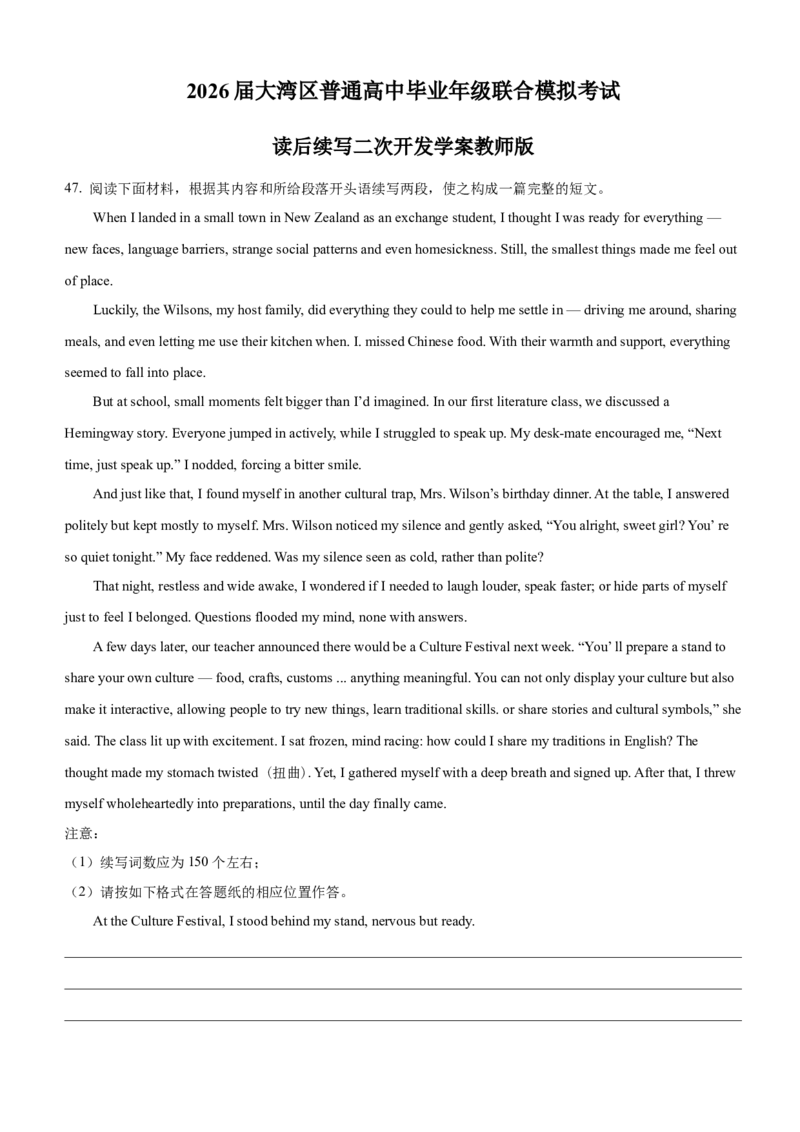
When I landed in a small town in New Zealand as an exchange student, I thought I was ready for everything —
new faces, language barriers, strange social patterns and even homesickness. Still, the smallest things made me feel out
of place.
Luckily, the Wilsons, my host family, did everything they could to help me settle in — driving me around, sharing
meals, and even letting me use their kitchen when. I. missed Chinese food. With their warmth and support, everything
seemed to fall into place.
But at school, small moments felt bigger than I’d imagined. In our first literature class, we discussed a
Hemingway story. Everyone jumped in actively, while I struggled to speak up. My desk-mate encouraged me, “Next
time, just speak up.” I nodded, forcing a bitter smile.
And just like that, I found myself in another cultural trap, Mrs. Wilson’s birthday dinner. At the table, I answered
politely but kept mostly to myself. Mrs. Wilson noticed my silence and gently asked, “You alright, sweet girl? You’ re
so quiet tonight.” My face reddened. Was my silence seen as cold, rather than polite?
That night, restless and wide awake, I wondered if I needed to laugh louder, speak faster; or hide parts of myself
just to feel I belonged. Questions flooded my mind, none with answers.
A few days later, our teacher announced there would be a Culture Festival next week. “You’ ll prepare a stand to
share your own culture — food, crafts, customs ... anything meaningful. You can not only display your culture but also
make it interactive, allowing people to try new things, learn traditional skills. or share stories and cultural symbols,” she
said. The class lit up with excitement. I sat frozen, mind racing: how could I share my traditions in English? The
thought made my stomach twisted (扭曲). Yet, I gathered myself with a deep breath and signed up. After that, I threw
myself wholeheartedly into preparations, until the day finally came.
注意:
(1)续写词数应为150 个左右;
(2)请按如下格式在答题纸的相应位置作答。
At the Culture Festival, I stood behind my stand, nervous but ready.
________________________________________________________________________________________________
________________________________________________________________________________________________
________________________________________________________________________________________________
________________________________________________________________________________________________
________________________________________________________________________________________________
____________________________________________________________
From that day on, my world here started to change.
________________________________________________________________________________________________
________________________________________________________________________________________________
________________________________________________________________________________________________
________________________________________________________________________________
【原文翻译】
当我作为一名交换生抵达新西兰的一个小镇时,我以为我已经为一切做好了准备——新的面
孔、语言障碍、陌生的社交模式,甚至是想家。然而,最微小的事情还是让我感到格格不入。
幸运的是,我的寄宿家庭威尔逊一家尽他们所能帮我安顿下来——开车带我四处转转,一起
分享美食,甚至在我想念中餐时让我使用他们的厨房。在他们的温暖和支持下,一切似乎都步入
了正轨。
但在学校,微小的瞬间感觉比我想象的要严重。在我们的第一堂文学课上,我们讨论了一篇
海明威的小说。每个人都积极投入,而我却挣扎着不敢发言。我的同桌鼓励我:“下次,只管大
声说出来。”我点点头,挤出一丝苦笑。
就像这样,我发现自己陷入了另一个文化陷阱,威尔逊夫人的生日晚餐。在餐桌上,我礼貌
地回答,但大部分时间保持沉默。威尔逊夫人注意到了我的沉默,温柔地问道:“你还好吗,亲
爱的女孩?你今晚这么安静。”我的脸红了。我的沉默是被视为冷漠,而不是礼貌吗?
那天晚上,我辗转反侧,清醒无比,想知道我是否需要笑得更响亮,说话更快速,或者隐藏
一部分自我,只为了感到归属感。问题涌上我的心头,没有一个有答案。
几天后,我们的老师宣布下周将举办一个文化节。“你们将准备一个展位来分享你们自己的
文化——食物、手工艺品、习俗……任何有意义的东西。你们不仅可以展示你们的文化,还可以
让它具有互动性,让人们尝试新事物,学习传统技能,或者分享故事和文化象征,”她说。班级
里洋溢着兴奋的气氛。我僵坐在那里,思绪飞转:我怎么能用英语分享我的传统呢?这个想法让
我的胃扭曲起来。然而,我深吸一口气,振作起来,报了名。在那之后,我全心全意地投入到准
备工作中,直到那一天终于到来。