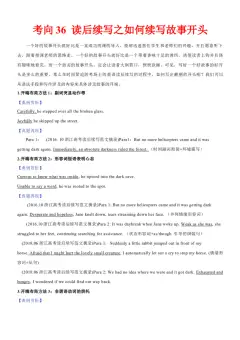
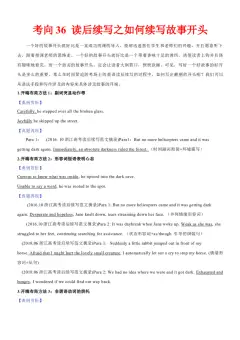
09 续写语言组织微观技巧
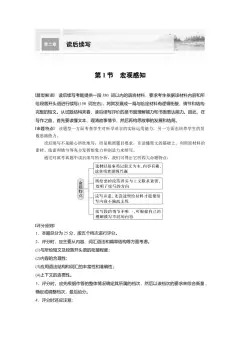
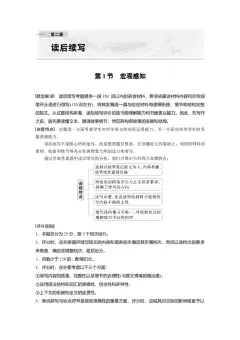
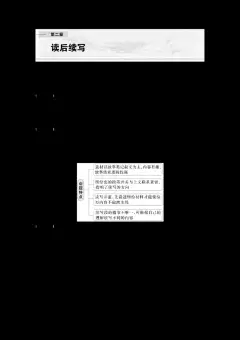
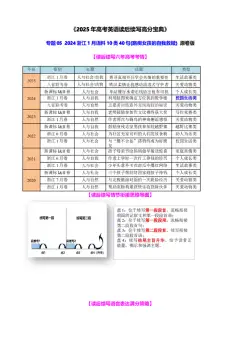
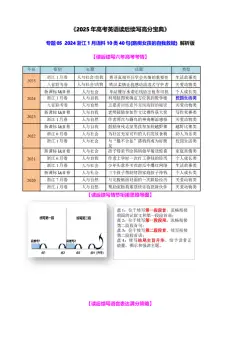
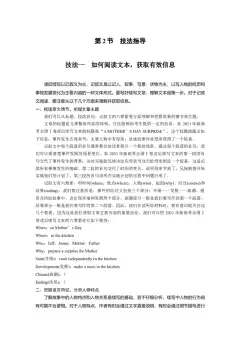
语言组织的宏观设计策略
续写是一种创造性地模仿和使用前文语言的语言训练,学生在续写中可直接使用前文中出现的词语,
模仿前文句型,切实习得优质语言,使续作继承前文的语言风格,确保语言协同。因此,教师需要在教学
中对学生进行正面引导,不可将大量的时间用于情节的创新设计,导致无暇顾及学生对语言风格的洞察和
模仿;不可盲目堆砌背诵的好词、好句、套句、仿句等,而冲淡原有语言的叙事风格,使得续写段落与原
文格格不入;不可将所谓的情感态度价值观进行标签式的粘贴复制,而忽视了原文语言风格视角下的隐而
不明、自然收尾。
语篇所采用的人称、时态、体裁形式、遣词造句、修辞手法、语气态度等都会对特定语篇的语言风格
产生重要作用。因此,教师需要带领学生识别和梳理,尤其注意语篇语言,如描述型语言、叙事型语言、
对话型语言、风趣幽默型语言、朴实真诚型语言、严谨委婉型语言、态度语气型语言等的使用比例,定语
从句、状语从句、倒装句、非谓语动词等句式结构的点缀呈现,拟人、比喻、对比、夸张、双关等修辞的
选择使用等。例如,情感表达可以通过形容词描述、副词修饰以及动作描写来体现,但更有影响力的还是
通过心理描写来凸显,让读者产生同理心,在潜移默化中达成移情。因此,拥有意识是提升续写水平的起
点,自觉行动并予以落实才是续写结构启动的实现途径。
英语语言的学习在很大程度上离不开学习者的模仿过程。王初明教授指出,外语学习的语言理解和语
言产出结合会产生协同效应,协同越强,外语学习效果越好。以他人使用语言的方式表达自己思想的过程
即语言协同。读后续写时要注意将语言的模仿与创新有机结合,以提高续写的准确性、融洽度。教师要指
导学生在阅读时关注原文语篇的时态、语言风格、特点、句式结构、细节描写,并在不抄袭原文的原则下,
借鉴、模仿和使用语言,减少语言错误。教师还应指导学生在平时的阅读中有针对性地积累词汇和句式,
提高续写语言的协同性、准确性和丰富性。
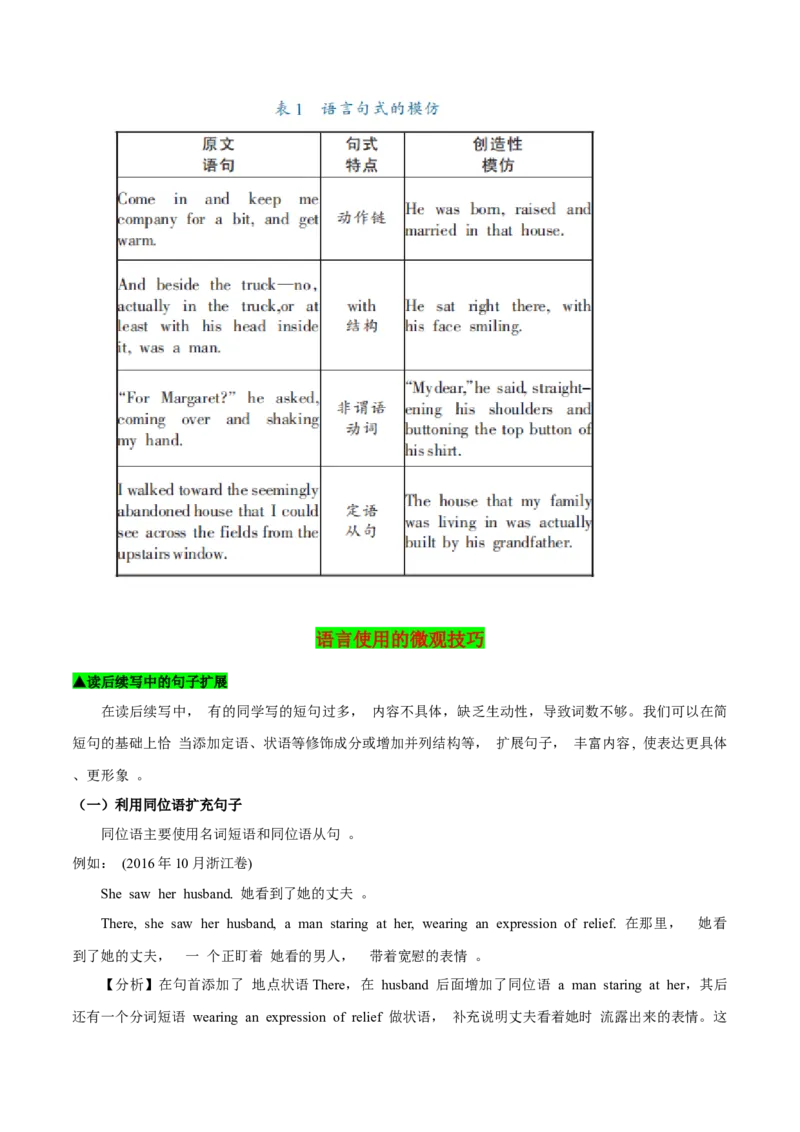
在续写前,教师可鼓励学生分析文本语言句式特点,并尝试进行创造性模仿,使之与续写的内容有机
结合,提高准确运用语言句式的能力,促进语言的习得,避免续写句式单一。例如,某读后续写语篇叙述
了作者搬家后第一次出去散步,在一个小木屋遇见了 70 多岁的 Will Banks以及后续故事。Will Banks 在
打招呼时喊出了作者的名字,但是作者却不认识他,于是,WillBanks 邀请作者进屋喝杯茶,顺便讲述他
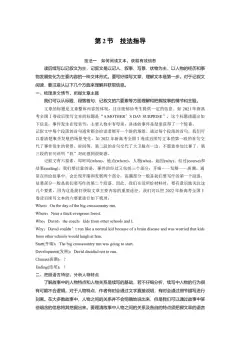
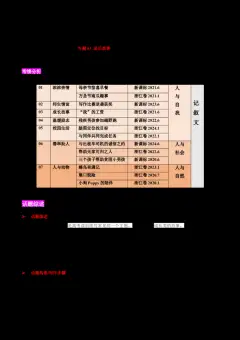
为什么知道作者的名字。在该语篇的续写过程中,学生可分析原文语句的句式特点,并进行创造性模仿
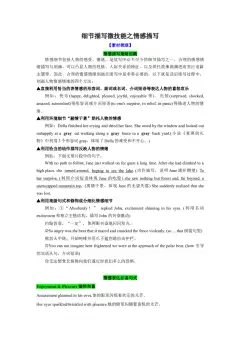
(如表1)。语言使用的微观技巧
▲读后续写中的句子扩展
在读后续写中, 有的同学写的短句过多, 内容不具体,缺乏生动性,导致词数不够。我们可以在简
短句的基础上恰 当添加定语、状语等修饰成分或增加并列结构等, 扩展句子, 丰富内容, 使表达更具体
、更形象 。
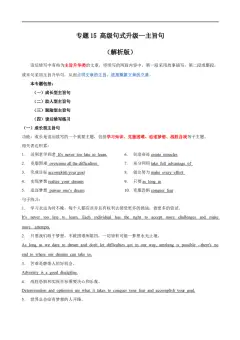
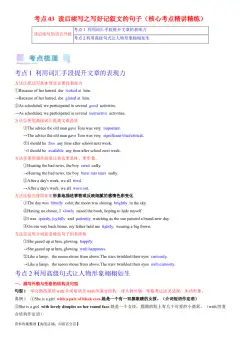
(一)利用同位语扩充句子
同位语主要使用名词短语和同位语从句 。
例如: (2016年10月浙江卷)
She saw her husband. 她看到了她的丈夫 。
There, she saw her husband, a man staring at her, wearing an expression of relief. 在那里, 她看
到了她的丈夫, 一 个正盯着 她看的男人, 带着宽慰的表情 。
【分析】在句首添加了 地点状语There,在 husband 后面增加了同位语 a man staring at her,其后
还有一个分词短语 wearing an expression of relief 做状语, 补充说明丈夫看着她时 流露出来的表情。这种形象具体的描写,增加了画面感,也提升了整个句子的层次 。
(二)利用状语扩充句子
添加的状语,可以是副词、非谓语动词、介词短语和状语从句等 。
例如: (2016 年 10 月浙江卷)
Jane walked on. 简继续走 。
Jane walked on for quite a long time. 简继续走了很长时间 。
With no path to follow, Jane walked on for quite a long time. 因为无路可循, 简继续走了很长时间
。
【分析】添加 for quite a long time 和 with no path to follow 两个做状语的介词短语后, 句子
表达更为生动具体了 。
(三)利用定语扩充句子
定语扩句的主要方式是使用形容词、非谓语动词、介词短语和定语从句等 。
例如:
His mother works in a big company. 他母亲在一家大公司工作 。
His loving mother, who used to be an excellent English teacher in a middle school, now works in a
big company. 他的慈母,曾经是一名优秀的中学英语老师, 现在在一家大公司工作。
【分析】我们在主语 mother 前添加了形容词loving,更形象地说明了his mother的特征; 在mother
后面添加了who used to be an excellent English teacher in a middle school,内容 更丰富,让读者更加
了解母亲 。
(四)递进式扩充句子
对先后发生的两个或多个连贯动作,可以采用递进式 。主要方式有 (1) 用 and 连接; (2) 用
after that, additionally, furthermore, what’s more, to make things worse 等 。
例如:
Mac then jumped off the bicycle. 然后麦克从自行车上跳了下来 。
Mac then jumped off the bicycle and he was ready to fight against the wolf. 麦克从自行车上跳下来,
准备跟狼搏斗 。
【分析】 “ 跳下自行车”与“准备搏斗”两个连贯动作,让 Mac 准备跟狼搏斗的形象跃然纸上。
(五)转折式扩充句子
表示转折的有 but, however 等。
例如:
Jane kept moving. 简继续往前走 。Jane kept moving, but the farther she walked, the more confused she became. 简继续往前走, 但她走
得越远, 就越感到困惑 。
【分析】添加后面的转折分句后,暗示着“她可能迷路了”。
(六)因果式扩充句子
除了引导原因状语从句和结果状语从句的连词后,还 有 due to, owing to, on account of, because of,
as a result of 等 表 示 原因,therefore, as a result 等表示结果 。
例如:
He has broken his leg. 他摔坏了腿 。
He has broken his leg and therefore he can’t walk.他摔坏了腿,因此不能走路了 。
▲读后续写中的句子压缩
虽然读后续写的语料不同,但在续写的写作中,根据需要进行语段压缩的方法是可以通用的。常用的
压缩语段的方法有如下几种:
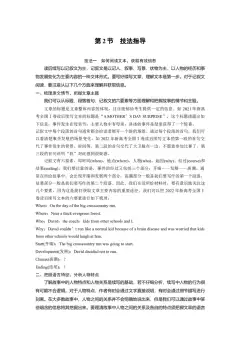
1. 摘取法。找出语段材料的主旨句,直接摘取关键成分作为答案。或者将分散在各句中的重要信息找
出来,摘取关键词语,再将其进行连缀。
2. 概括法。没有中心句,也没有明显关键词的阅读材料,如果要压缩出主要内容,则可以采用概括法,
分别用一两个恰当的词语去概括文句的意思,再组合答案。
3. 整合法。如果语段材料没有中心句,其体现材料主旨的关键词语可能分散在几个句子中,这就需要
考生将分散在各处的关键词语找出来,将包含重要信息的句子加以综合概括,然后将找出的关键词与概括
出来的内容加以整合,形成符合题干要求的短句。
4. 替换法。阅读材料中有能够体现语段主旨的中心句,且中心句中有关键的词语,这时候就可以运用
此法将指示代词替换成语意明确的词语。
5. 补充法。阅读材料中有能够体现语段主旨的中心句,但将其压缩成主干后,还需要在中心词前面补
充出修饰、限制性的定语,才能让句意完整明确,这时候就可以运用补充法为主干中心词补出修饰、限定
性的词语。
在读后续写中, 要提高读后续写的语言表达能力,仅仅强调词汇和语法学习是远远不够的。我们除
了掌握读后续写常用的一些词语外,在平时的学习中还要注意积累一些常用句式,特别是分词与状语从句
的转换与使用,并晨读背诵、默写、仿写,最后做到在读后续写中运用自如。
▲用分词为读后续写增色
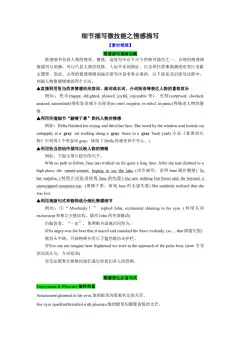
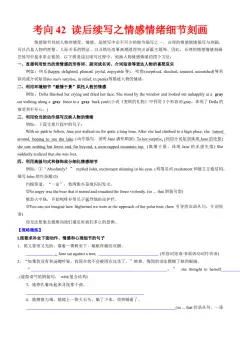
1.心理状态类分词凸显人物情绪状态
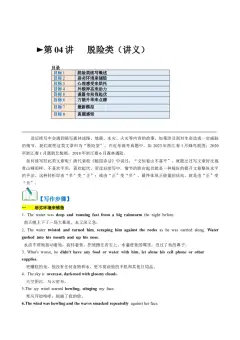
例如:Knowing that she was ill, he was so worried that he even forgot to eat dinner.
Delightedly realizing that he was coming to help her, she sat down in relief.2.感官类分词突出人物的动作回应
例如: Seeing /Watching the bear tearing down the fence, she was thrilled with terror.
Glancing at the dark forest in the distance, she stepped back to the cabin in anxiety.
Feeling nervous, he stood there frozen.
3.反思类分词提升人物对事件的认知
例如:Thinking that she would see her son soon, she walked quickly towards her house and was wearing
a big smile.
Recalling/Thinking back on the days they spent together, she felt cherished and expressed the
gratitude to those things he did for her.
4.情感情绪类分词强化人物的心理体验
例如: Cherishing the gratitude towards the villagers, he pick the phone with the purpose of sharing some
heartfelt words with them.
Overwhelmed with terror, she just ran as quickly as he could to get out of the old castle.
Exhausted by the gossips, he finally left her and let go of all the memories there.
5.“否定祈使句+典型动作类分词”深化表述目的
例如:Don’t just stand there to do nothing, everything waving at you in fact.
Don’t hesitate to attend the party, joining your fellows and sharing your happiness.
6.特征类分词升华人物/场景描述
例如:Characterized by the beautiful seaside, the city is always crowded with laughter and cheers of the
tourists.
Featured by the quietness, it is a good place to relax yourself there.
Characterized by the shyness before the public, she is always cautious when among the students.
7.独立主格结构增添叙事活力
例如: She saw the bear approaching quickly, her legs shaking .
He walked into the classroom with joy, his hands holding the prize high .
She didn’t know how to answer her son, her heart broken .
8.垂悬分词让表达更紧凑
例如: Speaking of the plan of the journey , the children were always filled with joy and hope as well.
Judging from her clothes , we know that she was still worried and had no interest in makeup.
写作策略实践与强化
1.阅读下面材料,根据其内容和所给段落开头语续写两段,使之构成一篇完整的短文。Long ago, there lived two brothers who were very poor. They lived in small houses at opposite sides of their
wheat field. Each year the brothers divided the grain they had grown into two equal parts. Although they worked
hard from sunup to sundown, they hardly had enough to eat. In spite of this, they were happy because of their great
love for each other.
But one year, Simon, the younger brother felt a great sadness. He was worried about his older brother, Ruben.
Ruben was alone in the world, with neither wife nor children. “Who will care for him when he gets old and can no
longer work? If only he had some money to save for his old age! It isn’t fair that we share the harvest equally. But
he will not accept gifts from me. What shall I do?” he thought.
At the same time, Ruben was sitting under a tree, thinking deeply. He thought his brother, Simon, needed to
support a family. “I have no family. It isn’t fair that we share the harvest equally. Surely he deserves more than I! I
must think of a plan to help him.”
That midnight, Ruben went quietly to his barn (粮仓) where he filled a sack (麻袋) with wheat and put it on
his shoulder. Then he crossed the field to his brother’s house and secretly placed his wheat with Simon’s.
注意:1.续写词数应为150左右;
2.请按如下格式作答。
The next morning Ruben was very surprised.
____________________________________________________________________________________________
____________________________________________________________________________________________
____________________________________________________________________________________________
____________________________________________________________________________________________
______________________________________________________________________________________
But this time unexpectedly they chose the same moment to carry their sacks.
____________________________________________________________________________________________
____________________________________________________________________________________________
____________________________________________________________________________________________
____________________________________________________________________________________________
______________________________________________________________________________________
2.阅读下面材料,根据其内容和所给段落开头语续写两段,使之构成一篇完整的短文。
After a hard day’s work, I usually go shopping in the nearby commercial center to relieve my tiredness.
Last Monday, I was in the commercial center as usual and I decided to go and get a cup of coffee. As I wasmaking my way to the coffee shop. I noticed an old gentleman rather poorly dressed sitting on a bench nearby. I
knew from first sight that he was in need of some kind of help. He had a little lunch laid out in front of him and was
wholeheartedly enjoying it. It was also rather obvious that he had a problem with his right eye and probably
couldn’t see out of it. I then joined the line and waited to be served.
Then one thing that made me unforgettable happened. There was a young man in front of me in the line who
was also waiting to be served. The next thing I knew was that the young man handed the server a twenty-dollar bill
and requested an orange juice, as well as a favour. The server looked at the young man, a little confused, not fully
understanding the request.
“Please help me give the juice to the old gentleman eating his lunch outside on the bench, as well as the
change from the 20 dollars,” the young man said to the server.
At that time, the server hesitated for a moment and said, “I am a little scared for his behavior and appearance.”
“Don’t worry. I have the confidence that he is a kind and warm-heated gentleman. He is just in need of some
kind of help and has a problem with his right eye and probably couldn’t see out of it. I will be watching every
second so that you will be completely safe at all times,” the young man added.
注意:
1.续写词数应为150左右;
2.请按如下格式在答题卡的相应位置作答。
Then the server approached the old gentleman slowly.
____________________________________________________________________________________________
____________________________________________________________________________________________
____________________________________________________________________________________________
____________________________________________________________________________________________
____________________________________________________________________________________
I wondered why the young man didn’t perform this act of kindness himself.
____________________________________________________________________________________________
____________________________________________________________________________________________
____________________________________________________________________________________________
____________________________________________________________________________________________
____________________________________________________________________________________
3.阅读下面材料,根据其内容和所给段落开头语续写两段,使之构成一篇完整的短文。Mail lay scattered across the kitchen table. I couldn’t put off sorting through it any longer. I checked the
envelopes, putting aside the ones addressed to my husband.
It had been over three years since Bob had died. To friends and family it looked like I had moved past the
worst of my sorrow. I took care of my house, socialised and kept up with community. On the outside everything
appeared to be normal. But inside I worried I would never get better, never be myself again. They say sorrow has
no set time limit, but I was so tired of feeling empty and hopeless. My sorrow was sharp and fresh as ever. It was
like a wall of pressure in my chest, pressing my heart.
I picked up a piece of Bob’s mail and held it out to tear in half, but stopped myself from cutting up the
envelope. The letter was from an organisation that funded a Haitian orphanage called My Father’s House. Its
founder, Carol Hawthorne, had given a presentation at our church. Bob and I had donated, and Bob ended up on the
mailing list to receive the newsletter (通讯) with updates on the children.
I hadn’t read one since Bob died. But just three months before, in January, the country had been hit by a
terrible earthquake. In my depressed state, it hadn’t even occurred to me to wonder whether the orphanage had
survived. I opened the newsletter and was surprised to find out that My Father’s House was still standing. Of course
now it was more crowded than ever. At the bottom of the page was an announcement about an upcoming trip to
visit the orphanage in person. “I should go.” The thought wouldn’t leave me. I contacted Carol Hawthorne. “What
would I do if I go?” I asked. “Build houses?”
“The Haitian people there are eager to work and they know what they’re doing,” said Carol. “What they need
are raw materials, and we provide them. We also visit with the children. We go to clinics and schools, pass out
supplies. You’ll be very busy, I promise!” I reserved a seat but didn’t mention it to any of my friends. Just a few
weeks later, I was at the airport with seven strangers, waiting to board a plane to Haiti. Even after take-off I wasn’t
really sure of what I was doing.
注意:续写词数应为150左右。
In Haiti we were met by Pastor Ronald Lefranc, the director of My Father’s House.
____________________________________________________________________________________________
____________________________________________________________________________________________
____________________________________________________________________________________________
____________________________________________________________________________________________
_________________________________________________________________________________________
Carol and Pastor Ronald led us into the main building.____________________________________________________________________________________________
____________________________________________________________________________________________
____________________________________________________________________________________________
____________________________________________________________________________________________
________________________________________________________________________________________
参考答案
1.
【答案】
The next morning Ruben was very surprised. How could this be? Their piles were equal, yet each knew he had
secretly given wheat to his brother. He thought that something must have gone wrong. So Ruben again filled a sack
with wheat and intended to put it on Simon’s pile at midnight. “I’m fully awake now and I must make sure I put it
on his pile this time,” Ruben thought. “Tomorrow my pile will be smaller and his pile will be larger, as it should
be.” Ruben still felt proud of his plan.
But this time unexpectedly they chose the same moment to carry their sacks. Halfway across the field they
met. “Ruben! What are you doing out?” cried Simon in shock and tried to hide his own sack. Surprised, Ruben
dropped his sack. Then he saw Simon’s sack and they both began to laugh. When they finished laughing, they
hugged each other tightly. Their hearts were full of love for each other.
2.
【答案】
Then the server approached the old gentleman slowly. “Hello, the orange juice and the money for you,” the
server said with a little cautiousness. Hearing that, the old gentleman was very surprised at the unexpected event.
Knowing what had happened, he took them with a big smile, stood up and bowed to the server and the young man.
The server felt relaxed immediately and talked happily with the old gentleman. The young man smiled happily. The
old gentleman showed great gratitude to them again after drinking the juice.
I wondered why the young man didn’t perform this act of kindness himself. While I was wondering, the young
man left and the server continued doing his job. From the young man’s behavior, I suspected that deep down in his
heart he was hoping that this act of kindness might inspire others to do something for the old gentleman as well and
inspire others to do something when the same things happen around us. Absolutely beautiful! From then on, I made
up my mind to help someone who needs help. Only in this way could more and more people help each other in the
future.3.
【答案】
In Haiti we were met by Pastor Ronald Lefranc, the director of My Father’s House. A crowd of
children — 52 in all — rushed up to greet us. I couldn’t understand the words of the song they sang in Creole, but I
didn’t need to with the smiles on their faces. Each child planted a big kiss on my cheek.
Carol and Pastor Ronald led us into the main building. Pastor Ronald told us that there was a collection
of tents. Many of these children came to the orphanage after the earthquake. They still didn’t feel safe sleeping
under a roof. But there was no sign of fear in the playroom inside. I played dolls and other games. Children I’d just
met presented me with pictures they’d drawn and letters written in Creole. In the evening the children gathered in
the dining room. They took turns reading aloud and then they all joined in the song. The words were strange, but
the tune sounded familiar. They’d lost so much,yet were so joyful.