第6 讲 动词时态语态-2 2026 年高考语法专项突破(全国通
用)
(语法讲义+模拟练习+真题操练)
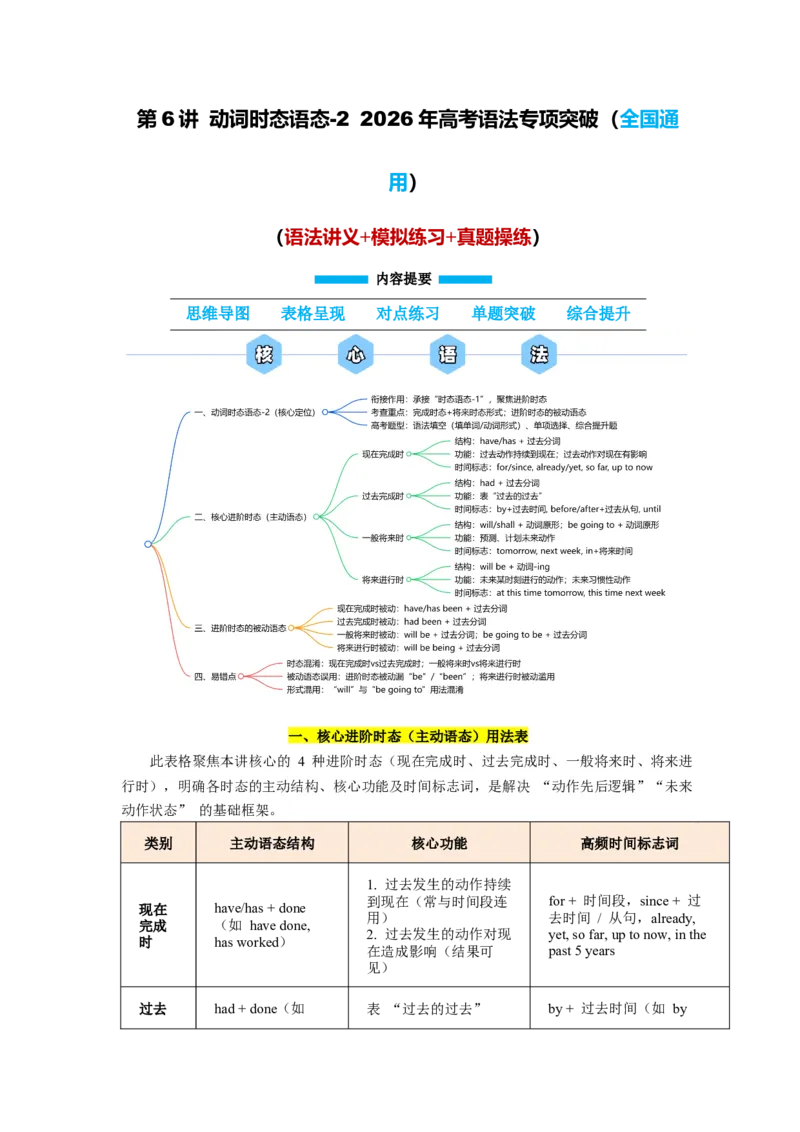
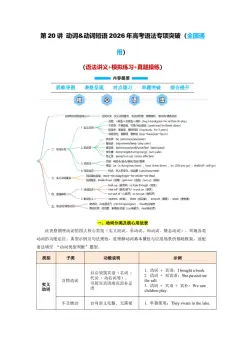
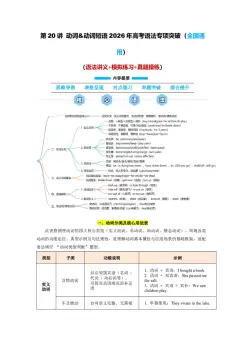
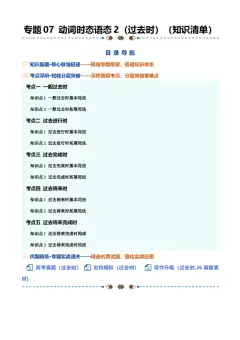
 内容提要
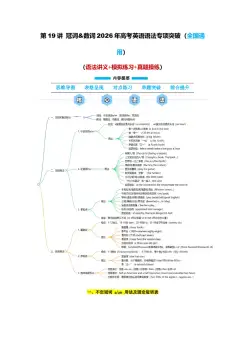
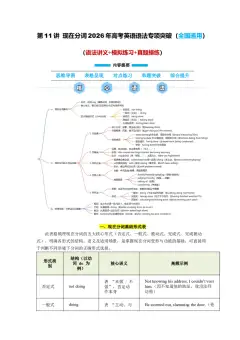
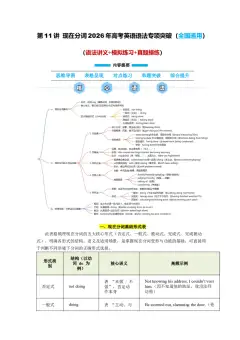
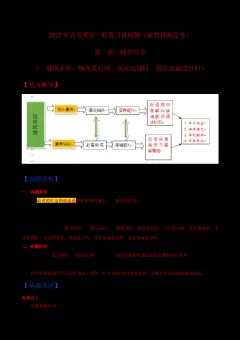
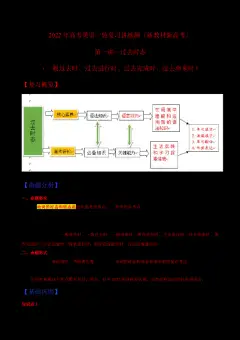
思维导图
表格呈现
对点练习
单题突破
综合提升
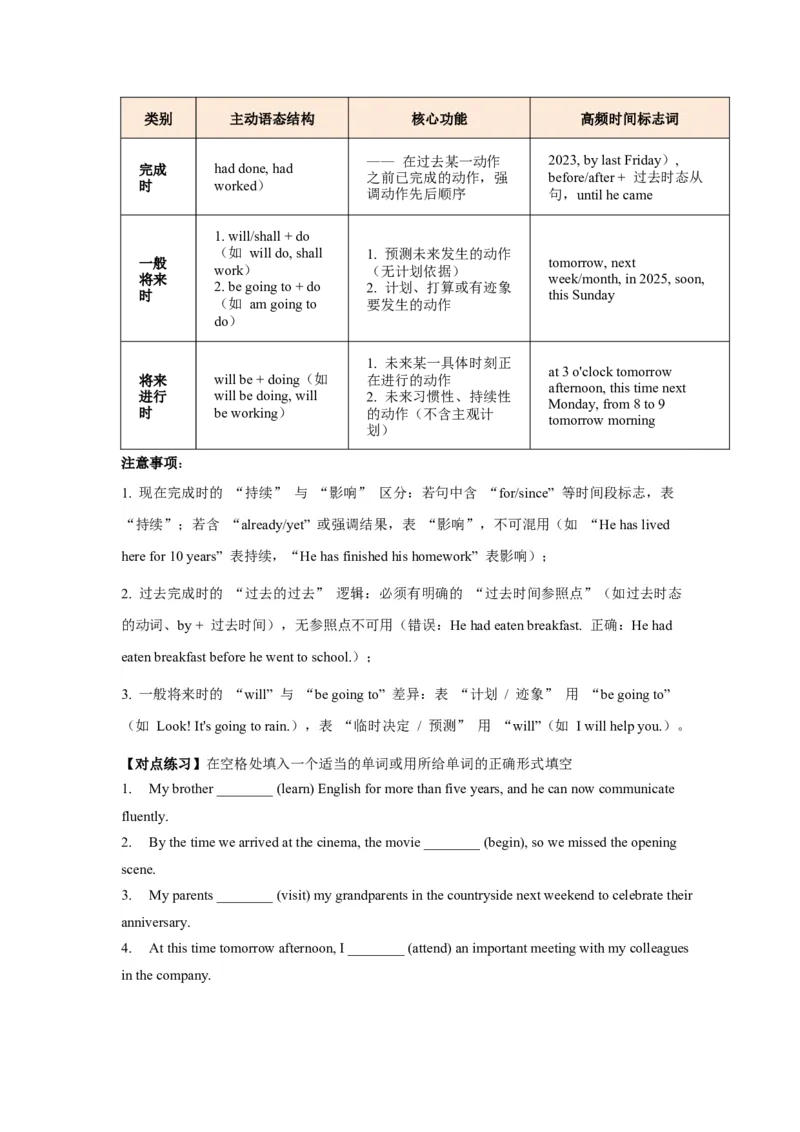
一、核心进阶时态(主动语态)用法表
此表格聚焦本讲核心的 4 种进阶时态(现在完成时、过去完成时、一般将来时、将来进
行时),明确各时态的主动结构、核心功能及时间标志词,是解决 “动作先后逻辑”“未来
动作状态” 的基础框架。
类别
主动语态结构
核心功能
高频时间标志词
现在
完成
时
have/has + done
(如 have done,
has worked)
1. 过去发生的动作持续
到现在(常与时间段连
用)
2. 过去发生的动作对现
在造成影响(结果可
见)
for + 时间段,since + 过
去时间 / 从句,already,
yet, so far, up to now, in the
past 5 years
过去
had + done(如
表 “过去的过去”
by + 过去时间(如 by
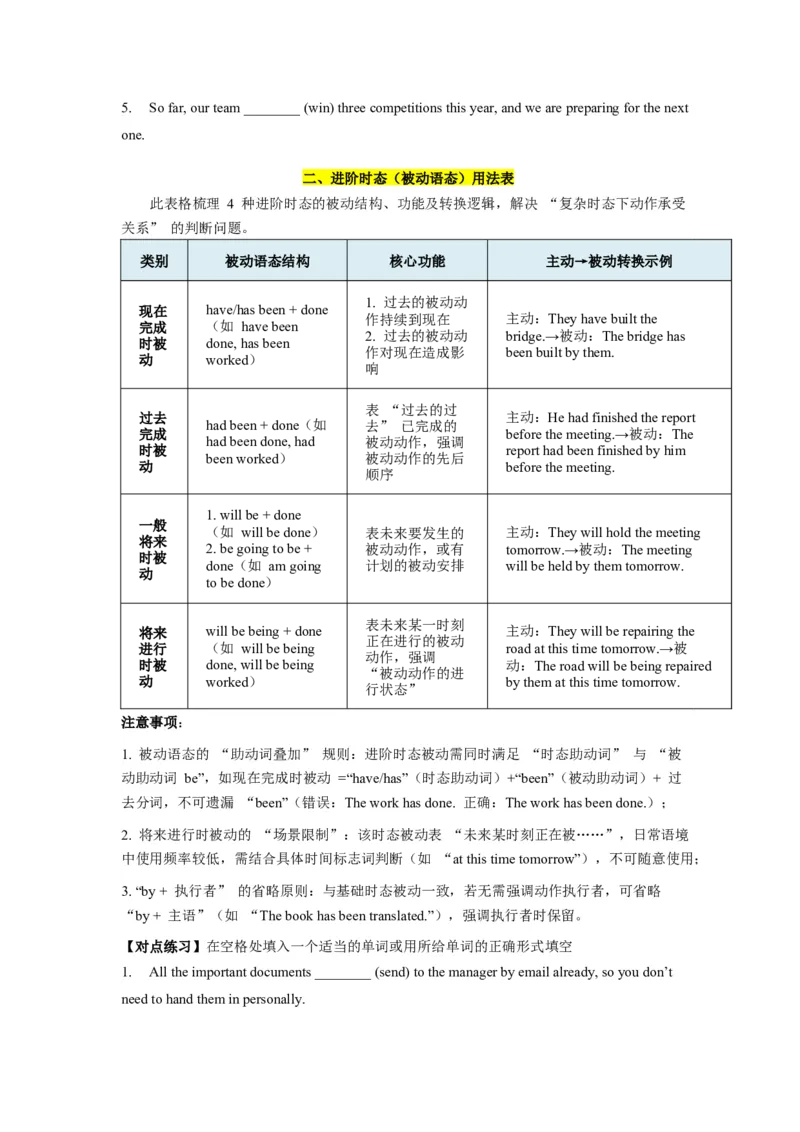
类别
主动语态结构
核心功能
高频时间标志词
完成
时
had done, had
worked)
—— 在过去某一动作
之前已完成的动作,强
调动作先后顺序
2023, by last Friday),
before/after + 过去时态从
句,until he came
一般
将来
时
1. will/shall + do
(如 will do, shall
work)
2. be going to + do
(如 am going to
do)
1. 预测未来发生的动作
(无计划依据)
2. 计划、打算或有迹象
要发生的动作
tomorrow, next
week/month, in 2025, soon,
this Sunday
将来
进行
时
will be + doing(如
will be doing, will
be working)
1. 未来某一具体时刻正
在进行的动作
2. 未来习惯性、持续性
的动作(不含主观计
划)
at 3 o'clock tomorrow
afternoon, this time next
Monday, from 8 to 9
tomorrow morning
注意事项:
1. 现在完成时的 “持续” 与 “影响” 区分:若句中含 “for/since” 等时间段标志,表
“持续”;若含 “already/yet” 或强调结果,表 “影响”,不可混用(如 “He has lived
here for 10 years” 表持续,“He has finished his homework” 表影响);
2. 过去完成时的 “过去的过去” 逻辑:必须有明确的 “过去时间参照点”(如过去时态
的动词、by + 过去时间),无参照点不可用(错误:He had eaten breakfast. 正确:He had
eaten breakfast before he went to school.);
3. 一般将来时的 “will” 与 “be going to” 差异:表 “计划 / 迹象” 用 “be going to”
(如 Look! It's going to rain.),表 “临时决定 / 预测” 用 “will”(如 I will help you.)。
【对点练习】在空格处填入一个适当的单词或用所给单词的正确形式填空
1.
My brother ________ (learn) English for more than five years, and he can now communicate
fluently.
2.
By the time we arrived at the cinema, the movie ________ (begin), so we missed the opening
scene.
3.
My parents ________ (visit) my grandparents in the countryside next weekend to celebrate their
anniversary.
4.
At this time tomorrow afternoon, I ________ (attend) an important meeting with my colleagues
in the company.
5.
So far, our team ________ (win) three competitions this year, and we are preparing for the next
one.
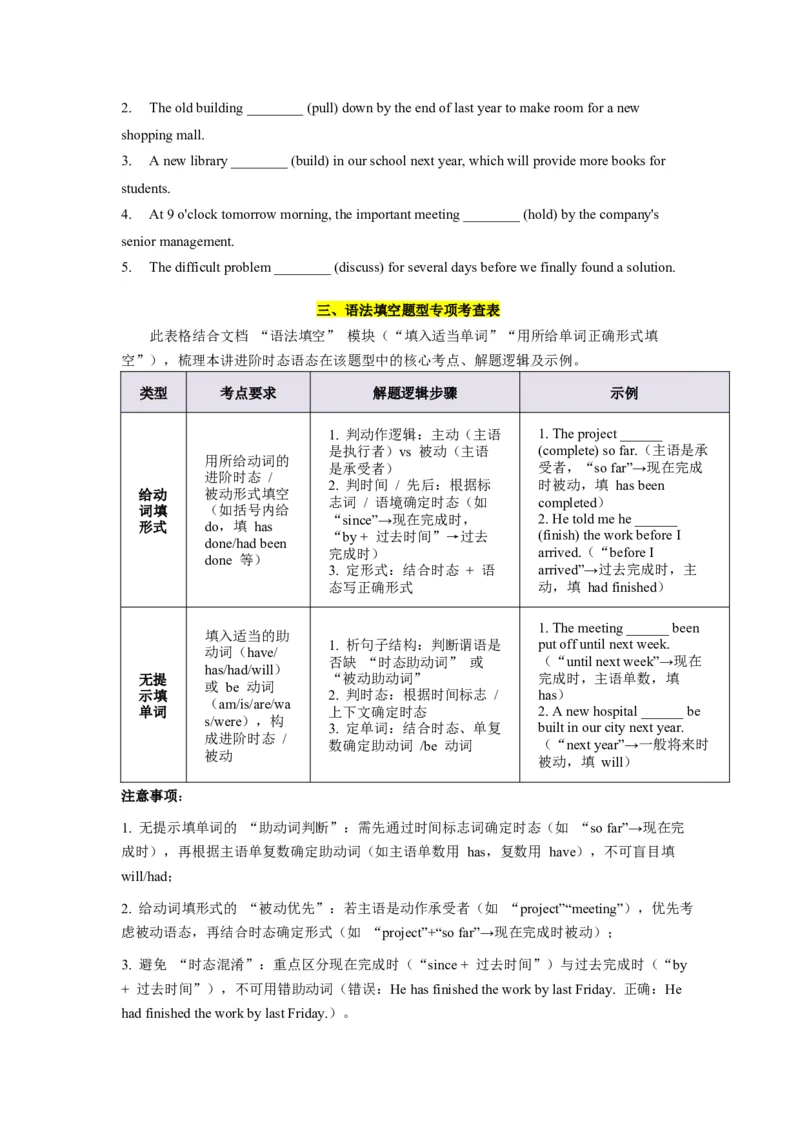
二、进阶时态(被动语态)用法表
此表格梳理 4 种进阶时态的被动结构、功能及转换逻辑,解决 “复杂时态下动作承受
关系” 的判断问题。
类别
被动语态结构
核心功能
主动→被动转换示例
现在
完成
时被
动
have/has been + done
(如 have been
done, has been
worked)
1. 过去的被动动
作持续到现在
2. 过去的被动动
作对现在造成影
响
主动:They have built the
bridge.→被动:The bridge has
been built by them.
过去
完成
时被
动
had been + done(如
had been done, had
been worked)
表 “过去的过
去” 已完成的
被动动作,强调
被动动作的先后
顺序
主动:He had finished the report
before the meeting.→被动:The
report had been finished by him
before the meeting.
一般
将来
时被
动
1. will be + done
(如 will be done)
2. be going to be +
done(如 am going
to be done)
表未来要发生的
被动动作,或有
计划的被动安排
主动:They will hold the meeting
tomorrow.→被动:The meeting
will be held by them tomorrow.
将来
进行
时被
动
will be being + done
(如 will be being
done, will be being
worked)
表未来某一时刻
正在进行的被动
动作,强调
“被动动作的进
行状态”
主动:They will be repairing the
road at this time tomorrow.→被
动:The road will be being repaired
by them at this time tomorrow.
注意事项:
1. 被动语态的 “助动词叠加” 规则:进阶时态被动需同时满足 “时态助动词” 与 “被
动助动词 be”,如现在完成时被动 =“have/has”(时态助动词)+“been”(被动助动词)+ 过
去分词,不可遗漏 “been”(错误:The work has done. 正确:The work has been done.);
2. 将来进行时被动的 “场景限制”:该时态被动表 “未来某时刻正在被……”,日常语境
中使用频率较低,需结合具体时间标志词判断(如 “at this time tomorrow”),不可随意使用;
3. “by + 执行者” 的省略原则:与基础时态被动一致,若无需强调动作执行者,可省略
“by + 主语”(如 “The book has been translated.”),强调执行者时保留。
【对点练习】在空格处填入一个适当的单词或用所给单词的正确形式填空
1.
All the important documents ________ (send) to the manager by email already, so you don’t
need to hand them in personally.
2.
The old building ________ (pull) down by the end of last year to make room for a new
shopping mall.
3.
A new library ________ (build) in our school next year, which will provide more books for
students.
4.
At 9 o'clock tomorrow morning, the important meeting ________ (hold) by the company's
senior management.
5.
The difficult problem ________ (discuss) for several days before we finally found a solution.
三、语法填空题型专项考查表
此表格结合文档 “语法填空” 模块(“填入适当单词”“用所给单词正确形式填
空”),梳理本讲进阶时态语态在该题型中的核心考点、解题逻辑及示例。
类型
考点要求
解题逻辑步骤
示例
给动
词填
形式
用所给动词的
进阶时态 /
被动形式填空
(如括号内给
do,填 has
done/had been
done 等)
1. 判动作逻辑:主动(主语
是执行者)vs 被动(主语
是承受者)
2. 判时间 / 先后:根据标
志词 / 语境确定时态(如
“since”→现在完成时,
“by + 过去时间”→过去
完成时)
3. 定形式:结合时态 + 语
态写正确形式
1. The project ______
(complete) so far.(主语是承
受者,“so far”→现在完成
时被动,填 has been
completed)
2. He told me he ______
(finish) the work before I
arrived.(“before I
arrived”→过去完成时,主
动,填 had finished)
无提
示填
单词
填入适当的助
动词(have/
has/had/will)
或 be 动词
(am/is/are/wa
s/were),构
成进阶时态 /
被动
1. 析句子结构:判断谓语是
否缺 “时态助动词” 或
“被动助动词”
2. 判时态:根据时间标志 /
上下文确定时态
3. 定单词:结合时态、单复
数确定助动词 /be 动词
1. The meeting ______ been
put off until next week.
(“until next week”→现在
完成时,主语单数,填
has)
2. A new hospital ______ be
built in our city next year.
(“next year”→一般将来时
被动,填 will)
注意事项:
1. 无提示填单词的 “助动词判断”:需先通过时间标志词确定时态(如 “so far”→现在完
成时),再根据主语单复数确定助动词(如主语单数用 has,复数用 have),不可盲目填
will/had;
2. 给动词填形式的 “被动优先”:若主语是动作承受者(如 “project”“meeting”),优先考
虑被动语态,再结合时态确定形式(如 “project”+“so far”→现在完成时被动);
3. 避免 “时态混淆”:重点区分现在完成时(“since + 过去时间”)与过去完成时(“by
+ 过去时间”),不可用错助动词(错误:He has finished the work by last Friday. 正确:He
had finished the work by last Friday.)。
【对点练习】在空格处填入一个适当的单词或用所给单词的正确形式填空
1.
The project ________ (complete) successfully so far, and we are very proud of our
achievements.
2.
She told me that she ________ (read) the novel before her friend recommended it to her.
3.
A new park ________ been built in our community recently, which has become a popular place
for residents to relax.
4.
The important meeting ________ be held in the big hall tomorrow morning, so we need to
prepare the equipment in advance.
5.
By the time the storm stopped, many houses in the small village ________ (destroy) by the
strong winds.
四、易错点对比辨析表
此表格针对本讲高频易错点(时态混淆、被动语态误用),通过 “错误 - 正确” 对比
明确规则,帮助规避典型错误。
类型
错误表达
正确表达
核心规则总结
现在完
成时 vs
过去完
成时混
淆
He has left before I came.
(错误:“before I
came” 是过去时间参照
点,需用过去完成时)
He had left
before I came.
有 “过去时间参照点”
(如过去时态从句),表
“过去的过去” 用过去完
成时;无参照点,表 “持
续到现在” 用现在完成时
一般将
来时被
动遗漏
“be”
The exam will hold next
month.(错误:主语
“exam” 是承受者,缺
被动助动词 be)
The exam will
be held next
month.
一般将来时被动结构为
“will be + 过去分词”,不
可遗漏 “be”,且过去分词
不可变原形
现在完
成时与
“过去
时间”
连用错
误
He has visited Beijing
last year.(错误:“last
year” 是过去时间点,
不可与现在完成时连
用)
He visited
Beijing last
year. / He has
visited Beijing
since last year.
现在完成时不可与 “last
year/yesterday” 等过去时间
点连用,可与 “since + 过
去时间”(时间段)连用
将来进
行时表
“计
划” 错
误
We will be having a party
next Sunday.(错误:
“next Sunday” 表计
划,用一般将来时更合
适,将来进行时表
“周日某时刻正在
开”)
We will have a
party next
Sunday.
将来进行时表 “未来某时
刻正在进行”,表 “未来
计划” 优先用一般将来时
(will do/be going to do)
注意事项:
1. 时间标志词的 “专属匹配”:不同进阶时态对应固定标志词(如 “so far” 只配现在完成
时,“by + 过去时间” 只配过去完成时),需牢记匹配关系,避免混用;
2. 被动语态的 “时态一致性”:被动结构中的助动词(be/have/has/had)需与时态保持一致,
如过去完成时被动用 “had been”,现在完成时被动用 “have/has been”,不可交叉使用(错
误:The work had been done so far. 正确:The work has been done so far.);
3. 语境逻辑优先:若无明确时间标志词,需通过动作先后关系判断时态(如 “他说他之前
见过她”,“见过” 在 “说” 之前,用过去完成时:He said he had seen her before.)。
【对点练习】在空格处填入一个适当的单词或用所给单词的正确形式填空
1.
He ________ (finish) his homework before his mother came back home yesterday evening.
2.
The sports meeting ________ (hold) in our school next month, so all students are busy
preparing for it.
3.
My sister ________ (visit) Shanghai last year, and she has not been there since then.
4.
We ________ (have) a picnic in the park next Sunday, and we have already bought all the food.
5.
By the end of last month, the factory ________ (produce) more than 10,000 new cars this year.
一、语法填空:用所给单词的正确形式填空
1.(2025 高三·全国·专题练习)We                  (hold) a free taster session on 23rd
May, at 10 am, to demonstrate the variety of effective and active exercises. (所给词的适当形式填
空)
2.(2025 高三·全国·专题练习)Engineers are now working on a new concept: the rail drones of
the future. They                  (move) on the track ahead of the train, and programmed to run
autonomously. (所给词的适当形式填空)
3.(2025 高三下·全国·专题练习)He                 (attend) the lecture he mentioned
yesterday at 8 o’clock this evening. (所给词的适当形式填空)
4.(2025 高三下·全国·专题练习)At this time next week, we                 (lie) on the
beach in a holiday mode. (所给词的适当形式填空)
5.(2023 高三·上海·专题练习)So far, our country                  (make) great
achievements in many fields. (所给词的适当形式填空)
6.(2023 高三·上海·专题练习)If you have kids, and they

    (not see) this
film yet, it’s safe to say they’d enjoy it. (所给词的适当形式填空)
7.(2023 高三·上海·专题练习)Since it drew recent media attention, Woon
(hear) from resorts and restaurants in 10 countries, including the United States. (所给词的适当形式
填空)
8.(2023 高三·上海·专题练习)While online shopping                 (change) our life, not
all of its effects have been positive. (所给词的适当形式填空)
9.(2023 高三·上海·专题练习)The week I turned 50, my marriage came to a sudden end. My
house, furniture and everything I


 (own) was sold to pay debts that I didn’t
know existed. (所给词的适当形式填空)
10.(2023 高三·上海·专题练习)Due to the hard training they                     (do)
before, their performances were very impressive. (所给词的适当形式填空)
11.(22-23 高一上·上海·假期作业)The news came as no surprise to me. I
(know) for some time that the factory was going to shut down.(所给词的适当形式填空)
12.(2023 高三·上海·专题练习)For young people, it was the first time that they
(experience) something big, a worry that they shared with their families, friends and neighbors, and a
suffering being endured at this moment and to be endured next few weeks. (所给词的适当形式填
空)
13.(2023 高三·上海·专题练习)Work hard, or you                   (regret) one day. (所
给词的适当形式填空)
14.(2023 高三·上海·专题练习)The reason why many people unconsciously “tune out” their
family members or close friends is that they think they already know what the other person

(say). (所给词的适当形式填空)
15.(2023 高三·上海·专题练习)Sooner or later those dishonest people


(pay) a price for their acts; on the contrary, when we are honest, we are truly free. (所给词的适当形
式填空)
Passage 1
(2024·浙江·高考真题)阅读下面短文, 在空白处填入1 个适当的单词或括号内单词的正确形
式。
The shelves in most supermarkets are full of family-size this and multi-buy that. However, if
you’re shopping for one, buying extra     1               (benefit) from price reductions
doesn’t make sense. Either your shopping is then too heavy to carry home
   2

you can’t use what you’ve bought while it’s still fresh.
Of course, shops are not charities — they price goods in the way     3               will
make them the most money. If most of their customers are happy to buy larger quantities, that’s     4
they’ll promote. But that leaves the solo (单独) customers out of pocket and disappointed.
Many supermarkets are no longer doing “buy one get one free” promotions because of the
5               (criticize) that they lead to waste. Consumers prefer money off individual items.
However, though it’s nice to get a few cents off a pack of sausages, it would help even more if they
could sometimes     6               (offer) in smaller packs. Even the biggest sausage fan
doesn’t want to eat them every day.
If your supermarket sells loose produce, then buying smaller quantities is easier. Over the last
two years, some supermarkets     7               (start) selling chicken or salad in packs     8
(design) with two halves containing separate portions (份). Then, when you use one section,     9
other stays fresh.
Who knows, perhaps some of the more forward-looking     10               (one) may
yet come out with a whole range of “just for you” pack sizes with special offers as well.
Passage 2
(2022·全国甲卷·高考真题)阅读下面短文, 在空白处填入1 个适当的单词或括号内单词的正
确形式.
A visually-challenged man from Beijing recently hiked (徒步) 40 days to Xi’an, as a first step
1              (journey) the Belt and Road route (路线) by foot.
On the 1,100 kilometer journey, the man Cao Shengkang,    2              lost his
eyesight at the age of eight in a car accident, crossed 40 cities and counties in three provinces.
Inspired by the Belt and Road Forum for International Cooperation    3              (hold) in
Beijing, Cao decided to cover the route by hiking as a tribute (致敬) to the ancient Silk Road.    4
friend of his, Wu Fan, volunteered to be his companion during the trip.
Cao and Wu also collected garbage along the road, in order to promote environmental    5
(protect). Cao believes this will make the hiking trip even more    6              (meaning).
The two of them collected more than 1,000 plastic bottles along the 40-day journey.
In the last five years. Cao    7              (walk) through 34 countries in six continents,
and in 2016, he reached the top of Kilimanjaro, Africa’s    8              (high) mountain.
Now, Cao has started the second part of his dream to walk along the Belt and Road route. He
flew 4, 700 kilometers    9              Xi’an to Kashgar on Sept. 20,     10

(plan) to hike back to Xi’an in five months.
Passage 3
(2025·广东清远·一模)阅读下面短文,在空白处填入1 个适当的单词或括号内单词的正确形
式。
A weekly runway show (时装秀) in a remote village of Kaili, Guizhou, has become popular
online, drawing many tourists and global attention. Unlike Paris’ or Milan’s fashion weeks, this 50-
meter wooden runway, which is used on weekends and holidays,     1               (feature)
locals of all ages, from kids to the elderly, instead of professional models.
Every evening from 7:00 to 9:30,     2               (participant) show hand-woven
Miao and Dong costumes with shiny silver jewelry. They walk, sing, and dance, with farm tools and
other daily things serving     3               performance aids, and the whole event is
livestreamed on social media.     4               (launch) last July at Kaili’s Ethnic Costumes
Park, it’s called “Village Runway Show”, attracting over 400,000 visits and millions of online views.
It even made headlines abroad and helped some “models” join big fashion weeks in London and
Osaka.
The show’s founder, surnamed Yang, is     5               36-year-old Miao designer.
His     6               (inspire) came from his mother’s trip to London Craft Week. He says
Guizhou already has popular rural events like Rongjiang’s “Cunchao” (soccer),
   7

Kaili’s show focuses more on traditional costumes. The show’s success comes from public
participation and cultural display that is     8               (sincere) presented. The show     9
(boost) Kaili’s economy since last year. It has raised villagers’ cultural confidence — young people
learn traditional crafts, graduates return to work, and local business people join this non-profit event.
This autumn, Kaili plans to hold its own ethnic fashion week, welcoming designers from all of
China’s 56 ethnic groups,      10                will further keep traditional culture lively
through more engagement.
Passage 4
(2025·广东·模拟预测)阅读下面短文,在空白处填入1 个适当的单词或括号内单词的正确形
式。
The number of Chinese artificial intelligence (AI) companies     1               (rise)
sharply to more than 5,000 in the past five years, according to data released by the Ministry of
Industry and Information Technology at the World Smart Industry Expo. In 2020, there     2

(be) only 1,454 AI companies in the country.
China has     3               (successful) set up over 40,000 smart factories, 11 national
pilot zones for AI innovation and application, as well as 17 national demonstration zones for
intelligent connected vehicle testing.
A 60 billion-yuan (about 8.4 billion US dollars) national AI industry investment fund has been
launched,     4               (accompany) by rules on AI ethics (伦理), China-BRICS center
for AI development and cooperation, and over 240 standards for core AI technologies.
China has placed strong emphasis on promoting     5               (it) AI industry. In
2017, the State Council released     6               development plan for the next generation
of AI. In 2025, it followed up with guidelines on advancing the “AI Plus” initiative, designed     7
(speed) up the building of an intelligent economy and a smart society,     8               are
characterized by human-machine cooperation, cross-sector integration and shared innovation.
“The     9               (sustain) development of China’s AI industry comes from
drawing on the valuable experience of early movers,      10                making full use of
self-advantages like abundant data resources, a complete industrial system, broad application
situations and vast market potential,” said Wan Gang, president of the China Association for Science
and Technology.
Passage 5
(2025·广东·一模)阅读下面短文,在空白处填入1 个适当的单词或括号内单词的正确形式。
Xunpu has attracted wide attention online after several stars shared photos of themselves
wearing a kind of local headwear called Zanhuawei (簪花围).
Xunpu is a small fishing village    1              (locate) in a county 10 kilometers from
the center of the city of Quanzhou in Fujian Province. Zanhuawei is a type of flower headwear worn
by local women, known as “the garden on the head”. It is    2              important part of
Xunpu women’s dress culture. As an old saying in Xunpu goes, “Put flowers in your hair in this life,
3              you’ll also be pretty in the afterlife.”
The tradition of wearing flowers    4              (be) part of Xunpu women’s lives since
the Tang Dynasty. Xunpu is famous for    5              (it) excellent seafood. When women
sell their seafood at the local market, they wear flowers in their hair so buyers can    6

(easy) distinguish (区别) them from sellers from nearby villages.
Xunpu women    7              are among the three major groups of fishing women in
Fujian, usually wear seasonal flowers and often present them as gifts    8              big days.
Local people often say, “When Xunpu women put a zanhua on their heads, they express their wishes
for    9              (happy), and the flowers are seen as a symbol of hope.”
Zanhuawei     10               (list) as a national intangible cultural heritage (非物质
文化遗产) in 2008.
Passage 6
(2024·安徽合肥·模拟预测)阅读下面短文,在空白处填入1 个适当的单词或括号内单词的正
确形式,并将答案填写在答题卡上。
The 24 solar terms    1              (recognize) as “the fifth great invention of China”.
Every year around May 21st, the second solar term of summer, Grain Buds, or Xiaoman in Chinese,
arrives. While it’s getting hotter and    2              (wet), the seeds of summer crops are
already full     3              not ripe. The difference in temperature between the North and the
South narrows and    4              greater amount of rainfall is on the way.
“Low rainfall during Xiaoman will bring problems for planting during Grain in Ear (芒种).”
Such sayings    5              (guide) agricultural production and the daily life of the Chinese
people for thousands of years. In the area south of the Yangtze River, three types of    6

(equip) start to work as Xiaoman gets closer. At this time, the waterwheel is pedaled ( 蹬)    7

(water) crops. Farmers use the oil mill to extract ( 提取) oil from the seeds freshly    8

(collect). They also use the weaving loom to reel silk threads.
Xiaoman is actually an interval (间歇) between harvests, so people in the past had to eat wild
vegetables in order to survive these tough days,    9              led to a unique eating custom.
Meanwhile, as Xiaoman is the birthday of the Silkworm God, people in some areas pray     10

a good silk harvest on that day.