考点07 状语从句(核心考点精讲精练)
温馨提示:
本资料注重培优,集中强化重点,突破难度,规避易混易错点,练习全部
是26 年新模拟题
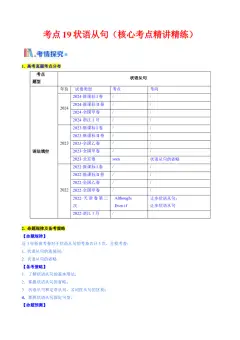
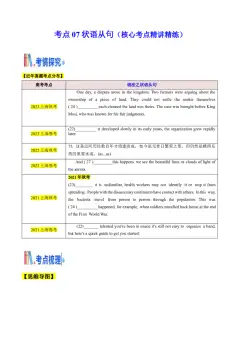
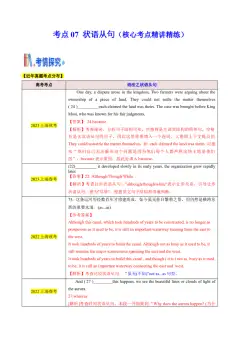
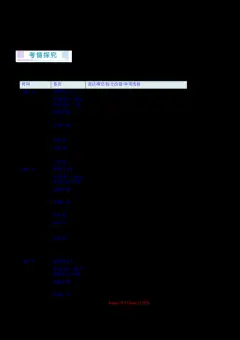
1. 高考真题考点分布
考点
题型
状语从句
年份
 试卷类型
考点
考向
语法填空
2025
2025·全国I 卷
/
/
2025·全国II 卷
/
/
2025·浙江1 月
/
/
2025·北京卷
/
/
2024
2024·新课标I 卷
/
/
2024·新课标II 卷
/
/
2024·全国甲卷
/
/
2024·浙江1 月
/
/
2023
2023·新课标I 卷
/
/
2023·新课标II 卷
/
/
2023·全国乙卷
/
/
2023·全国甲卷
/
/
2023·北京卷
seen
状语从句的省略
2. 命题规律及备考策略
【命题规律】
近3 年新高考卷对于状语从句的考查共计1 次,主要考查:
1.状语从句的连接词;
2.状语从句的省略。
【备考策略】
了解状语从句的基本用法;
掌握状语从句的省略;
状语从句和定语从句、名词性从句的区别;
掌握状语从句固定句型。
3.【命题预测】
预计2026 年高考仍然对状语从句的考查将集中在一以下几点:
1.主要考查状语从句连接词的正确运用,其次是状语从句的省略(非谓语动词短语与状语从句之间的转换);
2.高考对状语从句的考查仍将不会单纯考查其语法结构,而是将其融入一定的语境中来考查考生的实际综
合运用能力。
状语从句重难考点:
状语从句按其意义和作用可分为时间、地点、原因、目的、结果、条件、方式、比较、让步等。引导状语
从句的连词归纳如下:
从句
连词
时间状语从句
when, while, as, whenever, till, until,before, after, by the time, the first time ,as
soon as, the moment, each time, since,no sooner ...than... immediately 等
地点状语从句
where,wherever, everywhere 等
条件状语从句
if, unless, providing, as long as, on condition that, in case, if only 等
让步状语从句
though, although, even if/even though,as, while, whatever, however, no matter +疑问词
等
原因状语从句
because, since, as, now that, seeing that,considering that, in that, given that 等
目的状语从句
that, so that(为了),lest, in case, for fear that, in order that 等
结果状语从句
so that(因此),so...that ..such…that..等
比较状语从句
方式状语从句
as...as.... ,than 等
as if/as though, (just)as 等

考点一 考查时间状语从句的用法(高考最高频考点)
1. as, when 和while 引导的时间状语从句
●when 从句谓语动词为延续性动词或非延续性动词。从句的动作和主句的动作可以同时发生,也可以
先后发生。译为“当……时;在……期间”。while 从句的谓语动词为延续性动词。从句的动作与主句
的动作同时发生。as 从句谓语一般为延续性动词。从句的动作与主句的动作同时发生或交替进行,可
译为“一边……,一边……;随着……”
1.I was standing by the car          a hummingbird flew to the center of our group and began hovering.
2.         practicing Baduanjin, all you need to do is to focus on your body and health, moving slowly in a
comfortable rhythm, and liberate yourself from the anxiety of living alone in big cities.
3.The moment of truth came          I tentatively dipped my chopsticks into the broth and added a slice of
thinly sliced beef and a handful of vegetables.
4.         waiting there, he saw two pretty girls come out of the building.
5.I was reading a book in the classroom          there was an announcement.
1.如果主句表示的是短暂性动作,而从句用延续性动词的进行时表示在一段时间内正在进行的动作时,
when/while/as 可以互换使用。
When/While/As I was walking down the street, I came across an old friend of mine.
我正沿着大街走时,碰巧遇到了我的一位老朋友。
2.when 还可表原因,意为“既然”。
How can I help them to understand when they won't listen to me?
既然他们不听我说,我怎么帮他们理解?
2.before 与since 引导的时间状语从句
1. before 与since 的固定句式。
连词
常用句式
before
It will be+一段时间+before ... 过……时间才……
It will not be/was not long+before ... 不久就会/没多久就……
It was+时间段+before ... 过了……(时间)才……
since
It is/has been+一段时间+since ... (从句用一般过去时)
It was+一段时间+since ... (从句用过去完成时)
It will be half a year before I come back. (……之后才……)我半年之后才会来。
It won’t be long before we meet again.(不久就......)用不了多久我们就会再见面。
It was three days before he came back.(过了......才......)过了三天他才会来。
2.since 引导的从句如果用非延续性动词,所表示的动作自从句谓语动词所表示的动作开始时算起;若用延
续性动词,所表示的动作自从句谓语的动作或状态的完成或结束时算起。
It’s three years since he joined the army.(自从......多久了......)
自从他参军已经三年了。
It's two years since we arrived here.
我们到这儿两年了。
It's three years since we lived here.
我们不住在这里有三年了。
3.“It be+时间状语+that+其他”构成强调句型,意思是“正是在某一时间发生了某事”。
It was at eight o'clock that we got home.正是在八点我们到了家。
4.“It be+时间点+when 从句”表示“某事发生在什么时间”,it 指代时间。
It was six o'clock when we got home.当我们到家的时候六点了。
since 从句是延续性动词则表示“自该动作结束以来”。
She hasn’t called me since she lived here. 自从她离开这里(不住在这里)后,就没给我打过电话。
1.           I was 10 years old, I have dreamed of becoming a teacher.
2.It will not be long          the students take the College Entrance Examination.
3.The carving of fine details was completed          the arms were attached.
4.As we know, it is over 100 years              Tsinghua University was founded.
3.till 和until 引导的时间状语从句
till 和 until 含义相同,都表示 “直到…… 为止”,引导时间状语从句时,主句动作持续到从句动作发
生时结束。两者的区别在于:till 多用于口语,until 可用于句首,till 一般不用于句首。
1)肯定句中,其主句谓语动词必须为延续性动词,表示某动作一直延续到某时间为止。
2)否定句中(not... until):表示 “直到…… 才”,主句常用非延续性动词。
She stayed in the office until she finished all the work. 她一直在办公室待到完成所有工作。
He didn’t apologize to me not until I pointed out his mistake. 直到我指出他的错误,他才向我道歉。
Not until…位于句首,主句采用部分倒装语序,主句仍然采用陈述语序。
Not until I traveled abroad did I realize the importance of learning English.
直到出国旅行,我才意识到学英语的重要性。
1.For more than two years, Michelangelo worked on David day and night, rain and shine,          it was
completed.
2.I won’t believe your story              you show me clear evidence.
3.The charmers, who make snakes dance to the sound of flutes (笛子), used to be a traditional feature of Indian
life, performing in towns and villages,          they were banned in 1972 to control the trade in snake skins.
4.表示“一......就......”的句型归纳
①as soon as, immediately, directly, instantly, the moment, the minute, the instant, no sooner ... than ...,
hardly/scarcely ... when ... 和once(一……就……)
从句中常用一般时态代替将来时。
The moment I heard the voice,I knew Father was coming.
我一听到那个声音就知道父亲来了。
The boy burst into tears immediately he saw his mother.
那男孩一见到他妈妈便放声大哭。
②“on+v.ing”和“on+one's+n.”结构。当v.ing 和n.在意义上相对应时,这两个结构可以互换。
On arriving the station, the thief was arrested.
刚到火车站,这个小偷就被逮捕了。
On his arrival in Paris he was recognized as a noble and thrown into prison.
他刚到巴黎,就被认出是位贵族并被投入监狱。
③no sooner ... than ...,hardly/scarcely ... when ... 句型的时态运用:主句的谓语动词应用过去完成时,
而than 与when 引导的从句谓语动词应用一般过去时。此外,当把no sooner 和hardly/scarcely 提到句
首时,应用倒装语序。
He had no sooner finished his speech than the students started cheering.
→No sooner had he finished his speech than the students started cheering.
→Hardly had he finished his speech when the students started cheering.
他刚完成演讲学生们就开始欢呼起来。
1.Hardly      we driven two miles when it began to snow heavily.
2.He made for the door          instant he heard the knock.
3.         (immediate) I saw him, I knew he was the man the police were looking for.
4.No sooner              he stepped on the stage than the audience broke into thunderous applause.
1 .It will be several years __________ the full impact of the recent technological advancements in artificial
intelligence is fully understood.
2.I was informed that it will be eight months __________ a rescue mission arrives from Earth.
3.I have worked in this school__________I graduated from Peking University.
4.Please don’t talk so loudly __________ others are working.
1.         instant I learnt that our school would hold the coming-of-age ceremony, I jumped with joy.
2.It all began          a farmer called Yan Daocheng dug out a number of treasures accidentally in the spring
of 1929.
3.          he played his guqin in the mountains, a woodcutter named Zhong Ziqi heard the music and
understood exactly what Yu wanted to express.
4.I felt a deep sense of peace          I painted.
5.             he resigned from his work several years ago, he has tried several different jobs.
6.On a rainy evening in Yangshuo, I was setting up my camp              a man came and asked me to stay
in his home.
7.             Tu Youyou graduated, she worked at the China Academy of Traditional Chinese Medicine in
Beijing.
8.John thinks it won’t be long          he is ready for his new job.
9.I started to wait to leave          (immediate) we arrived at the place, and so did he.
10.She began to cry           instant she read the letter.

考点二 考查让步状语从句的用法
1.that 引导主语从句。
①although,though,as 和while 引导的让步状语从句
(1) as 引导的从句必须用倒装语序: 表语/状语/动词原形+as/though+主语+其他,若表语是可数名词
单数,前置时要省略冠词。
Child as/though he is, he can tell the names of all the cars.
尽管他是孩子,但他能辨认出所有车的名字。
Much as/though I like it, I won't buy it, for it's too expensive.
虽然我很喜欢它,但不会买,因为它太贵了。
(2)though 引导的从句可用倒装语序,也可不倒装;although 引导的从句不倒装;
(√)Smart though/as she is, she doesn't study hard.
(√)Although/Though it was raining hard, yet they went on playing football.
虽然雨下得很大,但他们还是继续踢足球。
(√)He is unhappy, though/although he has a lot of money.
虽然他很有钱,但他并不幸福。
(3) though 可用作副词,意为“然而”,表转折,置于句末。
He said he would come; he didn't,though.
他说他会来,可是没有来。
(4) while 引导让步状语从句,只能置于句首。
While I admit that there are problems, I don't agree that they cannot be solved.
尽管我承认有问题存在,但我并不认为这些问题不能解决。
②even if 与even though 引导的让步状语从句
even if/even though 引导让步状语从句时,表示语气更强的让步,意为“即使,即便”。
Tim is in good shape physically even though/even if he doesn't get much exercise.
蒂姆尽管不怎么锻炼,但体形很好。
Even though/if it rains tomorrow, we'll go there.(陈述语气)
即使明天下雨,我们也要去那里。
Even if I wanted to marry you, my parents would not agree.(虚拟语气)
即使我想和你结婚,我父母也不会同意。
He went out even though it was raining.
尽管在下雨,他还是出去了。
③“疑问词+ever”引导的让步状语从句
wherever,(what,who,whom,when,which,how)+ever 表示“无论……”,引导让步状语从句时,
相当于no matter where(what,who,whom,when,which,how)。
It is generally considered unwise to give a child whatever he or she wants.
总的来说,孩子想要什么就给什么是不明智的。
However/No matter how hard you try,it is difficult to lose weight without cutting down the amount you eat.
不管你多么努力,如果不减少饭量,减肥很难。
Whatever(=No matter what) you say, he won't believe you.
无论你说什么,他都不会相信你。
Whoever you are (=No matter who you are), you must obey the rules.
无论你是谁,都要遵守规则。
whoever, whatever, whomever, whichever 还可以引导名词性从句。
You can take whatever you like.(宾语从句)你喜欢什么就可以拿什么。。
④whether...or...引导的让步状语从句
whether...or...意为“无论……还是……”,提供两种对比情况。
All people,whether they are old or young,rich or poor,have been trying their best to help those in need
since the disaster.
所有人,无论衰老还是年轻,富裕还是贫穷,都一直在尽他们所能帮助灾后需要帮助的人们。
Whether she comes here or we go there, the topic of the discussion will remain unchanged.
不管是她来这儿还是我们去那儿,讨论的话题都不会变。
1.Mr. Smith insisted on finding a taxi for me even          I told him I lived nearby.
2.         he was defeated by his opponent, he never gave up any hope.
3.To show our respect, we usually have to take our gloves off             we are to shake hands with.
4.          the poetry of today has transformed in form and function, the root of its purpose can still be found
in poets’ desire to explore the human condition through the power of imagery and metaphor.
【2023 年天津第一次】________our hobbies, the Internet can connect us with others who enjoy the same
hobbies, even if they live on the other side of the world.
A.However
B.Whatever
C.Wherever
D.Whichever
1._________ he was tired from the marathon, he still managed to finish with a personal best.
2.Ms. Wu is so graceful a lady that she wears fine jewelry no matter _________ she goes.
3.Hard _________ he tried, he failed to catch up with the first runner.
4._________ difficulties we meet, we can work them out.
5.When you’re riding on trains, you won’t be provided with a blanket for free, even _________ your trip is an
overnight one.
6.No matter _________ I have to give a speech, I will get extremely nervous before I start.
7.I’ll try my best to help him, no matter _________  turns to me for help.
8._________ they go, animals find towns and cities in their way.
9._________ he was refused by the host, he insisted on entering the room.

考点三 考查条件状语从句的用法
1.if 和unless 引导的条件状语从句。if 表示正面的条件,意为“如果”;unless(=if ... not)表示反面的条
件,意为“除非,如果不”。
If you had come a few minutes earlier, you would have met him.
要是你早来几分钟就碰到他了。
You'll fail the exam unless you study hard(=if you don't study hard).
除非你努力学习,否则你考试会不及格。
2.in case,  on condition that,  providing(that),  provided (that),supposing (that), suppose (that)等词
汇意思相近,意为“万一,假使,假如,在……条件下”。
In case there is a fire, what will we do first?
万一发生火灾,我们首先要做什么?
Suppose/Supposing(that)  they refuse us, who else can we turn to for help?
假如他们拒绝了我们,我们还能求助于谁?
They agreed to lend us the car on condition that we returned it before the weekend.
他们同意把车借给我们,条件是我们在周末前归还。
3.as long as(=so long as)引导语气强烈的条件状语从句,意为“只要”。
As long as you don't lose heart, you will succeed.
你只要不灰心,就会成功。
4.在“祈使句+and/or/or else/otherwise+陈述句”句型中,祈使句在意义上相当于条件状语从句。
Run faster and you'll catch the bus.
跑快点,你就会赶上公共汽车的。
Work hard, otherwise you'll fail.
努力干,要不你就会失败的。
5.if only “如果……就好了”和only if “只有”也可以引导条件状语从句。但是当only if 置于句首时,主
句部分倒装。
If only I were as clever as you.
我要是像你一样聪明就好了。
Only if a teacher has given permission is a student allowed to leave the classroom.
学生只有得到老师的许可才能离开教室。
1.注意Only if…从句位于句首,主句部分倒装。
Only if you submit the essay by Friday will you get feedback. 只有你在周五前提交论文,才能得到反馈。
2.if only 意为“但愿;要是……就好了”,引导的从句要用虚拟语气(与现在的情况相反时,从句用
一般过去时;与过去的情况相反时,从句用过去完成时;与将来的情况相反时,谓语用“would/could+动
词原形”。)
1.         (provide ) that you didn’t try to make sense of it, it sounded beautiful.
2.Investors who buy stocks can trade their shares or keep them as          as the company is in business.
3.The school rules state that no child shall be allowed to go out of the school during the day,
accompanied by an adult.
4.          there were no air or water, there would be no living things on the earth.
1.There is a discount for the cost of the 6week English course          (provide) that you pay in advance.
2.        you study harder, you won’t be able to pass the final exam.
3.Jim says we can stay in his house as long                   we leave it clean and tidy.
4.You’ll make success sooner or later          condition that you don’t lose heart or give up.
5.         (suppose) that you listen to the doctor and do as he/she tells you, you’ll get better soon.
6.You may not succeed in business and social encounters          you employ inappropriate body language.
7.He doesn’t have any hobbies              you call watching TV a hobby.

考点四  考查目的状语从句和结果状语从句
1.目的状语从句的用法
①so that"为了;以便"。so that 通常可以与in order that 换用,它所引导的目的状语从句总是放在
主句之后,在非正式文体中,常省略that。in order that"为了;以便"。多与can/could/may/might 连用,
多用于正式文体,通常可以与so that 换用。
We got up early so that we could arrive in time.  我们起得早,以便能及时赶到。
Lucy saved money in order that she could buy a car. 露西攒钱买一辆汽车。
②for fear that 表示“生怕,以免”,in case 表示“以防”。
Batteries must be kept in dry places for fear that electricity should leak away.
电池应该放在干燥的地方,以免漏电。
I'll keep a seat for you in case you should change your mind.
我给你留个座位,没准儿你会改变主意。
2.结果状语从句的用法
引导结果状语从句的引导词或短语有so that, so ...  that ... , such ... that ... 。
①结构形式
There was so little food at home that we had to go out to buy some.
家里快没食物了,我们只好出去买一些。
Mike is such an honest worker that we all believe him.
→Mike is so honest a worker that we all believe him.
迈克是一个如此诚实的工人,以至于我们都相信他。
He has made such rapid progress that he was praised by his teacher three times a day.
他取得了如此快的进步,以致老师一天表扬了他三次。
②当so 或such 置于句首时,主句要用倒装语序。
So clever a student was he that he was able to work out all the difficult problems.
他是一个如此聪明的学生,以至于他能解决所有的难题。
Such was the force of the explosion that all the windows were broken.
爆炸的威力如此巨大,以致所有的窗户都被震破了。
③so/such ... that ... 引导的结果状语从句与so/such ... as ... 引导的定语从句的区别。
(1) so/such ... that ... 引导结果状语从句时,that 在从句中不作任何成分,只起连接作用。
It is such a moving film that we all want to see it.
这是一部如此感人的电影,以至于我们都想去看。
(2) so/such ... as ... 中,as 引导定语从句,as 在从句中作主语或宾语。
It is such a moving film as we all want to see.
这是一部感人的、我们都想看的电影。
1.Needless to say, I didn’t look forward to an entire term of being brushed off, but I tried to make the best of it
and didn’t say anything for fear           I would make things worse.
2.The police in our city work hard in order             we can live a safe life.
3.It was          a lovely day that everybody was feeling happy.
4.Klein, a noted historian of technology, spins a narrative so lively           at times it reads like a novel.
1.Cathy had quit her job when her son was born so              she could stay home and raise her family.
2.We need to understand what is happening to our planet in order             we can take actions.
3.The hotel has air conditioners. Besides, electric fans are available              case some guests are not
used to air conditioning.
4.The young people who run the shelter work hard to keep the place clean and advertise the animals

that they can be adopted.
5.The Potatso National Park covers              a wide area that the admission ticket for the park includes a
bus tour.
6.The Great Wall is           well-known a tourist attraction that lots of tourists visit the city every year.
7.Such an honest person is he         you can turn to him when you are in trouble.
8.As we can see, developing a good habit is so important          I would like to introduce one kind of good
learning habit-keep a learning diary every day.

考点五 地点状语从句和原因状语从句
1.地点状语从句
地点状语从句是指在复合句中作地点状语的从句,表示空间关系,可置于句首、句中或句末,通常由
从属连词where, wherever 等引导。
We should go where the Party needs us most.
我们应到党最需要我们的地方去。
You are free to go wherever you like.
你愿意去哪里就去哪里。
Where there is a will,  there is a way.
有志者,事竟成。
Wherever there is smoke, there is a fire.
无火不生烟。(无风不起浪)

where 既可引导定语从句,也可引导地点状语从句。where 引导定语从句时,从句前应有一个表示地点
的名词作先行词,where 可替换成“介词+ which'”;而状语从句前则无先行词。
They should go where they are needed most.他们应该去最需要他们的地方。
She lives where the climate is mild all year round. 她住在气候终年温和的地方。
2.原因状语从句
①引导原因状语从句的连词主要有:because, as, since 等。并列连词for 也可表示原因。每个连词的含义不
尽相同。
连词
位置
内涵
语气
回答why
被强调
because(因为)
主句前或后
直接因果关系
强
能
能
as (由于)
主句前或后
双方都知道的原因
弱
不能
不能
since/now that(既然)
通常位于主句前
for(因为)
位于句后
用于补充说明的原因
弱
不能
不能
He was criticized by the teacher, because he was late for class.
因为他迟到了,老师批评了他。
I can't go with you, as I  have a lot of work to do.
我不能和你一起去,因为我有很多工作要做。
Since everyone is here, we can begin our discussion.
既然大家都在这儿,我们可以开始讨论了。
②when(既然),也可以引导原因状语从句。
It was foolish of you to take a taxi when you could walk there in five minutes.
既然步行5 分钟就能到那里,你却去乘出租汽车,真够愚蠢的。
③其他词引导的原因状语从句
seeing that (鉴于,由于),considering that (考虑到),    in that(因为),
now that 既然,         given that 考虑到,          for the reason that 因为,
  Now that you are a high school student, you are responsible for what you do.
 既然是高中生了,你就要为你的行为负责。
  Seeing (that) he refused to help us, there’s no reason that we should now help him.
 他既然曾经拒绝帮助我们,我们现在没有理由来帮助他。
  Given that she is interested in children, I am sure teaching is the right career for her.
  考虑到她喜欢孩子,我可以肯定教书是最适合她的职业。
1.         trial-and-error was used, the cockatoos did better than monkeys in similar tests.
2.Aeroponics (气栽法) allows farmers to produce crops in climate-controlled containers. The containers can be
placed             there is access to water and Internet.
3.Now          we are in the information age, we have new concepts such as the computer, information
processing, virtual reality, and simulation.
4.At present, there are three panda bases providing this volunteer program. Dujiangyan Panda Base is the most
convenient one           it is near to Chengdu City.
5.I’m going to visit China this year,              I’m very interested in China’s history and culture.
1.If you happen to get lost in the wild, you’d better stay             you are and wait for help.
2.Everything was placed exactly          he wanted it for the graduation ceremony.
3.When you preview your lessons, you’d better make a mark          you have any questions.
4.          Loong were believed to have control over natural phenomena such as rain, and water and were
associated with the productivity of the land, Loong became symbols of strength and good fortune.
5.Health product sales recorded a nearly tenfold increase year-on-year during the two weeks leading to Mother’s
Day            consumers paid more attention to keeping healthy in post-pandemic times.
6.Now          you’ve listed your strengths, list your imperfections.
7.He was late for the meeting in            his car broke down on the way.

考点六 方式状语从句和比较状语从句
1.方式状语从句
①方式状语从句常由as, just as, as if/though 等引导,多置于主句之后。
You ought to write as he does.
你应该像他那样写。
②as if 或as though 引导的方式状语从句一般用虚拟语气,但如果从句所陈述的情况很可能实现,也可用
陈述语气。
She treats the boy as if he were her own son.
她对待那个男孩就好像他是她的亲生儿子一样。
He walked as though/if he was drunk.
他走起路来就像喝醉了一样。
as if / as though 也可以引导一个分词短语、不定式短语或无动词短语。
He stared at me as if seeing me for first time. 他目不转睛地看着我,就像第一次看见我似的。
He cleared his throat as if to say something. 他清了清嗓子,像要说什么似的。
The waves dashed on the rocks as if in anger. 波涛冲击着岩石,好像很愤怒。
2.比较状语从句
①as ... as ...; not so/as ... as ...; the same ... as ... 表示相同程度的比较,肯定句用as ... as ...,否定句可用not
as ... as 或not so ... as。
He doesn't run so/as fast as Jack (does).
他跑得不如杰克快。
②than 表示不同程度的比较,主句中用形容词或副词的比较级。
He is taller than any other student in our school
他比我们学校的任何一个学生都高。
③the+比较级,the+比较级,表示“越……就越……”
The more you eat, the fatter you will be.
吃得越多,你将越胖。
1.Walking in the Suzhou Gardens, you will have a feeling of travelling through time and space, as          you
were walking in a Chinese landscape painting.
2.When deeply absorbed in work,       he often was, he would forget all about eating and sleeping.
3.The more exposed young people are to financial issues, the         (likely)they are to become responsible.
4.The Government’s sugar tax on soft drinks has brought in half as much money           Ministers first
predicted it would generate, the first official data on the policy has shown.
1.I went up to my new teammate and introduced myself. He looked at me as           I weren’t there.
2.As far as we all can see, the boy walked in as        he had bought the whole school.
3.I don’t want to set down a series of facts in a diary                           most people do.
4.If I chose to remain silent when my parents were criticizing me, they would get angrier because I was acting
I had intended to be disrespectful.
5.As far as I am concerned, the more you learn, the more          (equip) for life you are.
6.When you are in the ethnic minority villages, you’ll find Chinese culture is much more diverse
you thought.
7.I feel much more confident              I felt this morning. I think that tomorrow will be a great day!
8.The more times you practice, the          (much) easily you will memorize something.
(最新模拟试题演练)
1.(2026·黑龙江省新时代高中教育联合体高三上学期8 月开学测试)The qipao is more than a dress     44
it’s a narrative of Chinese identity and artistry.
2.(2026·辽宁名校联盟高三上学期8 月联考)Unfortunately, the environments where we live and work often
make it easy not to do certain actions     40     there is no obvious cue to trigger the behavior.
3.(2026·山西忻州部分学校高三上学期8 月阶段性测试) Some scientists believe that a better option would
be to capture carbon from seawater rather than air,     41     the ocean is the planet’s largest carbon sink,
absorbing 25% of all carbon dioxide emissions.
4.(2026·浙江省名校协作体高三上学期返校联考)The idea of opening Ox Lan started when Zhou Yan from
China visited Stockholm in 2023.     37     Japanese ramen (拉面) and Vietnamese pho (粉) were readily
available in the city, what Zhou found most surprising was that authentic Chinese noodles remained noticeably
absent from the otherwise diverse food scene.
5.(2026·江西师范大学附属中学高三上学期开学摸底)“To expand production to industrial levels, scientists
will need to design and produce large-scale bases for growing engineered plants and obtaining oil is a challenge,” a
researcher says, “    45     duckweed is a non-mainstream crop without much existing infrastructure.”
6.(2026·河北省保定市部分高中高三上学期开学)The 35th Inner Mongolia Grassland Naadam Festival started
on July 19 in Xilin Gol League in heavy rain.     39     the downpour created muddy conditions for some
visitors, rainfall is considered auspicious on the grasslands, symbolizing prosperity for livestock and pastures ( 牧
场).
7.(2026·湖北省荆州中学高三上学期8 月月考)

 45

  these actions may seem minor, I believe that
adopting such practices can help reduce one’s plastic footprint and contribute to a healthier planet.
8.(2026·山西忻州部分学校高三上学期8 月阶段性测试)Some scientists believe that a better option would be
to capture carbon from seawater rather than air,     41     the ocean is the planet’s largest carbon sink,
absorbing 25% of all carbon dioxide emissions.
9.(2026·四川省巴中市普通高中高三上学期9 月零诊)

 41

  the first edition was finished in 1991, it
became an immediate success. Two years later, it won the first National Book Award and was later appointed by the
United Nations as the official reference for English to Chinese translation.
10.(2026·福建省厦门双十中学高三上学期开学)       wealthy we may be, we can never find enough
hours in the day to do everything we want.
11.(2026·江苏省南京市鼓楼区南京市第二十九中学高三上学期第一次模拟)It will be several years

the full impact of the recent technological advancements in artificial intelligence is fully understood.
12.(2026·江苏省南京市鼓楼区南京市第二十九中学高三上学期第一次模拟)Jingdezhen has a fascinating
and storied history, of which I knew little          I had the opportunity to visit it recently.
语法填空
阅读下面短文, 在空白处填入1 个适当的单词或括号内单词的正确形式。(2026·山东省日照市高三上学期
9 月校际联考)
The appeal of Labubu isn’t about aesthetics-it’s about symbolism. Labubu is unsettling, contradictory, and
weirdly     1     (charm). So is adolescence. Kids this age are often attracted by the strange and the edgy. Not
because they’re disturbed, but because they’re exploring how     2     (hold) conflicting emotions and still feel
okay.
Psychologists call this “symbolic mastery”: the process by which children tame confusion, discomfort, or
fear through ownership. If something     3     (shock) you just enough — but not too much — it becomes     4
perfect object for exploration. Labubu is an     5     (invite) to master the strange. To say: “This thing doesn’t
make total sense. But I can make space for     6    . I can own it.”
Let’s add in another piece of the puzzle: blind boxes. Labubu dolls     7     (sell) in sealed packages, so
you don’t know which version you’ll get     8     you open it. Labubu isn’t just a toy — it’s a social signal. In
middle school, kids say, “Look, I got the rare Labubu!” We talk about peer pressure like it’s always harmful, but the
truth is,     9     (fit) in is a developmental milestone.
So when your child wants a Labubu because “everyone else has one,” it’s not a moral failing. It’s a     10
(perfect) healthy bid for inclusion. You don’t have to give in, but it helps to understand the psychology behind the
ask.
单句语法填空
在空白处填入1 个适当的单词或括号内单词的正确形式。
1.(2022 全国甲卷改编)The disagreement was ______ sharp that neither he nor I knew how to settle it.
2.(2019 全国III 卷)On our way to the house, it was raining _______ hard that we couldn't help wondering how
long it would take to get there.
3.(2022 全国乙卷改编)________ you ride a bicycle, you don’t use petrol.
4.(2021 全国甲卷改编)In my opinion, ________ in trouble, we should seek help from those we trust mostly.
5. (2020 全国III 卷)__________ he asked the villagers on the banks of the river where he could find the
legendary (传奇的) artist, they smiled and pointed down the river.
6.(2020 全国I 卷改编)After that I poured oil into a pan and turned off the stove. I waited patiently ______ the
oil was hot.
7.(2016 全国II 卷)So, get an early start and try to be as productive ___________ possible before lunch.
8.(2021 天津卷改编)We all need to get involved in saving energy ________ it's at work, at home, or at school.
9.(2017 北京改编)______ birds use their feathers for flight, some of their feathers are for other purposes.
10.(2019 天津卷改编)Tom is so independent that he never asks his parents' opinion _________ he wants their
support.
11.(2018 北京改编)_________ we don’t stop climate change, many animals and plants in the world will be
gone.
12.(2018 江苏改编)_______ you can sleep well, you will lose the ability to focus, plan and stay motivated after
one or two nights.
13.(2021 天津卷) Feeling fearful is healthy ________ it helps you slow down and evaluate risks properly.
14.(2017 江苏改编)Located _______ the Belt meets the Road, Jiangsu will contribute more to the Belt and
Road construction.
15.(2021 新课标I 卷)The amazing thing about the spring is that the colder the temperature gets, the__________
(hot) the spring!
16.(2020 浙江6 月卷)Farming produced more food per person ___________ hunting and gathering ,so
people were able to raise more children.
17.(2018 全国I 卷)While running regularly can’t make you live forever, the review says it is more effective at
lengthening life ___________ walking, cycling or swimming.
18.(2018 全国II 卷)Corn uses less water ___________ rice and creates less fertilizer (化肥) runoff.