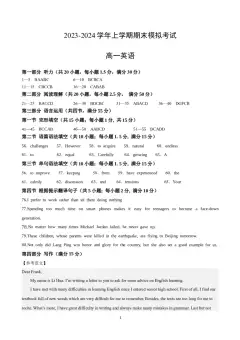
When I was a little girl, I liked drawing, freely and joyously making marks on the walls at
home. In primary school, I learned to write using chalks. Writing seemed to be another form of
drawing. I shaped individual letters into repeating lines, which were abstract forms, delightful but
meaningless patterns.
In secondary school, art was my favourite subject. Since I loved it so much I thought I was
good at it. For the art O-level exam I had to present an oil painting. I found it difficult, but still
hoped to pass. I failed, with a low grade. I’d been over-confident. Now I’d been declared
talentless.
But other channels of creativity stayed open: I went on writing poems and stories. Still, I
went to exhibitions often. I continued my habitual drawing, which I now characterised as childish
doodling (乱画). In my 30s, I made painter friends and learned new ways of looking at art.
However, I couldn’t let myself have a go at actually doing it. Though these new friends were
abstract painters using oil paints, or were printmakers or sculptors, I took oil painting as the taboo
(禁忌) high form I wasn’t allowed to practice.
One night, in my early 40s, I dreamed that a big woman in red approached me, handed me a
bag of paints, and told me to start painting. The dream felt so authoritative that it shook me. It was
a form of energy, giving me back something I’d lost. Accordingly, I started by experimenting with
water colours. Finally, I bought some oil paints.
Although I have enjoyed breaking my decades-long taboo about working with oil paints, I
have discovered I now prefer chalks and ink. I let my line drawings turn into cartoons I send to
friends. It all feels free and easy. Un-anxious. This time around, I can accept my limitations but
keep going.
Becoming a successful painter calls for being resolute. I realised I was always afraid of
wanting too much. That dream reminded me that those fears and desires could encourage me to
take risks and make experiments.
1.How did the author feel about the result of the art exam?
A.Scared. B.Worried. C.Discouraged. D.Wronged.
2.In her 30s, the author _________.
A.avoided oil painting practice B.sought for a painting careerC.fancied abstract painting D.exhibited child paintings
3.Which word would best describe the author’s dream?
A.Confusing. B.Empowering.
C.Disturbing. D.Entertaining.
4.What can we learn from this passage?
A.Actions speak louder than words. B.Hard work is the mother of success.
C.Dreams are the reflections of realities. D.Creative activities involve being confident.
As a clueless freshman, I waltzed into my first creative writing course by accident, thinking
it was a literature class on how to read stories, not how to write them.
When the teacher introduced the course, I realized my mistake. The credits I earned from
the course wouldn’t count toward my major. By the end of the session, however, I decided that I
had to be a part of the course. Perhaps, as a lifelong reader, I was eager to understand how stories
worked their magic.
But taking the class would be impossible: I wasn’t even on the waitlist. That’s when the
teacher asked for a volunteer to submit the first workshop story.
Silence blanketed the room. No one risked eye contact. Whoever volunteered would have to
write a whole story in a week. Perhaps they, like me, had never written one before.
Seizing my chance, I raised my hand and asked, “If I go first, will you give me a spot in the
class?” He said he would.
So, instead of keeping my head down and avoiding eye contact, I did the opposite.
Years later, I’d completed a degree in creative writing and was working on a novel when a
literary agent (经纪人) asked to read the first 50 pages of my draft. But I wasn’t comfortable
showing her anything; the novel was far from done.
Throughout graduate school, I’d been advised many times not to contact agents until I have
a complete draft. In the meanwhile, I knew the beginning of my story was attractive and that the
agent might not remember me after a year.
So, once again, instead of keeping my head down and avoiding eye contact, I did the
opposite. I sent her the first three chapters. A month later, she signed me on the strength of thosechapters alone. She has since seen me through the publication of three novels.
Determination, focus, perseverance—the qualities that I consider crucial in getting me into
Stanford no doubt helped me become the novelist I am today. And yet if I’d trained my gaze only
on the path ahead, I would have missed so many happy accidents, so many beautiful opportunities
to look up, raise my hand, and say yes.
5.What made the author finally decide to take the course?
A.The popularity of the course.
B.Her curiosity about story writing.
C.Her confidence in her writing skills.
D.The need to get credits for her degree.
6.The author volunteered to write the first workshop story to
A.challenge herself B.impress the teacher
C.display her talent D.win a place in the class
7.The author sent her first three chapters to the agent because
A.her friends advised her to do so
B.her story was attractive to readers
C.the agent asked her to turn in the work
D.she wanted to get the chance of publication
8.What does the passage mainly tell us?
A.Action speaks louder than words.
B.Chance favors only the prepared mind.
C.Success comes to those who will and dare.
D.Confidence leads to growth and fulfillment.
As a little boy, the first time I stepped into the Taekwondo dojang (跆拳道道场), I knew
that I had discovered my interest. The physical training, mental focus, and spiritual development
of Taekwondo drew me in, and I started a journey that would change my life.
My journey began as a White Belt filled with excitement. I was introduced to the basic
skills, forms, and principles of Taekwondo. With each belt promotion (晋级), I faced newchallenges. The training pushed me to test my limits and develop mental strength. Self-control
became the most important part of my training. Early mornings and late nights were spent
improving skills, perfecting forms, and pushing myself to the edge of tiredness. Taekwondo taught
me valuable lessons, not just on the training floor but also in other areas of my life.
The path to the Black Belt was not without challenges. I experienced moments of
frustration (挫折) and wanted to give up. However, it was during these challenging times that I
discovered the power of determination (决心). With the support of my teachers and friends, I
found the strength to push through the hard times. Each challenge became an opportunity for
growth. Dealing with these challenges strengthened my desire to become a Black Belt and
inspired me to keep pushing forward.
Beyond the physical and mental aspects, the art has taught me to treat others with kindness.
It has allowed me to face life’s challenges with a calm and focused mind. Taekwondo has also
taught me the importance of leadership, as I now have the opportunity to guide and inspire junior
students on their own journeys.
Finally, after years of training and personal growth, I stand before you as a Black Belt. I
have grown both physically and mentally, gaining valuable life skills along the way. As I continue
my journey, I look forward to meeting new challenges and inspiring others.
9.What drew the author in Taekwondo?
A.The support of teachers. B.The interest in Taekwondo.
C.The hope to change his life. D.The decision to start a journey.
10.What is the most important during the author’s training?
A.Self-control. B.Leadership. C.A calm mind. D.Determination.
11.What do we know about the author?
A.He never thought of giving up. B.His friends pushed him forward.
C.He is ready for new challenges in life. D.His training was relaxing and meaningful.
12.The author wrote this passage to ________.
A.describe the training process B.express thankfulness to teachers
C.inspire others with personal growth D.show the importance of friendshipA Thief in the Night
James worked as a mechanic in a garage located in the centre of NewYork City. One day,
When he finished his work, it was already very late and the last bus had gone. So James had to
walk home. In order to get home quicker, he decided to take a shortcut through Central Park. It
was dark and there were very few people in the park. James hardly met any one on the path he was
taking. Naturally he had some fear. Robbery and murder were often reported in the
neighbourhood. But James had no other choice.
Then somewhere in the middle of his path, James saw someone coming towards him from
the opposite direction. He could not see the stranger clearly but he could tell it was a man of
average build, just like himself. His fear began to grow. He tried not to look at the stranger and
decided to veer so as to avoid him But when he veered, the stranger veered too. Unfortunately
they veered in the same direction and bumped in passing.
When the stranger had gone, James was a little relieved. However, a few minutes later,
James had a feeling that the bumping could hardly have been an accident. Why did the stranger
veer in the same direction as me? He recalled newspaper reports that thieves pretended to bump
into people and picked their pockets. With this thought, James felt for his wallet in his pocket. It
was gone.
James had no doubt that the stranger was a thief and had taken his wallet. Anger made him
turn around. He caught up with the stranger and bravely demanded his wallet. The man gave it to
him and went away.
When James got home, the first thing he saw was his wallet lying on the bed. There was no
way to avoid the truth: He had robbed somebody.
13.Why did James take a shortcut through Central Park?
A.He wanted to get home quicker. B.He’s late for the last bus.
C.He’s very familiar with the path. D.He took the path accidentally.
14.What does “veer” mean in paragraph 2?
A.Escape. B.Change direction. C.Leave. D.Take action
15.Why did James turn around and catch up with the stranger?
A.To apologize for his rude behavior. B.To rob the stranger.
C.To demand his wallet back. D.To ask about his lost wallet.
16.What could be James’ feeling at the end of the story?A.Relieved. B.Satisfied. C.Relaxed. D.Regretful.
Opening the pages of Liuba Draws Beijing takes you on a fascinating visual journey
through the heart of China’s busy capital city. Within its lively watercolors, traditional hutong, the
grand Summer Palace, and the contemporary charm of Beijing’s Sanlitun and 798Art District all
come alive through the artistic lens of Liuba Vladimirova, more famously known as Liuba Draws.
Vladimirova’s journey from the icy Siberian city of Irkutsk to the vital Beijing started
during her college years, when she commenced with an academic exchange program connecting
her Russian university with Liaoning University in Shenyang, in Northeast China’s Liaoning
Province. It was during this transformative period that she first set foot in Beijing. Since then, her
affection for the city has been undeniable.
Vladimirova’s path as an artist was far from linear (直线的). Since childhood Vladimirova
has developed a love for drawing and painting. However, she pursued a different academic and
professional route, studying Chinese and international trade in college and later working in trade
relations between Russia and China, none of which was directly connected to the world of art. Yet,
Vladimirova’s inner artist remained alive.
In 2015, Vladimirova began crafting a series of illustrations centered around Beijing,
properly named “The Beijing Calendar”. What attracts Vladimirova most is Beijing’s historic
hutong. These narrow alleyways, rich in history and culture, serve as a wellspring (源泉) of
inspiration for her artistry.
Vladimirova’s ability to catch these hidden small differences likely comes from her unique
perspective as an “outsider”— someone who didn’t grow up in Beijing. This fresh perspective
allowed her to arrive in the city with fresh eyes and an eager heart, ready to embrace a new
culture.
17.What do the underlined words “commenced with” mean in paragraph 2?
A.Improved. B.Began. C.Resisted. D.Assessed.
18.What do we know about Vladimirova from paragraph 3?
A.She gave up her dream. B.She won many art prizes several years ago.
C.She was hardworking over her childhood. D.She delayed her artistic career.19.Why does the author mention hutong?
A.To praise Beijing’s architecture. B.To show the inspiration of Vladimirova’s art
making.
C.To state the main contents of an art book. D.To advise tourists to visit Beijing.
20.Which statement best summarizes Vladimirova’s success?
A.Curiosity works wonders. B.Hard work pays off in time.
C.The world is diverse and lively. D.Painting has no national boundaries.
Anxiety has followed me around like a lost dog looking for a bone for years now. I feel it
the most strongly when I’m worried about my health or my daughter’s health. I feel an unusual
sensation and all of a sudden: panic! My worries are not limited to health concerns though, and
they go in the direction of anxiety about the future of the world, worries about my finances, and
fears that I’m not good enough.
Let me go back a few decades, back to when anxiety wasn’t part of my life. When I was a
child, I loved art. I drew and I colored because that’s what I enjoyed. I went to college to become
an art teacher. When I finished school in May of 2001, I had a part-time design job, and after the
event of September 11th, 2001, I knew I needed to travel, to get out of the safe life I was living in
my hometown. That’s when my creative practices fell by the wayside.
Luckily, after the birth of my daughter in 2014, the desire to create came back. At first, I
was using a tiny corner of a bedroom in our rental house to paint. Eventually we bought a house,
and I had the space to spread out, ready to paint whenever the urge struck. That’s when I started
noticing something important: Painting stilled me in a way that nothing else did. It eased my fears
and anxieties in a way other practice (deep breathing, etc) did not, at least not as consistently.
When anxious thoughts start, I know what to do. I head into my studio, grab some materials, and
start creating. Soon enough, the worries are gone and instead my mind is quiet.
I think the reason why painting is so helpful for my anxiety is that, in order for me to be
anxious, I have to be worrying about the future and what it holds. When I’m doing an activity that
requires my full concentration, I have to be in the moment. It doesn’t matter if you’re artistic. Theonly thing that matters is finding a way to be here, in the now, instead of in the unknowable future.
21.Which word can best describe the writer in paragraph 1?
A.Cautious. B.Insecure. C.Considerate. D.Impatient.
22.When did the writer give up on art temporarily?
A.After her daughter was born. B.When she studied in college.
C.When she was still a little child. D.After some big event happened.
23.How does painting relieve the writer’s anxiety?
A.Painting makes her stay in a place. B.Colors of painting calm her down.
C.Painting is a very creative activity. D.Painting makes less room for worries.
24.What can we learn from the story?
A.What is important is to seize the moment. B.Anxiety may sometimes be beneficial to life.
C.It is necessary to learn some art in childhood.D.Painting is the best way to ease people’s
mind.
Early on, Sandra Marshall showed a talent and love for art. A New York native, Sandra
owes her passion for art, and her thirst for learning, to childhood trips into New York City to visit
the museums, and galleries.
After Sandra received a Bachelor of Arts degree from Arizona State University, she worked
as a portrait painter and mural (壁画) artist but turned to food art when her daughter declared she
would no longer eat meat. Sandra started exploring with fruits and vegetables to make cooking
more fun, and was inspired by the colors of nature. She would write stories about her dinnertime
art pieces so her children would see the magic in produce.
In 2014, Sandra opened a studio called Be...An Artist Studio, which welcomed artists to
come and learn many different types of art. Paint nights, sculpting nights, live entertainment and
eventually a cooking school, all came together and helped to bring the community creating
together. She was featured on many television networks displaying her passions for the arts.
Sandra began posting her creations on social media which led to her first published book One Hot
Night at the Veggie Bar.
In 2019, Sandra closed her studio to expand and bring art to more people. This also gaveher more time to create and explore he town art, including her food art. Sandra hosted painting
events, painting with thousands of people at her large Be...An Artist events, such as the National
Football League’s owners meeting in 2019 where she painted with the NFL owners and their
families.
Sandra is now working with schools, bringing the joy of creating to children and their
families with her “Success For All” painting programs that n re supported by the sales of her food
art books and grants given to the schools. Last year alone, she painted with thousands of children
and their families over Zoom.
25.For what reason did Sandra change her art theme?
A.She got bored with mural art.
B.She was attracted by the colors of nature.
C.She wanted to introduce her daughter to art.
D.She hoped to make cooking more appealing.
26.What is mainly talked about in paragraph 3?
A.Sandra’s influence. B.Sandra’s art styles.
C.Sandra’s achievements. D.Sandra’s future plan.
27.What did Sandra do to promote art?
A.She wrote books on art. B.She held large painting events.
C.She opened her own studio. D.She began to try different types of art.
28.What could be the best title of the text?
A.The Story behind Food Art
B.The Rise of Be...An Artist Studio
C.A Trip Shaping Sandra’s Artistic Career
D.Sandra Marshall: from a Portrait Painter to an Art Advocate
I write this on a spring morning, in the van I have called home for two years now.
From one small window, I have a view of joggers pounding the sunny path by the Oxford
Canal, and the other looks onto the busy railway line along which trains travel from Southampton
Docks to Birmingham.The woods where I’ve parked my van have grown up between them. This ancient van, a
vehicle designed for freedom and the open road, has proved a stable solution for surviving the
current housing crisis.
I became a travel writer after my studies ended, committing to brief “residencies” with
museums and art centres—where temporary accommodation is often provided in exchange for
producing new work about a community. Over the years that followed, living and working on
location in the polar regions or Scandinavia or the Alps, not settling down for very long, meant
wherever I landed was always “home”.
During the pandemic it was necessary to adopt a more permanent engagement with locality.
Oxford had often drawn me back. It’s a crossroads of reality and the imagination, the perfect city
for a writer.
It takes a surprising amount of work to keep a tiny home in order: buying a used van online;
ensuring the smooth running of a gas cooker and car batteries; fetching water and emptying the
mobile toilet. I began to enjoy taking care of my immediate surroundings. Over the summer, I
worked to turn waste-ground into a wild garden, replacing weeds with wild plants.
I made friends with the self-sufficient boaters living nearby, always ready to share
knowledge on the low-carbon simplicity of life without electricity. I’ve learnt that comfort can be
found away from the bright infrastructure of urban life: in watching the birds that nest in the tree
and the foxes playing in the woods at dawn, in making a cup of coffee on a spring morning.
My step away from conventional housing has been a necessary act of personal economy,
but the benefits include taking nothing for granted, and unexpected delight.
29.Why did the writer make the van his home?
A.Because the feature of the van and that of his occupation are matching.
B.Because the van is equivalent to a crossroads of reality and the imagination.
C.Because the views of joggers and trains outside the van can relieve his pressure.
D.Because living and working on location in the polar regions are appealing to him.
30.What does “immediate surroundings” in Paragraph 6 refer to?
A.a used van B.a gas cooker C.a wild garden D.a mobile toilet
31.Which of the following is the benefit of unconventional housing?
A.Joining joggers to do exercise. B.Keeping a tiny home in order easily.
C.Improving the economy of Oxford. D.Embracing delightful surprises.32.What’s the writer’s attitude towards living in the van?
A.Cautious. B.Ironical. C.Favorable. D.Neutral.
Every April I am troubled by the same concern that spring might not occur this year. The
landscape looks dull, with hills, sky and forest appearing grey. My spirits ebb, as they did during
an April snowfall when I first came to Maine. “Just wait,” a neighbour advised. “You’ll wake up
one morning and spring will just be here.”
And look, on 3 May that year I awoke to a green so amazing as to be almost electric, as if
spring were simply a matter of flipping a switch. Hills, sky and forest revealed their purples, blues
and greens. Leaves had unfolded and daffodils were fighting their way heavenward.
Then there was the old apple tree. It sits on an undeveloped lot in my neighbourhood. It
belongs to no one and therefore to everyone. The tree’s dark twisted branches stretch out in
unpruned (未经修剪的) abandon. Each spring it blossoms so freely that the air becomes filled
with the scent of apple.
Until last year, I thought I was the only one aware of this tree. And then one day, in a bit of
spring madness, I set out to remove a few disorderly branches. No sooner had I arrived under the
tree than neighbours opened their windows and stepped onto their porches(门廊; 走廊). These
were people I barely knew and seldom spoke to, but it was as if I had come uninvited into their
personal gardens.
My mobile-home neighbour was the first to speak. “You’re not cutting it down, are you?”
she asked anxiously. Another neighbour frowned as I cut off a branch. “Don’t kill it, now,” he
warned. Soon half the neighbourhood had joined me under the apple tree. It struck me that I had
lived there for five years and only now was learning these people’s names, what they did for a
living and how they passed the winter. It was as if the old apple tree was gathering us under its
branches for the purpose of both acquaintanceship and shared wonder. I couldn’t help recalling
Robert Frost’s words:
The trees that have it in their pent-up buds
To darken nature and be summer woods
One thaw led to another. Just the other day I saw one of my neighbours at the local store.He remarked how this recent winter had been especially long and complained of not having seen
or spoken at length to anyone in our neighbourhood. And then, he looked at me and said, “We
need to prune that apple tree again.”
33.By saying that “my spirits ebb” in paragraph 1, the author means that _______ .
A.he feels relieved B.he is tired
C.he is surprised D.he feels blue
34.The apple tree mentioned in the passage is most likely to _______ .
A.be appealing only to the author
B.have been abandoned by its original owner
C.be regarded as a delight in the neighbourhood
D.have been neglected by everyone in the community
35.According to paragraph 4, why did the neighbours open their windows and step onto their
porches?
A.They wanted to get to know the author.
B.They were concerned about the safety of the tree.
C.They wanted to prevent the author from pruning the tree.
D.They were surprised that someone unknown was pruning the tree.
36.It can be inferred that the author’s neighbour mentioned in the last paragraph most cared
about _______ .
A.when spring would arrive B.how to pass the long winter
C.the pruning of the apple tree D.the neighbourhood gathering
Sandoval, who comes from Los Angeles, has traveled and filmed in over 50 countries
across seven continents and now lives in China. “In 2008, tired of my studio work in the U.S, I
came to China, thinking I would be here one or two years, but it has turned out to be 16 years!” he
said. He hopes his photographs will inspire others to embark on adventures as well.
Sandoval is a professional photographer and learned commercial photography at what was
then the Brooks Institute of Photography. With the hope of trying something different for himself,
he went to Chengdu in Southwest China to live in October 2008 and has traveled throughout thecountry since then.
In the beginning, he did editorial work for magazines both in and outside Sichuan, such as
Vogue. Then he worked with the Sichuan tourism department to produce travel brochures, and also
on ad campaigns for destinations for corporate companies.
To him, Chengdu is the capital of a laid-back lifestyle. He was delighted to see that
residents, dressed stylishly or comfortably, strolled in the streets “as slowly as snails”. Almost a
“walking encyclopedia” of Chengdu, Sandoval covered every corner of Chengdu and recorded
Chengduese and their lives with his camera, listening to the sound of mahjong tiles being shuffled
and music from traditional stringed instruments.
He also goes from place to place with his heavy travel kit. The varied culture and vast,
beautiful land has kept him in China much longer than he had planned in the beginning. He
remembers a wide range of adventures like exploring a local vineyard and local wine in Yinchuan
City, a riding performance by a Mongolian ethnic group in the Shuidonggou Horse Riding Show,
and then the totally different experience of visiting the Hainan Free Trade Port in the south.
He thinks he has done a lot in “this beautiful and vast country” with his “travel photos”. “I
try to show people the beauty of where I go. I try to inspire them to travel and go to places. I’m
hoping to do more international work,” he said.
37.Why did Sandoval come to China?
A.He was not good at studio work. B.He wanted to step out of the comfort zone.
C.He had a preference for international work. D.He was attracted by the picturesque nature
of China.
38.What does the underlined word “laid-back” in Paragraph 4 refer to?
A.Leisurely. B.Simple. C.Luxurious. D.Healthy.
39.Sandoval’s experiences around China are mentioned in Paragraph 5 to show _______.
A.Sandoval’s diverse hobbies B.Sandoval’s desire for new careers
C.Sandoval’s superb photo technique D.Sandoval’s fascination for Chinese culture
40.What is the writing purpose of this passage?
A.To call on readers to take up photography.
B.To praise Sandoval for spreading Chinese culture.
C.To facilitate the development of tourism in Chengdu.
D.To introduce the experience of a professional photographer.参考答案:
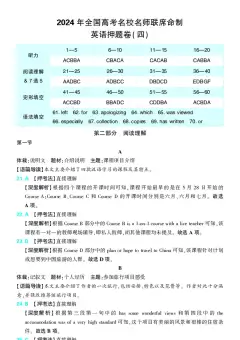
1.C 2.A 3.B 4.D
【导语】本文是一篇记叙文。文章主要讲述了作者一直喜欢绘画,但中学时由于油画测试
成绩较低,作者对绘画失去了信心。在40岁出头时,一个梦让作者重拾画油画的信心并接
受了自身局限性的故事。
1.推理判断题。根据第二段“I found it difficult, but still hoped to pass. I failed, with a low
grade. I’d been over-confident. Now I’d been declared talentless.(我觉得很难,但仍希望能通过
测试。我没有通过,而且成绩很低。我过于自信了。现在,我被宣布为毫无(油画)天赋的
人了)”并结合下文中作者多年不碰油画的经历可推知,作者对美术考试的结果感到气馁。
故选C。
2.细节理解题。根据第三段“In my 30s, I made painter friends and learned new ways of
looking at art.(在我30多岁时,我结交了画家朋友们,学到了看待艺术的新方法)”和
“Though these new friends were abstract painters using oil paints, or were printmakers or
sculptors, I took oil painting as the taboo (禁忌) high form I wasn’t allowed to practice. (虽然这
些新朋友是使用油画颜料的抽象画师,或者是版画家或雕塑家,但我把油画作为禁忌的高
级形式,不允许我练习)”可知,作者在30多岁时回避练习油画。故选A。
3.推理判断题。根据第四段“The dream felt so authoritative that it shook me. It was a form of
energy, giving me back something I’d lost. (这个梦给我的感觉是如此的权威,它震撼了我。
它是能量的一种形式,让我回我失去了的东西)”可知,作者的梦赋予作者练习油画的力量。
故选B。
4.推理判断题。根据第六段“Becoming a successful painter calls for being resolute. I realised
I was always afraid of wanting too much. (成为一名成功的画家需要有决心。我意识到我总是
害怕想要得太多)”及文章内容可知,本文主要讲述了作者一直喜欢绘画,但中学时由于油
画测试成绩较低,作者对绘画失去了信心。在40岁出头时,一个梦让作者重拾画油画的信
心并接受了自身局限性的故事。由此可推知,我们能从文章中学到创作活动需要自信,故
选D。
5.B 6.D 7.D 8.C
【导语】本文是一篇记叙文。文章主要讲述了作者误打误撞选了一门创意写作课,通过第
一个写研讨会故事为自己在班上赢得一席之地,之后又通过自己的敢拼敢闯的精神,和经纪人签约并出版了三部小说,成为今天的小说家。
5.细节理解题。根据文章第二段“By the end of the session, however, I decided that I had to
be a part of the course.Perhaps, as a lifelong reader, I was eager to understand how stories worked
their magic. (然而,在课程结束时,我决定我必须参加课程。也许,作为一名终身读者,我
渴望了解故事是如何发挥魔力的。)”可知,作者想知道故事如何发挥魔力,故她对故事写
作的好奇心使她最终决定选修这门课。故选B项。
6.细节理解题。根据文章第五段“Seizing my chance, I raised my hand and asked, “If I go
first, will you give me a spot in the class?” He said he would. (抓住机会,我举起手问道:“如
果我先去,你能在班上给我一个位置吗?”他说他会的。)”可知,作者自愿写了第一篇工
作坊的故事是为了在班上赢得一席之地。故选D项。
7.推理判断题。根据文章倒数第二段“A month later, she signed me on the strength of those
chapters alone. She has since seen me through the publication of three novels. (一个月后,她仅
凭这些章节的力量就签下了我的名字。从那以后,她帮助我完成了三部小说的出版。)”可
知,作者把她的前三章寄给了经纪人,因为她想获得出版的机会。故选D项。
8.主旨大意题。根据文章第六段“So, instead of keeping my head down and avoiding eye
contact, I did the opposite. (所以,我没有低着头,避免眼神交流,而是做了相反的事情。)”
和倒数第二段“So, once again, instead of keeping my head down and avoiding eye contact, I did
the opposite. (所以,我又一次没有低着头,避免眼神交流,而是反其道而行之。)”和最后一
段“Determination, focus, perseverance—the qualities that I consider crucial in getting me into
Stanford no doubt helped me become the novelist I am today. (决心、专注、毅力——这些我认
为对我进入斯坦福至关重要的品质无疑帮助我成为今天的小说家。)”可知,作者敢闯敢拼
的精神和她一直的坚持成就了她的现在,故文章主要想告诉我们:成功属于那些有意志和
勇气的人。故选C项。
9.B 10.A 11.C 12.C
【导语】这是一篇记叙文。文章主要介绍了作者的跆拳道之路。
9.细节理解题。由文章第一段“As a little boy, the first time I stepped into the Taekwondo
dojang, I knew that I had discovered my interest. The physical training, mental focus, and
spiritual development of Taekwondo drew me in, and I started a journey that would change my
life. (当我还是个小男孩的时候,第一次踏入跆拳道道场,我就知道我发现了自己的兴趣所在。跆拳道的体能训练、精神集中和精神发展吸引了我,我开始了一段改变我一生的旅
程。)”可知,作者对跆拳道的兴趣导致作者学习跆拳道。故选B。
10.细节理解题。由文章第二段中“Self-control became the most important part of my
training. (自我控制成为我训练中最重要的部分。)”可知,自我控制是作者训练中最重要的
部分。故选A。
11.细节理解题。由文章最后一段“Finally, after years of training and personal growth, I stand
before you as a Black Belt. I have grown both physically and mentally, gaining valuable life
skills along the way. As I continue my journey, I look forward to meeting new challenges and
inspiring others. (最后,经过多年的训练和个人成长,我以黑带的身份站在你们面前。我的
身心都得到了成长,并在此过程中获得了宝贵的生活技能。在我的旅程中,我期待着迎接
新的挑战并激励他人。)”可知,作者已准备好迎接生活中的新挑战。故选C。
12.推理判断题。由文章最后一段“Finally, after years of training and personal growth, I stand
before you as a Black Belt. I have grown both physically and mentally, gaining valuable life
skills along the way. As I continue my journey, I look forward to meeting new challenges and
inspiring others. (最后,经过多年的训练和个人成长,我以黑带的身份站在你们面前。我的
身心都得到了成长,并在此过程中获得了宝贵的生活技能。在我的旅程中,我期待着迎接
新的挑战并激励他人。)”可知,作者写这段话是为了用个人成长激励他人。故选C。
13.A 14.B 15.C 16.D
【导语】这是一篇记叙文。文章主要叙述了詹姆斯晚上抄近路穿过经常有抢劫和谋杀报道
的中央公园,以为钱包被碰撞他的人偷了,于是愤怒的让对方交出钱包。结果,他到家时
发现自己的钱包在床上,意识到他抢劫了某人。
13.细节理解题。由文章第一段中“One day, When he finished his work, it was already very
late and the last bus had gone. So James had to walk home. In order to get home quicker, he
decided to take a shortcut through Central Park. (一天,当他完成他的工作时,已经很晚了,
最后一班公共汽车已经走了。所以詹姆斯不得不步行回家。为了快点到家,他决定抄近路
穿过中央公园。)”可知,詹姆斯抄近路穿过中央公园,是因为他想更快地到家。故选A。
14.词句猜测题。由文章第二段中“Then somewhere in the middle of his path, James saw
someone coming towards him from the opposite direction. (然后,在他走到半路的某个地方,
詹姆斯看到有人从相反的方向朝他走来。)”、“His fear began to grow. He tried not to look atthe stranger (他的恐惧开始增加。他尽量不去看那个陌生人)”和“so as to avoid him (以避开
他)”可知,詹姆斯看到有人从相反的方向朝他走来,他很害怕,所以决定转向以避开他,
画线词的含义为“转向”。A. Escape逃生;B. Change direction改变方向;C. Leave离开;
D. Take action采取行动。故选B。
15.细节理解题。由文章倒数第二段中“James had no doubt that the stranger was a thief and
had taken his wallet. Anger made him turn around. He caught up with the stranger and bravely
demanded his wallet. (詹姆斯毫不怀疑那个陌生人是个小偷,偷走了他的钱包。愤怒使他转
过身来。他追上了陌生人,勇敢地要了他的钱包。)”可知,詹姆斯转身追上那个陌生人是
为了要回他的钱包。故选C。
16.推理判断题。由文章最后一段“When James got home, the first thing he saw was his
wallet lying on the bed. There was no way to avoid the truth: He had robbed somebody. (当詹姆
斯回到家,他看到的第一件事是他的钱包躺在床上。没有办法回避事实:他抢劫了某
人。)”可知,他到家时发现自己的钱包在床上,意识到他抢劫了某人,所以他很后悔。故
选D。
17.B 18.D 19.B 20.A
【导语】本文是一篇记叙文。文章介绍了胡同里的外国艺术家俄罗斯插画师Liuba
Vladimirova以及她用水彩为北京手绘的“纪念册”——《Liuba画北京》。
17.词句猜测题。根据第二段中划线部分所在句中的“Vladimirova’s journey from the icy
Siberian city of Irkutsk to the vital Beijing started during her college years(弗拉基米罗娃从冰冷
的西伯利亚城市伊尔库茨克到充满活力的北京的旅程始于她的大学时代)”可知,
Vladimirova在上大学时来到北京;由划线部分所在从句“when she commenced with an
academic exchange program connecting her Russian university with Liaoning University in
Shenyang, in Northeast China’s Liaoning Province(当时她commenced with 一个学术交流项目,
将她所在的俄罗斯大学与中国东北辽宁省沈阳的辽宁大学联系起来)”以及下文“It was
during this transformative period that she first set foot in Beijing.(正是在这一变革时期,她第一
次踏上了北京的土地)”可知,她由于在大学期间来到辽宁大学开始学术交流项目而有机会
去北京;“she commenced with an academic exchange program connecting her Russian
university with Liaoning University in Shenyang”表达的意思为“她开始了她的俄罗斯大学与
沈阳辽宁大学的学术交流项目”,“commenced with”意为“开始”,与B选项began表达意思一致。故选B。
18.推理判断题。根据第三段“Vladimirova’s path as an artist was far from linear (直线的).
Since childhood Vladimirova has developed a love for drawing and painting. However, she
pursued a different academic and professional route, studying Chinese and international trade in
college and later working in trade relations between Russia and China, none of which was directly
connected to the world of art. Yet, Vladimirova’s inner artist remained alive.( Vladimirova作为艺
术家的道路远非直线的。Vladimirova从小就对绘画和绘画产生了热爱。然而,她追求不同
的学术和专业路线,在大学学习中国和国际贸易,后来从事中俄贸易关系方面的工作,这
些都与艺术界没有直接联系。然而,Vladimirova内心的艺术家仍然活着)”可知,尽管
Vladimirova从小就对绘画和绘画产生了热爱,但是她在大学学习中国和国际贸易,并从事
中俄贸易关系方面的工作;由此可知,她一开始从事的是与艺术没有联系的工作,后来才
从事艺术行业,她推迟了她的艺术生涯。故选D。
19.推理判断题。根据第四段“In 2015, Vladimirova began crafting a series of illustrations
centered around Beijing, properly named “The Beijing Calendar”. What attracts Vladimirova most
is Beijing’s historic hutong. These narrow alleyways, rich in history and culture, serve as a
wellspring (源泉) of inspiration for her artistry.(2015年,Vladimirova开始创作一系列以北京
为中心的插图,并将其命名为“北京日历”。最吸引Vladimirova的是北京历史悠久的胡同。
这些历史文化丰富的窄巷是她艺术创作灵感的源泉)”可知,最吸引Vladimirova的是北京历
史悠久的胡同,历史文化丰富的窄巷是她艺术创作灵感的源泉;由此推知,作者提到胡同
是为了展示Vladimirova艺术创作的灵感。故选B。
20.推理判断题。通读全文,尤其是根据最后一段“Vladimirova’s ability to catch these
hidden small differences likely comes from her unique perspective as an “outsider”— someone
who didn’t grow up in Beijing. This fresh perspective allowed her to arrive in the city with fresh
eyes and an eager heart, ready to embrace a new culture. (Vladimirova能够捕捉到这些隐藏的细
微差异,可能是因为她作为一个‘局外人’——一个不在北京长大的人——的独特视角。
这种全新的视角让她带着全新的眼光和渴望的心来到这座城市,准备接受一种新的文化)”
可知,Vladimirova的展示北京的绘画之所以如此成功是她对这座城市充满好奇心,以一个
“局外人”的身份带着全新的眼光和渴望的心来到北京,以全新的视角去接受一种新的文
化。由此推知,A选项“Curiosity works wonders.(好奇心能创造奇迹)”能够最好地概括
Vladimirova的成功。故选A。21.B 22.D 23.D 24.A
【导语】这是一篇记叙文。文章主要讲述了作者曾经缺乏安全感,很焦虑。直到作者重新
开始绘画,慢慢找回了平静。
21.推理判断题。根据第一段“Anxiety has followed me around like a lost dog looking for a
bone for years now. I feel it the most strongly when I’m worried about my health or my daughter’s
health. I feel an unusual sensation and all of a sudden panic! My worries are not limited to health
concerns though, and they go in the direction of anxiety about the future of the world, worries
about my finances, and fears that I’m not good enough.(多年来,焦虑就像一只迷路的狗在找骨
头一样跟着我。当我担心我的健康或我女儿的健康时,我感觉最强烈。我有一种不寻常的
感觉,然后突然恐慌起来!不过,我的担忧并不局限于健康问题,它们还包括对世界未来
的焦虑、对自己财务状况的担忧,以及对自己不够优秀的恐惧)”可推知,作者没有安全感。
故选B。
22.细节理解题。根据第二段“When I finished school in May of 2001, I had a part-time
design job, and after the event of September 11th, 2001, I knew I needed to travel, to get out of the
safe life I was living in my hometown. That’s when my creative practices fell by the wayside. (当
我在2001年5月毕业的时候,我有一份兼职的设计工作,在2001年9月11日的事件之后,
我知道我需要旅行,离开我在家乡的安全生活。就在那时,我的创作实践戛然而止)”可知,
作者在一些重大事件发生之后暂时放弃了艺术。故选D。
23.细节理解题。根据第三段“That’s when I started noticing something important: Painting
stilled me in a way that nothing else did. It eased my fears and anxieties in a way other practice
(deep breathing, etc) did not, at least not as consistently. When anxious thoughts start, I know what
to do. I head into my studio, grab some materials, and start creating. Soon enough, the worries are
gone and instead my mind is quiet. (就在那时,我开始注意到一件重要的事情:绘画以一种其
他任何东西都无法做到的方式让我平静下来。它缓解了我的恐惧和焦虑,这是其他练习
(深呼吸等)所没有的,至少没有那么持续。当焦虑的想法开始时,我知道该怎么做。我
走进我的工作室,抓起一些材料,开始创作。很快,烦恼消失了,取而代之的是我的头脑
很安静)”可知,绘画让担忧的空闲少了,从而缓解了作者的焦虑。故选D。
24.细节理解题。根据最后一段“The only thing that matters is finding a way to be here, in the
now, instead of in the unknowable future.(唯一重要的是找到一种方法,活在当下,而不是不可知的未来)”可知,故事告诉我们重要的是要抓住当下。故选A。
25.D 26.C 27.B 28.D
【导语】这是一篇记叙文。文章主要介绍了Sandra Marshall通过不断努力从一个肖像画和
壁画画家到一个艺术提倡者,并宣传和推动艺术的故事。。
25.推理判断题。由文章第二段中“After Sandra received a Bachelor of Arts degree from
Arizona State University, she worked as a portrait painter and mural (壁画) artist but turned to
food art when her daughter declared she would no longer eat meat. Sandra started exploring with
fruits and vegetables to make cooking more fun, and was inspired by the colors of nature. (桑德拉
从亚利桑那州立大学获得文学学士学位后,曾担任肖像画家和壁画艺术家,但在女儿宣布
不再吃肉后,她转向了食品艺术。桑德拉开始探索水果和蔬菜,让烹饪变得更有趣,她的
灵感来自大自然的颜色。)”可知,桑德拉改变她的艺术主题,她希望让烹饪变得更有吸引
力。故选D。
26.主旨大意题。由文章第三段“In 2014, Sandra opened a studio called Be...An Artist Studio,
which welcomed artists to come and learn many different types of art. Paint nights, sculpting
nights, live entertainment and eventually a cooking school, all came together and helped to bring
the community creating together. She was featured on many television networks displaying her
passions for the arts. Sandra began posting her creations on social media which led to her first
published book One Hot Night at the Veggie Bar. (2014年,桑德拉开了一家名为Be……的工
作室。一个艺术家工作室,欢迎艺术家们来学习许多不同类型的艺术。油漆之夜、雕刻之
夜、现场娱乐活动,最终还有一所烹饪学校,所有这些都聚集起来,帮助把社区创造在一
起。她曾在许多电视网络上亮相,展示了她对艺术的热情。桑德拉开始在社交媒体上发布
她的创作,这使得她出版了第一本书《在素食酒吧的一个炎热的夜晚》。)”可知,第三段
主要介绍了Sandra的成就。故选C。
27.细节理解题。由文章第四段中“Sandra hosted painting events, painting with thousands of
people at her large Be...An Artist events, such as the National Football League’s owners meeting
in 2019 where she painted with the NFL owners and their families. (桑德拉举办了绘画活动,和
成千上万的人一起画画。一个艺术家的活动,比如2019年美国国家橄榄球联盟的老板聚会,
在那里她和NFL的老板以及他们的家人一起画画。)”可知,桑德拉为促进艺术举办大型绘
画活动。故选B。28.主旨大意题。通读全文,尤其是由文章第二段中“After Sandra received a Bachelor of
Arts degree from Arizona State University, she worked as a portrait painter and mural (壁画) artist
but turned to food art when her daughter declared she would no longer eat meat.(桑德拉从亚利桑
那州立大学获得文学学士学位后,曾担任肖像画家和壁画艺术家,但在女儿宣布不再吃肉
后,她转向了食品艺术。)”和文章第四段中“In 2019, Sandra closed her studio to expand and
bring art to more people. This also gave her more time to create and explore he town art, including
her food art. (2019年,桑德拉关闭了她的工作室,以扩大规模,把艺术带给更多人。这也
给了她更多的时间去创作和探索小镇艺术,包括她的食物艺术。)”可知,文章主要介绍了
Sandra Marshall通过不断努力从一个肖像画和壁画画家到一个艺术提倡者,宣传和推动艺
术的故事。故选D。
29.A 30.C 31.D 32.C
【导语】这是一篇记叙文。讲述了作者作为旅行作家以面包车为家的体验和感受。
29.细节理解题。由文章第三段第二句“This ancient van, a vehicle designed for freedom and
the open road, has proved a stable solution for surviving the current housing crisis.”(这辆古老的
面包车是为自由和开放道路而设计的,事实证明它是度过当前住房危机的稳定的解决方
案。)和第四段“I became a travel writer after my studies ended, committing to brief
“residencies” with museums and art centres — where temporary accommodation is often provided
in exchange for producing new work about a community.”(学业结束后,我成为了一名旅行作
家,致力于在博物馆和艺术中心进行短暂的“驻留”——在那里,通常会提供临时住宿,
以换取创作关于社区的新作品。) 可知,面包车自由和开放的特征和作者作为旅行作家的
职业是相匹配的。故选A项。
30.词句猜测题。由文章第六段最后一句“Over the summer, I worked to turn waste-ground
into a wild garden, replacing weeds with wild plants. ”(整个夏天,我努力把荒地变成野生花园,
用野生植物代替杂草。)可知,“immediate surroundings”面包车周围的环境指的是a wild
garden。故选C项。
31.细节理解题。由文章最后一段“My step away from conventional housing has been a
necessary act of personal economy, but the benefits include taking nothing for granted, and
unexpected delight.”(我远离传统住房是个人经济状况的必要行为,但好处包括从不想当然,
以及意想不到的快乐。)可知,住在面包车这种非传统住房里可以随时拥抱令人愉快的惊喜。故选D项。
32.观点态度题。由文章倒数第二段“I made friends with the self-sufficient boaters living
nearby, always ready to share knowledge on the low-carbon simplicity of life without electricity.
I’ve learnt that comfort can be found away from the bright infrastructure of urban life: in watching
the birds that nest in the tree and the foxes playing in the woods at dawn, in making a cup of
coffee on a spring morning.(我和住在附近的自给自足的船民交了朋友,他们随时准备分享没
有电的低碳简单生活的知识。我明白了,远离城市生活明亮的基础设施也能找到舒适:在黎
明时看着树上筑巢的鸟儿,在树林里玩耍的狐狸,在春天的早晨泡一杯咖啡。)”和最后一
段后半句“the benefits include taking nothing for granted, and unexpected delight.”(好处包括从
不想当然,以及意想不到的快乐。)可知,作者对于住在面包车的态度是支持,赞成的。A
选项Cautious译为“谨慎的”,B选项Ironical译为“讽刺的”,C选项Favorable译为
“支持的,赞成的”,D选项Neutral译为“中立的”。故选C项。
33.D 34.C 35.B 36.D
【导语】本文是记叙文。文章主要介绍了作者生活在这个地方很久了,和邻居没有什么接
触,一次他想修剪一颗老苹果树,邻居看到后都以为作者要砍掉这棵树,于是很担心,都
过来询问作者,这让邻居们都聚集到了苹果树下,带来了邻居之间的快乐。
33.词句猜测题。根据第一段中“The landscape looks dull, with hills, sky and forest appearing
grey. (这里的景色看起来很暗淡,山丘、天空和森林都显得灰暗。)”可知,这里的风景看起
来很暗淡,让作者感到沮丧,由此可推知,my spirits ebb意为“感到沮丧”,故选D。
34.推理判断题。根据第五段中“Soon half the neighbourhood had joined me under the apple
tree. It struck me that I had lived there for five years and only now was learning these people’s
names, what they did for a living and how they passed the winter. It was as if the old apple tree
was gathering us under its branches for the purpose of both acquaintanceship and shared wonder.
(不久,邻居们有一半人来到苹果树下与我会合。我在那里住了五年,直到现在才知道这些
人的名字,他们以什么为生,以及他们是如何度过冬天的。就好像那棵老苹果树把我们聚
集在它的树枝下,既是为了相识,也是为了分享奇迹。)”可推知,苹果树被认为是邻里之
间的快乐之事,故选C。
35.细节理解题、根据第四段中“I set out to remove a few disorderly branches. No sooner had
I arrived under the tree than neighbours opened their windows and stepped onto their porches(门廊; 走廊). (我开始移除一些乱七八糟的树枝。我刚到树下,邻居们就打开窗户,走进门
廊。)”和第五段中““You’re not cutting it down, are you?” she asked anxiously. Another
neighbour frowned as I cut off a branch. “Don’t kill it, now,” he warned. (“你不会把它砍了
吧?”她焦急地问道。当我砍下一根树枝时,另一个邻居皱起了眉头。“现在不要砍
它,”他警告说。)”可知,邻居们打开窗户走进门廊是因为他们担心苹果树的安全,故选
B。
36.推理判断题。根据最后一段中“Heremarked how this recent winter had been especially
long and complained of not having seen or spoken at length to anyone in our neighbourhood. And
then, he looked at me and said, “We need to prune that apple tree again.”(他说,最近这个冬天特
别漫长,他抱怨说,没有见过我们附近的任何人,也没有和他们长谈过。然后,他看着我
说,“我们需要再修剪一下那棵苹果树。”)”可推知,邻居们最关心的是邻里之间的相聚,
故选D。
37.B 38.A 39.D 40.D
【导语】本文是一篇记叙文。文章讲述了专业摄影师Sandoval的故事,他来自洛杉矶,曾
在全球50多个国家旅行和拍摄,后来为了寻求新的生活体验来到中国,原本计划只待一两
年,却意外地在中国生活了16年,通过照片展示了中国的美丽,还记录下了成都人和他们
的生活。
37.细节理解题。根据第二段中“With the hope of trying something different for himself, he
went to Chengdu in Southwest China to live in October 2008 and has traveled throughout the
country since then. (2008年10月,怀揣着尝试一些不同的东西的希望,他去了中国西南部
的成都生活,从那时起,他就在全国各地旅行)”可知,Sandoval到中国来是因为他想走出
自己的舒适区,尝试一些不同的东西。故选B项。
38.词句猜测题。根据画线词的下文“He was delighted to see that residents, dressed stylishly
or comfortably, strolled in the streets “as slowly as snails”. (他很高兴看到居民们穿着时髦或舒
适,在街上“像蜗牛一样慢”地散步)”可知,成都的居民们非常自如地在街上慢慢地散步。
由此可知,当地的生活方式是悠闲的,画线词意思应该是“悠闲的,闲散的”,与
Leisurely意思相近。故选A项。
39.推理判断题。根据倒数第二段中“The varied culture and vast, beautiful land has kept him
in China much longer than he had planned in the beginning. He remembers a wide range ofadventures like exploring a local vineyard and local wine in Yinchuan City, a riding performance
by a Mongolian ethnic group in the Shuidonggou Horse Riding Show, and then the totally
different experience of visiting the Hainan Free Trade Port in the south. (多样的文化和广袤美丽
的土地使他在中国停留的时间比他最初计划的要长得多。他记得各种各样的冒险经历,比
如在银川市探索当地的葡萄园和当地的葡萄酒,在水洞沟骑马表演中观看蒙古民族的骑马
表演,然后参观南方海南自由贸易港的完全不同的体验)”可推知,这里提到了Sandoval在
中国的经历,以显示他对中国文化的迷恋。故选D项。
40.推理判断题。通读全文,尤其是第一段中“Sandoval, who comes from Los Angeles, has
traveled and filmed in over 50 countries across seven continents and now lives in China.
(Sandoval来自洛杉矶,曾在七大洲的50多个国家旅行和拍摄,现在住在中国)”可知,文章
讲述了专业摄影师Sandoval的故事。他来自洛杉矶,曾在全球50多个国家旅行和拍摄,后
来为了寻求新的生活体验来到中国,原本计划只待一两年,却意外地在中国生活了16年,
通过照片展示了中国的美丽,还记录下了成都人和他们的生活。因此,文章的目的应该是
介绍一位专业摄影师的经历。故选D项。